Scotch Bonnet Pepper Growth Time Calculator
Plan Scotch bonnet sowing, Caribbean chinense transplant timing, first fruit set, green bonnet stage, yellow, red, orange, or chocolate color ripening, harvest flushes, and container or bed yield.
Scotch bonnets need a long warm run, but they are not just a generic hot pepper. Their bonnet-shaped fruit, fruity Caribbean aroma, heavy flush pattern, and color-dependent harvest timing deserve their own schedule.
📋Scotch Bonnet Growing Presets
🌶Cultivar, SHU, and Color Grid
⚙Growth Time Inputs
Scotch Bonnet Growth Schedule
Your calculated bonnet timeline will appear here.
📈Scotch Bonnet Stage Timing Table
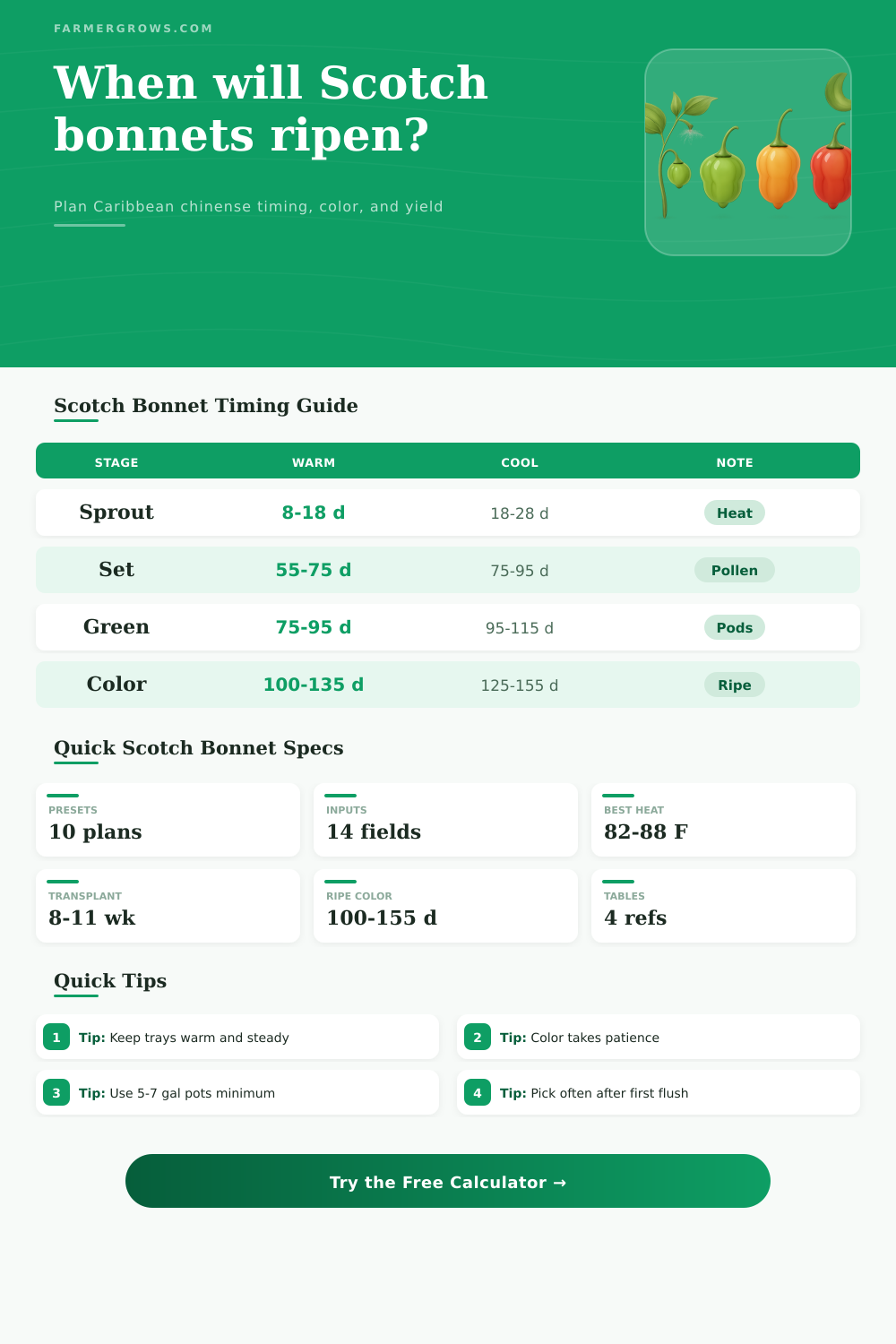
| Stage | Warm target | Cool or stressed crop | Scotch bonnet note |
|---|---|---|---|
| Germination | 8 to 18 days at 82 to 88 F | 18 to 30 days below 78 F | Bottom heat matters because chinense seed stalls in cool trays. |
| Transplant size | 8 to 11 weeks from sowing | 10 to 13 weeks if slow | Wait for a stocky plant, not just calendar age. |
| First flowers | 35 to 55 days after transplant | 50 to 70 days after transplant | Cool nights, dry pots, or excess nitrogen can delay set. |
| First fruit set | 55 to 75 days after transplant | 75 to 95 days after transplant | Pods often appear in clusters before the first heavy flush. |
| Green bonnet harvest | 75 to 95 days after transplant | 95 to 115 days after transplant | Green pods work for early sauce, but aroma is lower than ripe pods. |
| Full color harvest | 100 to 135 days after transplant | 125 to 155 days after transplant | Yellow and orange usually finish before red or chocolate strains. |
🌿Cultivar, SHU, and Ripe Color Table
| Scotch bonnet strain | Typical SHU range | Main ripe color | Timing character |
|---|---|---|---|
| Jamaican yellow Scotch bonnet | 100,000 to 350,000 | Yellow | Reliable for garden harvests and classic Caribbean sauce flavor. |
| MOA yellow Scotch bonnet | 150,000 to 325,000 | Yellow | Often selected for true bonnet shape and strong fruity aroma. |
| Freeport orange Scotch bonnet | 100,000 to 350,000 | Orange | Good container candidate with bright color and moderate finish time. |
| Caribbean red Scotch bonnet | 150,000 to 350,000 | Red | May hold green longer before a concentrated red color break. |
| Chocolate Scotch bonnet | 200,000 to 400,000 | Brown chocolate | Usually needs extra late-season warmth for full ripe flavor. |
| Mixed open-pollinated bonnets | 80,000 to 350,000 | Yellow, orange, or red | Use the later end of the calculator range for uneven batches. |
🧺Container vs Bed Timing and Yield Table
| Growing setup | Timing effect | Typical pods per plant | Best use |
|---|---|---|---|
| 5 to 7 gallon container | Add 4 to 10 days if roots dry out | 25 to 60 pods | Balcony plants, movable fall color finish, smaller batches. |
| 10 gallon container | Near bed timing with steady water | 45 to 95 pods | Patio growers wanting more flushes without a garden bed. |
| Raised bed | Baseline timing | 60 to 120 pods | Most home sauce gardens with warm soil and 24 inch spacing. |
| In-ground row | Baseline to 5 days faster in warm soil | 70 to 140 pods | Market rows and larger Caribbean pepper patches. |
| Low tunnel | 5 to 12 days faster early, longer fall finish | 70 to 150 pods | Cooler climates that need a longer color window. |
| Greenhouse or high tunnel | 10 to 20 days faster if nights stay warm | 90 to 180 pods | Long-season production and late ripe harvests. |
💧Harvest Flush and Season Fit Table
| Window | What to expect | Picking interval | Yield note |
|---|---|---|---|
| First set | Scattered clusters after steady warm nights | Leave until size fills | Do not judge the crop by the first few pods. |
| Green harvest | Firm bonnet shape before color break | Every 5 to 7 days | Useful if frost is close or sauce needs green heat. |
| First ripe flush | Most valuable flavor window | Every 3 to 5 days | Regular picking pushes the next wave of flowers. |
| Peak warm flush | Fastest color turn in hot settled weather | Every 2 to 4 days | Expect the largest pod count from well-fed bed plants. |
| Late fall flush | Color slows as nights cool below 60 F | Every 4 to 7 days | Containers can be moved to finish orange, red, or chocolate pods. |
| Seed-saving finish | Fully ripe pods held several extra days | Pick only sound ripe pods | Choose true bonnet-shaped fruit from healthy plants. |
💡Scotch Bonnet Growing Tips
Fruit set tip: Scotch bonnet pollen works best with warm nights and steady moisture. If flowers drop during a heat spike or cool spell, keep the plant balanced and wait for the next flush.
Color tip: A green bonnet may be usable, but the classic fruity aroma builds as pods turn yellow, orange, red, or chocolate. Give late pods protected warmth when frost is near.
Scotch bonnets gets shuffled into “generic hot peppers” in most gardens. This happens until the seeds fail to grow in chilly trays and melt away with summer heat without a single fruit following. It is not typically due to a lack of sun or soil, but more often then not, it is the clock. Scotch bonnets is members of the Chinense species, which are biologically programmed for lengthy, steamy summers in the Caribbean, not our helter-skelter temperate-zone growing season. Every trick in the book won’t help if you are three weeks off on the transplant timing… You’ll be forever running after your harvest and never catch up before frost.
Rather than guess whether you’re running out of time in the season, this calculator (above) do all that math for you. It takes your specific soil type and average night temperature into account. Pollen viability plummets at sub-60 degree nights. It then estimates how many more “days” before those pods will reach peak color. You should of decide whether to push them for yellow or red, or just go ahead and pick some green ones. This thing figure it out for you.
How to Time Your Scotch Bonnet Harvest
The biggest rookie error is starting seedlings too late. Scotch bonnets grow slow, even after they emerge (which requires bottom heat). They also needs bottom heat to really get going, especially as they begins their journey toward fruiting. An eight-week-old plant that fills its starter pot may be ready to go outside, whereas one that grows to twice that size but isn’t so full will still be struggling. The page’s reference table explain all that. It also shows how this relates to choosing container size. Container size determines if roots stays healthy and produce well.
Things shift a bit if you’re working with five-gallon buckets. These rootbound plant stress more easily in a heat wave, which causes flowers to drop or delays fruit set.
The last clue to whether something will taste good is this: color does not determine flavor. For example, green Scotch bonnets are hot, yes, but not the sweet-fruity character that makes them the variety they are. Patience is key if you’re growing scotch bonnets (yellow or orange varieties gets there sooner than the darker ones like red or chocolate); they won’t start turning up until they’ve had some time after transplanting. Depending on where you live and what type of weather patterns you experience, the calculator tell you when you should expect to be able to see at least a hint of color, the first blush… And thus roughly when to harvest. With a short season, it may say to pick them young and green as soon as possible and use them right away, though save a couple of plants inside to let ripen fully.
Does picking frequency affect your yield? That’s one big factor that determines yield. That’s one big factor that determines yield. Scotch bonnet plant do not produce fruit in a slow trickle each day; instead, they makes them in flushes. Picking frequently sends a message to continue making flowers rather than hanging on to ripe pods. Your results depend on your other practices (this estimator assumes standard care). If you use a balanced fertilizer and water consistently, it may be towards the top end of the range. On the other hand, too much nitrogen or drought stress will favor leafy growth over fruit.
These time frames will spare you the embarrassment of looking up at an empty trellis in September. If you know the average frost date for where you live and plan backwards from that when you sow, the plant should be in flower (its reproductive phase) just as long as the weather remains warm enough to allow fruit set. A few weeks of care when the seeds are seedlings, and knowing exactly how much your local climate can handle, can mean the difference between a jar-full of homemade hot sauce or nothing but a small harvest.