
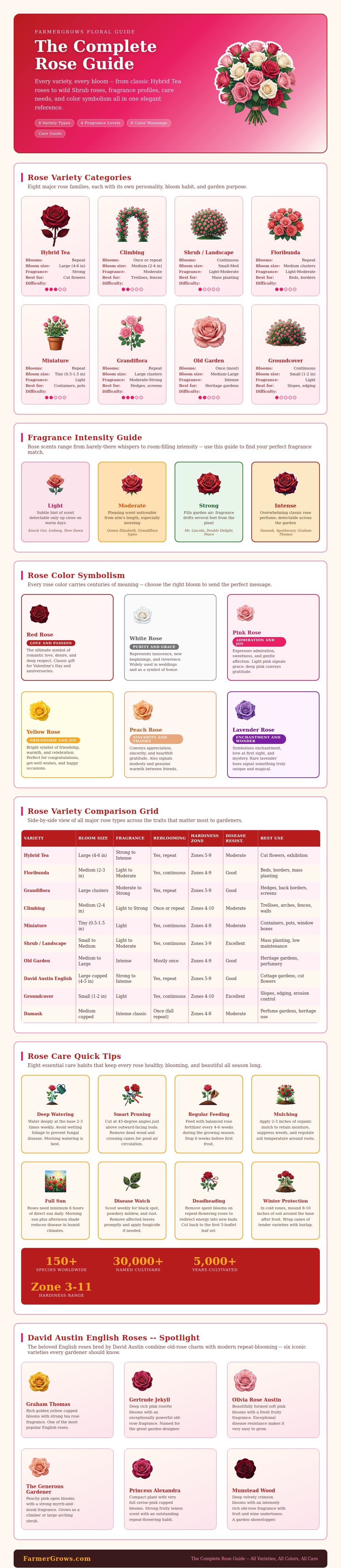
If you are standing in the nursery aisle facing long shelves of naked, bare-root roses, you may not know what to buy or even which one is right for your yard. I know; it happens all the time. The labels are incomprehensible; those botanical names sound as if someone’s mumbling. And half the plants seem to look alike, until they open in three months’ time. Knowing clearly which variety will perform which task is critical. This way, you won’t feel lost; instead, your decisions will turn into a puzzle where every piece know exactly where it fits. That’s why having a clear variety chart matters so much: it turns a daunting decision into a manageable puzzle.
So how does it work? The chart group roses by their habits and care requirements. This saves you the guesswork and makes it easy to break things down. For example: hybrid teas; the traditional cut flower (are big singles borne on tall stems), lasting nicely in a vase. That’s good. But they’re also high-maintenance types, often needing frequent feedings and some serious pruning to stay looking like an exhibition rose.
How to Choose the Right Roses for Your Garden
Shrub roses, if you want something less demanding, were made for tough love; they’ll take abuse far better then their dandy cousins will, and quickly fill out to form masses of smaller blooms.
Another element most of us gardeners miss out on until the end is fragrance. We imagine all rose fragrances are lovely, but they vary widely among different varieties. Some moddern roses are bred for their look only, with no fragrance whatsoever. How much does yours rate on this scale of fragrances from light whispers to intense perfumes? Look for English varieties and old garden roses if you want not just a beautiful garden, but one where the nose can take part, too. These strong perfumes carry across the yard, creating atmosphere beyond just what we see. The lighter ones are harder to find unless you lean in close, and that small difference change how we experience the garden.
If you intend to present those arrangements as gifts, there’s even more to consider: color symbolism. White roses signify new beginnings and purity; red roses, love and passion. Yellow flowers has no romantic meanings at all, making them a safe choice when sending a bouquet of friendship. That knowledge can also help when creating flower arrangement for an anniversary or even a memorial garden. When you select a color, you’re selecting a word, but it is a word in a language we all speak but seldom consciously think about.
Care routines matter more than variety type when it comes to long term health. Black spot is one fungal disease that can take over if the plant’s foliage stays wet, so keep base well watered and the leaves dry. Best time to do this: morning hours, since if there’s moisture that gets onto leaves, they have the rest of the day to dry off before humidity gathers in the evenings. Don’t be afraid of pruning; most often it’s just clearing out deadwood and opening up the center of the plant to allow for better air circulation. Mold loves to lurk in the thick insides of plants; good airflow stop it.
Stress can come from a cold snap or a hot spell. Mulch is important to moderate temperature at the root zone and maintain soil moisture, which reduces stress for your plant. The big two causes of failure in roses (rather than being inherently “bad” genetics) are improper care (too much or too little water) and overcrowding, so keep these basics on track, and don’t get fancy with complicated chemistry. Feed throughout the active growing season, but cease well ahead of any first frost that might come along, so that they has time to be truly hardened off. Winter prep in cold zones means shielding the graft union from winter weather by mounding up soil over the base.
David Austin has bridged the gap between modern reliability and old fashioned charm with his English roses that rebloom all season long, yet have cupped forms and heady scents. Roses such as Gertrude Jekyll or Graham Thomas combine the legacy appearance with a less-demanding nature that suits cottage-garden settings, where form should be as important as function.
To find the rose for you isn’t necessarily about spending the most but rather selecting a personality that matches yours. Start with what you love, whether it is watching a trellis climb upward in summer or cutting fresh stems for the kitchen table every day. Then, use the chart to get a sense of the big picture and make your buying decisions to match. Treat them with some basic respect (like any plant), and a well chosen rose will reward you with years of fragrance and beauty…and less time spent fighting off problems and more time enjoying its blooms.
And don’t forget: You’re only halfway there. As in: Standing in the nursery aisle. Now that you have an idea of what to hunt for, though, those bare roots won’t seem so strange. They will begin to appear as opportunities, since your garden’s not just waiting for any rose; it’s waiting for the right one. Choose carefully, tend with patience; and let them go from there.