Ranunculus Bulb Planting Depth Calculator
Estimate ranunculus corm cover, total hole depth, spacing capacity, bed fit, rot pressure, and frost protection needs from corm grade, soil, drainage, planting season, and growing setup.
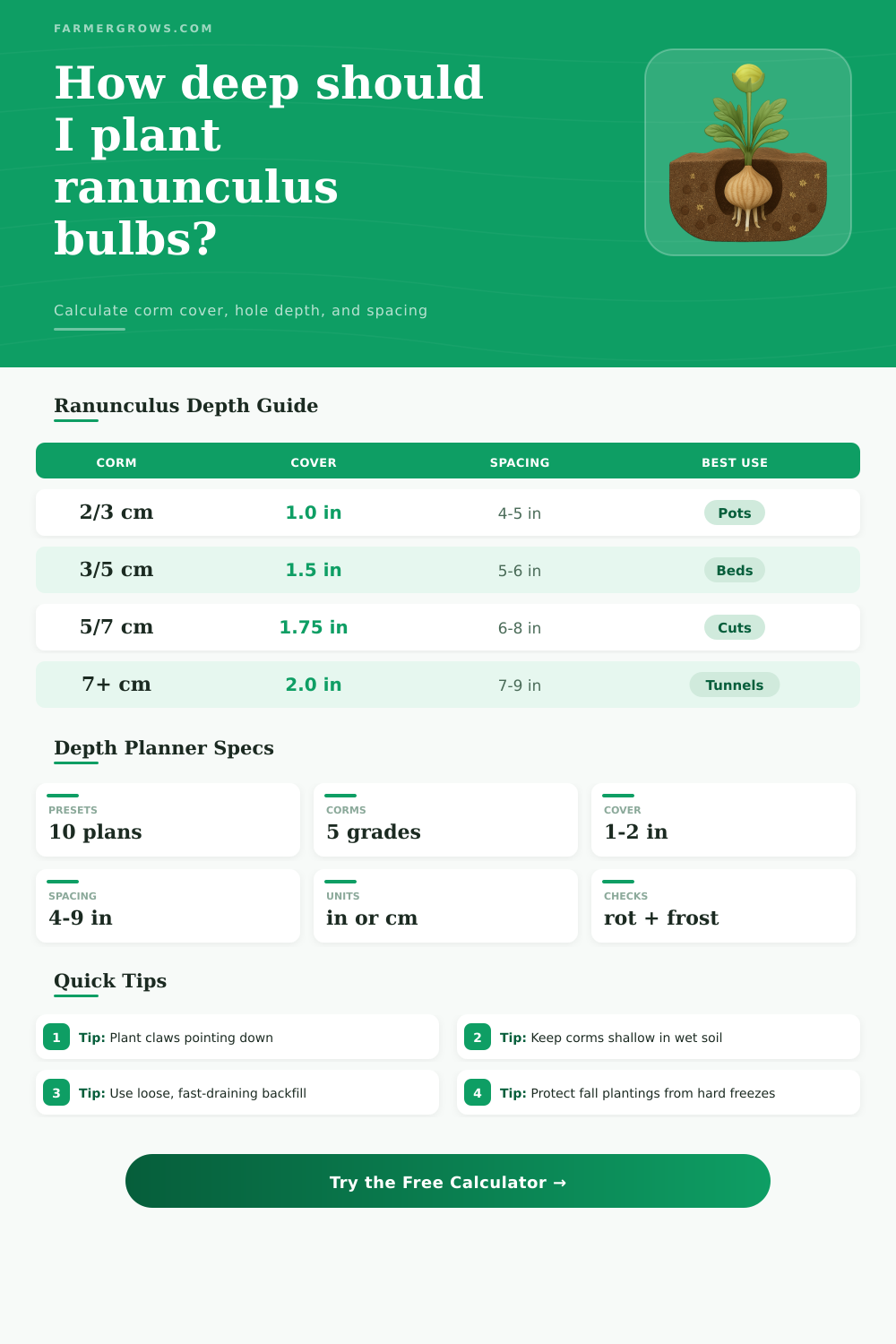
Ranunculus are corms, often sold as dry claw-like bulbs. They are planted shallow compared with tulips or daffodils: claws point down, the crown sits below the finished soil surface, and wet heavy soil usually calls for less cover rather than a deeper hole.
Ranunculus Planting Depth Results
Your depth plan will appear here.
1. Ranunculus Corm Depth By Grade
| Corm grade | Typical corm height | Cover above crown | Hole depth to claw tips | Spacing note |
|---|---|---|---|---|
| Small 2/3 cm | 0.45 to 0.6 in | 1.0 to 1.25 in | 1.5 to 1.9 in | Good for containers and bedding trials |
| Standard 3/5 cm | 0.6 to 0.85 in | 1.25 to 1.75 in | 1.9 to 2.6 in | Common garden and flower farm grade |
| Large 5/7 cm | 0.8 to 1.0 in | 1.5 to 2.0 in | 2.3 to 3.0 in | Good for cut-flower beds and tunnels |
| Jumbo 7+ cm | 0.95 to 1.2 in | 1.75 to 2.25 in | 2.7 to 3.4 in | Use generous spacing and excellent drainage |
2. Site Adjustment Guide
| Condition | Depth tendency | Why it matters | Best practice | Warning sign |
|---|---|---|---|---|
| Loose loam with good drainage | Baseline | Balanced moisture and air around the crown | Plant claws down and firm gently | Crown drying if left too shallow |
| Heavy clay or poor drainage | Shallower cover | Deep wet holes can rot corms before rooting | Use raised rows, compost, or gritty backfill | Sour smell, mushy corms, no shoots |
| Sandy fast-draining soil | Slightly deeper cover | Extra cover buffers drying and temperature swings | Water in after planting and mulch lightly | Corms dry before root growth starts |
| Container planting | Shallow, even cover | Pots freeze and saturate more quickly than beds | Use drainage holes and a protected spot | Water sitting in the saucer |
| Fall planted in cold zones | Do not bury deep | More depth slows emergence and may still freeze | Use frost cloth, low tunnel, or greenhouse protection | Hard freeze before corms root |
3. Spacing And Row Capacity
| Layout | In-row spacing | Rows per bed | Approx. corms per 50 ft | Best fit |
|---|---|---|---|---|
| Container or patio bowl | 4 to 5 in | Clustered | Depends on pot area | Small and standard corms |
| Garden raised bed | 5 to 6 in | 3 to 4 rows | 300 to 480 | Mixed garden cutting |
| Cut-flower tunnel | 6 in | 4 to 5 rows | 400 to 500 | Balanced stems and airflow |
| Jumbo premium row | 7 to 9 in | 3 to 4 rows | 200 to 340 | Strong plants and easier harvest |
4. Planting Orientation Checks
| Step | What to check | Good target | Why it matters | Fix |
|---|---|---|---|---|
| Soak | Corms are plump, not mushy | Hydrated but firm | Over-soaking can start rot | Drain and pre-sprout cool |
| Orientation | Claw tips point downward | Crown near top | Upside-down corms waste energy turning | Reset before backfilling |
| Cover | Firm soil above crown | About 1 to 2 in | Too much cover delays shoots | Pull soil back gently |
| Backfill | No sealed wet pocket below corm | Loose, settled soil | Airless wet holes rot roots | Raise bed or add gritty compost |
| Protection | Cold nights are managed | Frost cloth or tunnel when needed | Shallow corms need surface protection | Cover before hard freezes |
For fewer losses: Prioritize drainage and cool rooting. A shallow raised bed with loose backfill is usually safer than planting deeply in heavy soil.
For stronger stems: Use consistent spacing, firm the crown area gently, and protect fall or winter plantings from freeze-thaw movement.
Ranunculus aren’t bulbs, actualy. They’re corms shaped rather like miniature paw-like claws or dried-out ginger roots so when I plant them, I place their claw ends downward in soil, as if someone’s hand were pushing them underground. This determines how far above or below ground level the crowns of these guys goes, just beneath the surface. It means worrying about planting them too high (and having them freeze) or too low (rotting off the corm).
But there’s an easier way out of this problem than your worries allows. It’s not really a matter of protecting the plant from the cold (although perhaps some plants is like that); it’s more a matter of how soil behaves with water at and around the crown. A corm buried two inches deep in heavy clay will drown because clay retains water after a rain. A sandier soil are fast-draining; at two inches deep, the corm dry out completely.
How to Plant Ranunculus Corms
You don’t have to know all the conversions and coefficients because the calculator does the math: just plug in your drainage quality and your soil type. You don’t even have to remember set of rules, because you just has to grasp the concept of “when the dirt changes, the rule changes.”
There’s another element most gardeners don’t consider: pre-sprouting. To force an early bloom, you’d normally soak the corms in water till they begins sprouting tiny white root nubs. Trouble is: Once they’re up out of the ground like that, their roots is tender. When you drop such a pre-sprouted corm into a wide, loosely packed hole, they want to tumble headfirst because nature and gravity incline them that way, growing outward from root tips downward. Planting the thing upright (or at all if you go too deep) mean wasting precious first-season energy reserves as the plant tries to right itself before it has time to worry about foliage.
Since a dry corm can handles more bumping around than a sprout that is already focused on growing in a certain direction, the tool needs to know your current condition based off your setup. Depth is only half the story; your spacing are equally important because it affects airflow and prevents disease. Ranunculus crave moisture, but hate being drowned, meaning no stagnant water allowed around their stems. Crowded conditions also create a moist environment that invites botrytis and rust.
A little math will help: This chart spells it all out for various sizes of corm. Jumbo ones want breathing room, while smallish ones may get away with close quarters. Allowing six or eight inches per plant gives the leaves plenty of room for air to move. That single change does so much more to decrease rot then any fungicide sprays can accomplish.
An inch or two of extra soil won’t protect a corm sitting barely below ground against a hard frost here in Zone 5 or colder. Winter protection is very important, and adding just a little soil might actualy do the opposite by trapping moisture against the crowns during thaw cycles. We need insulation, not suffocation. You can use frost cloth, low tunnels, or even move containers onto a sheltered patio to protect them with an insulating layer while still letting air circulate.
The calculator takes that type of protection into account, along with your own zone, to calculate whether your proposed depth will be safe or risky. When combined with moist soils, it warn when bare exposure means high rot potential.
Growing ranunculus isn’t perfect; not all of the corm will cooperate even if planted perfectly, so expect a few casualties in your first batch. But failure doesn’t have to be a disaster. You should of get the basics right by giving them good drainage before you even start digging the hole, and firm the soil gently against the crown. Don’t forget: Crowns are near the surface, and the claws go down. Treat it like a plant, which is a livig root system that deserves respect rather than just being a decorative object. If you do that, the rest; the blooms, will fall into place. It’s worth the fuss, as long as you let the flowers breathe from the get-go.