
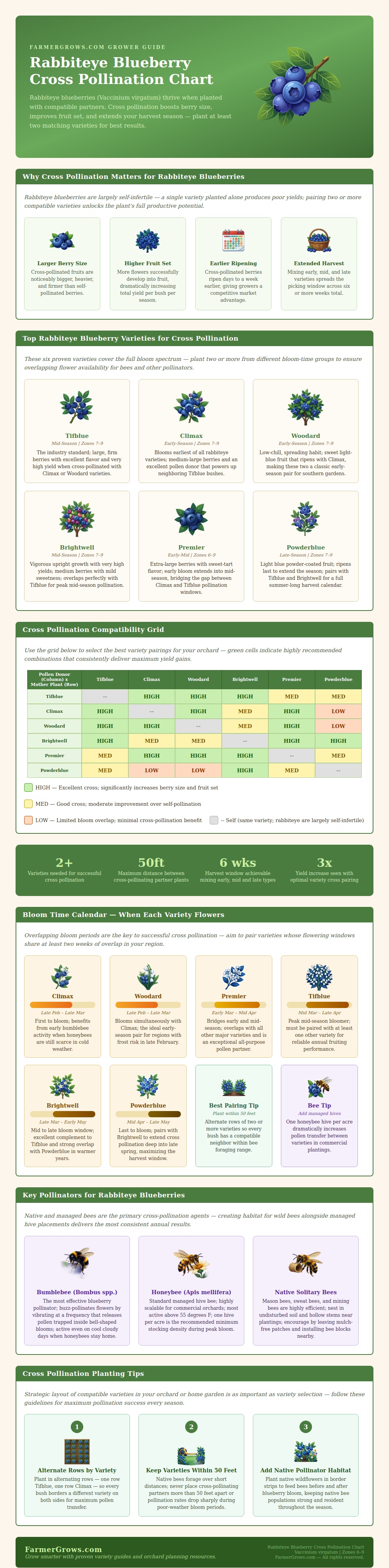
New gardeners planting their first rabbiteye blueberries assume one plant equals lots of berries. Sorry, nature isn’t cooperating as generously as you might hope: Rabbiteyes is mostly self-sterile. This means that even if you have an acre of gorgeous Tifblue bushes growing here, it’s going to produce little unless another compatible variety (same species or perhaps a related one) happens to be nearby.
Nothing wrong with the plant; nothing wrong at all, except biology want this plant to find its mate. The genetics and the bloom timing must match. What was once a simple task of planting shrubs become a strategic challenge. You have to pair blooms and match genetics. You can see in the visual guide (above) which types makes the best match to cross-pollinate each other, but knowing why that combo works will help you achieve success.
How to Plant Rabbiteye Blueberries for More Fruit
In the case of rabbiteye blueberries, scientific name: Vaccinium virgatum; pollination by another variety is necessary to ensure complete fruit set. The resulting crop is bigger, firmer, and even ripens more quickly then it would otherwise, thanks to bee activity from crossing two compatible plants. This is a fair trade for much improved result.
As you’ll see, both Climax and Woodard open their blooms in early March or late February. That means they’re basically waking up around the same time. And relying on one another while it’s still too cool for a lot of honeybees to venture out of the hive yet. Bumblebees are tougher and can braves those frosty spring mornings. This makes them essential partners in this first round of cross-pollination. Miss it, and you’ve lost them all. It also makes sense to plant the two together, since their bloom windows overlap.
Tifblue is the industry standard for mid-season production. Great flavor on big, firm berries, though Tifblue require some assistance to be at its best. Combinations with Brightwell (or even Climax) create a high-yielding area. Genetic diversity significantly increases fruit set. This makes these top-tier combos on the chart because you get more berries, and they are better berries that store and travel better.
For the late season, choose Powderblue for plants that bloom last and allow for harvests deep into the summer months. Powderblue also partners extremely well with Brightwell to ensure pollination occurs throughout the whole growing season. Staggering in this way gives you fewer massive pickup days so you aren’t drowning all at once. Instead, it spreads out your work over multiple weeks, saving your time and your back.
But distance makes a big difference (more so then many people seem to think). Though bees work efficient, they’re also lazy; they don’t want to fly around too much for nectar or pollen. Planting compatible varieties within 50 feet of one another means that bees will frequent both regularly on their foraging rounds. Make it even easier by planting them in alternating rows: Then each bush has a partner right beside it. It’s the difference between a moderate harvest and an overflowing basket of fruit.
Separate from the issue of pollination: Soil also matters. Specifically, rabbiteye blueberries prefers acid soil (with a pH of about 4.5 to 5.5); that’s just the way they like it. Even with a good cross-pollination plan in place, if your soil is too alkaline these guys aren’t going to do well. Test your soil before planting; save yourself months of frustration.
Growing rabbiteye blueberries successfully isn’t just about grabbing a variety name off a nursery tag. It means building an ecosystem where different bloom times overlap so bees can easily reach different sources of pollen. Plant with this purpose… And suddenly you’re no longer fighting Nature’s needs but working with them. You end up with a garden that doesn’t feel so much like a maintenance chore, but rather like a well-oiled machine that yields sweet fruit from early spring through late summer. That’s the true reward of getting the pairs right in the first place.