Pumpkins Per Plant Calculator
Estimate how many pumpkins each plant should produce, then scale the count into harvest weight, target plant count, seedling reserve, patch area, and vine pressure.
Pumpkin yield per plant depends on variety size, vine habit, pollination, spacing, season length, water, fertility, and how many fruit you intentionally leave on each vine. Use a preset, then tune the inputs to match your patch.
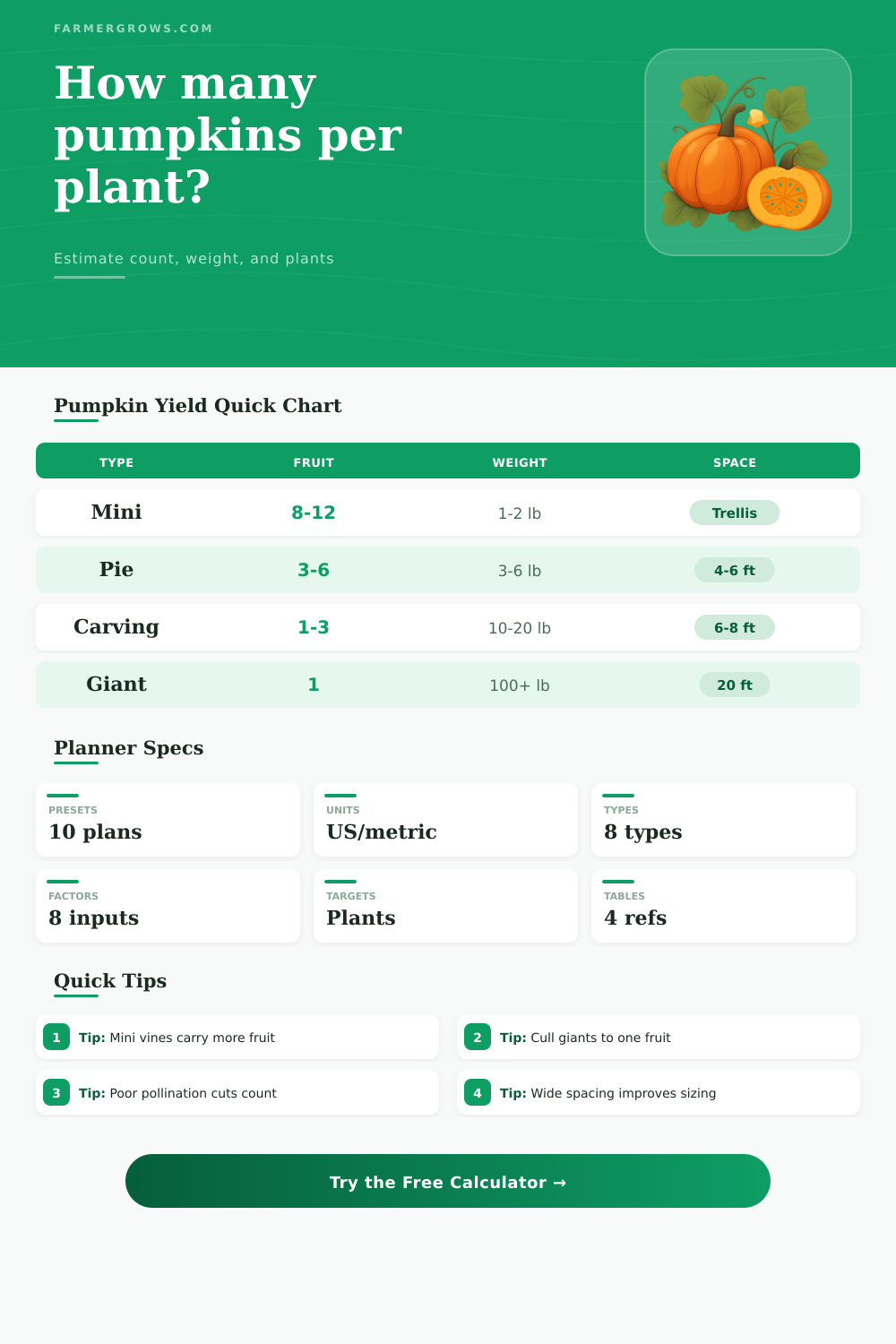
Small-fruited vines often carry 8 to 12 fruit when pollination and picking access are good.
Sugar and pie types usually sit around 3 to 6 fruit per healthy plant in garden spacing.
Large jack-o-lantern vines commonly finish 1 to 3 pumpkins because fruit size uses more plant energy.
Competitive giant plants are normally thinned to one selected fruit with very wide vine training.
Pumpkin yield snapshot
Enter your pumpkin crop details and calculate the expected harvest.
| Pumpkin type | Typical pumpkins per plant | Common fruit weight | Planning note |
|---|---|---|---|
| Mini or ornamental | 8 to 12 fruit | 0.5 to 2 lb each | Highest fruit count; trellis only with strong support. |
| Small pie pumpkin | 4 to 8 fruit | 2 to 4 lb each | Good balance of count and kitchen weight. |
| Pie or sugar pumpkin | 3 to 6 fruit | 3 to 8 lb each | Common home garden estimate when vines are healthy. |
| Bush or semi-bush | 2 to 5 fruit | 4 to 10 lb each | Useful where vine room is limited. |
| Carving pumpkin | 1 to 3 fruit | 10 to 25 lb each | Large fruit reduces count per plant. |
| Giant pumpkin | 1 selected fruit | 100 lb and up | Train vines and remove extra fruit. |
| Growing factor | Low-yield condition | Strong condition | Why it changes yield |
|---|---|---|---|
| Pollination | Few bees, hot mornings | Good bee visits or hand set | Unpollinated female flowers abort early. |
| Spacing | Tangled vines and poor airflow | Room for leaves and harvest aisles | More light and airflow supports fruit fill. |
| Water | Dry swings during sizing | Even moisture in root zone | Pumpkins are heavy water-demanding fruit. |
| Fruit selection | Too many weak fruit kept | Misshapen fruit removed early | Energy shifts to fewer stronger pumpkins. |
| Season length | Cool start or early frost | Warm soil and full maturity window | Fruit need time after set to size and cure. |
| Harvest goal | Mini plants | Pie plants | Carving plants |
|---|---|---|---|
| 25 pumpkins | 3 to 4 plants | 5 to 9 plants | 10 to 20 plants |
| 50 pumpkins | 5 to 8 plants | 9 to 17 plants | 20 to 40 plants |
| 100 pumpkins | 10 to 15 plants | 17 to 34 plants | 40 to 80 plants |
| 300 lb harvest | 30 to 60 plants | 12 to 25 plants | 10 to 20 plants |
| Spacing style | Plant spacing | Row spacing | Best use |
|---|---|---|---|
| Mini trellis | 18 to 24 in | 36 to 48 in | Small fruit with sturdy vertical support. |
| Pie garden row | 36 to 48 in | 48 to 72 in | Sugar pumpkins and short vines. |
| Carving patch | 48 to 72 in | 72 to 96 in | Jack-o-lantern pumpkins and wider aisles. |
| Giant mound | 15 to 25 ft | 15 to 25 ft | One crown with trained secondary vines. |
Count fruit after set. The first flush of flowers can look promising, but pumpkins only count once pollinated fruit begin swelling.
Do not crowd large vines. A tight carving patch may produce leaves, but fewer well-sized pumpkins because light and airflow drop inside the canopy.
Use culling intentionally. Removing late, misshapen, or excess fruit can lower count while improving weight, color, handle strength, and curing.
Start a reserve. Pumpkins dislike cold soil, cutworms, and transplant stress. A small seedling buffer protects the final plant count.
Even though the pumpkin vine might appear to be doing great in late July; all leaves with no fruit; chances are, it’s not. You’ve planted eight seeds. You saw those babies pop up. Now you’re seeing leaf but nothing else. What happened? Will there be any pumpkins at all, for Halloween (or Thanksgiving)? How do you know what to expect?
Counting leaves isn’t the right measurement. The answer depend on how many flowers produced fruit, how much room the vines had to grow, whether you remove extra baby pumpkin, and most importantly, how realistic your estimate is as a gardener. Most of us overestimate. You set yourself up with whatever you start with; what kind of variety you grow.
How Many Pumpkins Will You Get?
Each mini pumpkin doesn’t take much energy to produce, so you can get up to a dozen fruits per vine without problem. It is not the same with giants meant for carving. When a plant is putting all its effort into producing one monster twenty-pounder of a jack-o-lantern, it’s pumping loads of water and sugar into just that one fruit. That thing isn’t going to support multiple large ones simultaneously. Plant five big pumpkins on a vine and those pumpkins will either abort (stop growing) or rot from within.
With the calculator above, select your desired type, and you’ll see how this affects your potential yield.
Limited pumpkin yield may be due to poor pollination. During their brief receptive period, a female flower must get sufficient pollen. Otherwise, it’ll drop off in a few days, aborted. That occurs commonly in cool springs when pollinators aren’t abundant. It also happens in hot weather when bees aren’t as active. You can remedy this by hand-pollinating. But: It takes effort.
It is no wonder your pollination score was low. Don’t fault the soil. Blame the lack of visits by bees. The tool has a specific input for flower set conditions. It makes you face the fact that not all flowers will turn into fruits.
More than most gardeners know, it is also important that you leave space for the vines. Sun helps the vines to mature and the fruits to ripen. Space makes growing easier because crowded plants competes for light and nutrients. This competition results in smaller fruit and a greater risk of fungal diseases such as powdery mildew.
Trellising mini pumpkins saves ground space but requires sturdy support structures that can holds the weight of multiple fruits as they swell, while also providing room for vines to breathe and access sunlight. As fruits begin to fill out and plump up, they’ll become heavy, and the structure will have to bear their weight. Ground-based varieties tend to spread out somewhat, and should be spaced about six to eight feet apart from hill to hill. Plan your plot accordingly by following the table of spacing requirements below.
If you’re serious about your pumpkin-growing (and why wouldn’t you be?), then you’ll need to cull some. That’s right; remove any excess or misshapen fruits early on, to let the plant focus its energy on those that remain. This sounds counterproductive since you want more pumpkins, but hey: A vine with a few good, spaced-out pumpkins will fare better than a vine with six puny fruits.
Consider pest damage. Culling loss? Take those into account with this calculator. What you get isn’t an over-optimistic theoretical max; it’s a realistic guess of what you can actualy expect to use from your harvest.
In the sizing stage, proper watering is most important. Because pumpkins are primarily water, an erratic watering schedule results in hollow hearts or uneven growth. Properly watered plants will have deep root systems that will carry them through a dry period.
Timing of fertility changes with age. Too much early nitrogen promotes foliage at the expense of fruit set. Once blossoms form and fruit begins to grow, phosphorus and potassium become more important. If your plant gets too much nitrogen at this point, it may burn itself out and never fully develop every pumpkin. Getting the balance right makes sure there are enough resources to plump up each pumpkin.
When planning your seed starts, include some wiggle room for the fact that certain seeds won’t even sprout, and that not all seedlings will survive to be transplanted. When you do start them, starting extra helps ensure enough plants in the end. It’s better to start too many than to run out of time or space midseason and have less-than-the-planned crop of what you want to grow. You can plan how many to start by taking into account expected losses, and then your desired yield, as part of the calculation.
There’s as much management involved in growing pumpkin as there is management in growing anything. If the genetics and your soil are telling you that this vine should only have three good-size pumpkins, you’re not going to get 10 giants out of it no matter what. You must adjust your expectations based on what they need and how well you care for them, like spacing and feeding them… To match their naturaly biology.
It’s not so much about having more, but having better fruit. On frosty mornings when the first frost threatens, you’ll be standing in the garden with a harvest of healthy, well-sized pumpkins. And it won’t be too many to manage. You’ll see the sense in getting started with reasonable expectations. The plan holds up; the panic goes away.