Pumpkin Seed Germination Time Calculator
Estimate when pumpkin seeds should crack, emerge, and become transplant-ready based on seed age, soil temperature, planting depth, moisture, medium, and heat mat use.
This calculator focuses on seed-starting and first emergence, not the full pumpkin crop timeline. It estimates the likely sprout window from practical starting conditions and flags when a tray should be warmed, aired, or checked.
Pumpkin Germination Estimate
The estimate adjusts a normal pumpkin sprouting window for temperature, depth, seed age, medium, heat, and moisture stress.
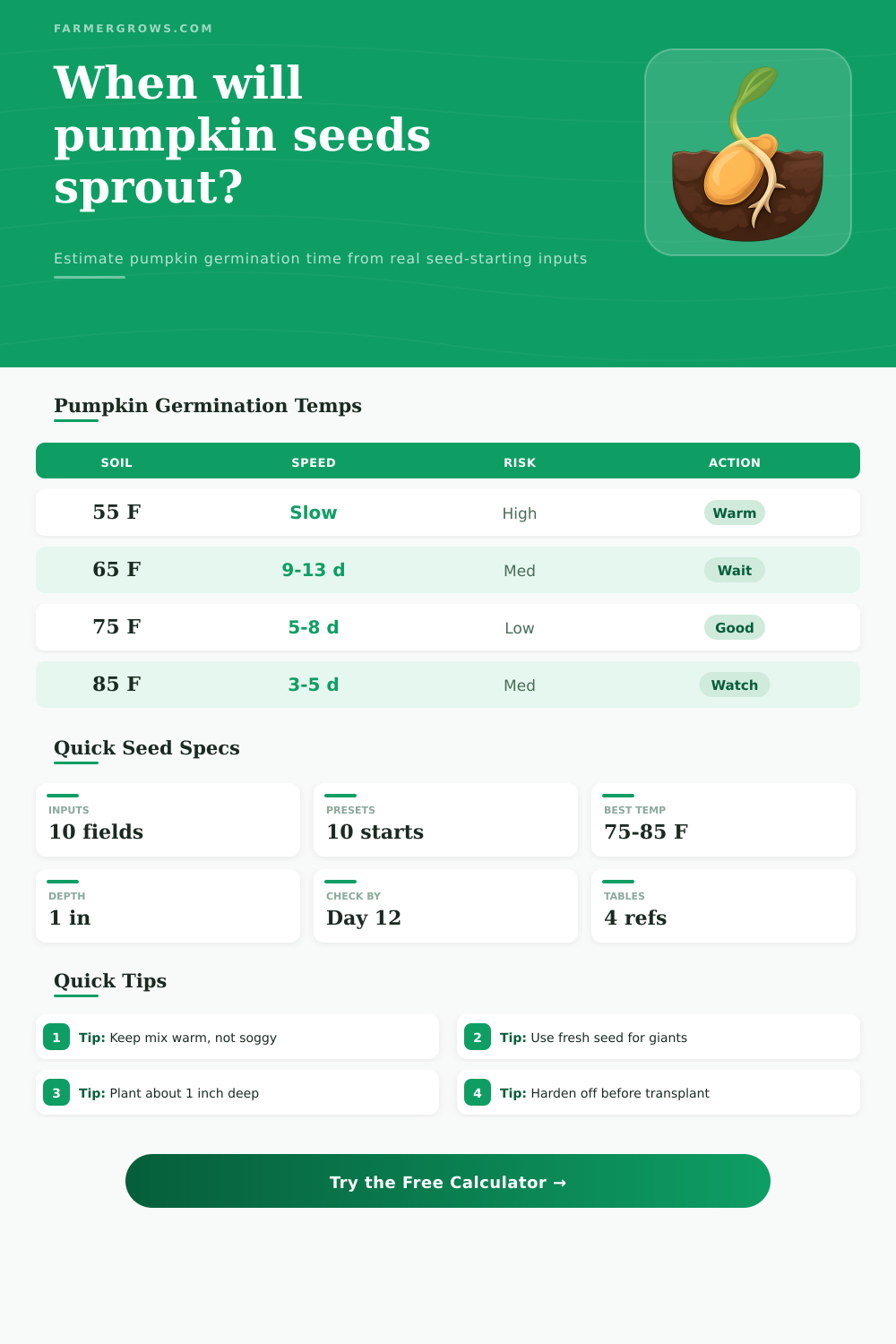
| Soil temperature | Expected pumpkin sprout speed | Germination risk | Seed-starting action |
|---|---|---|---|
| Below 55°F / 13°C | Very slow or stalled | High rot risk in wet media | Warm the tray or wait for warmer soil |
| 55 to 60°F / 13 to 16°C | 14 to 24 days | High delay risk | Use bottom heat and avoid overwatering |
| 61 to 68°F / 16 to 20°C | 9 to 15 days | Moderate | Expect uneven emergence |
| 69 to 78°F / 21 to 26°C | 5 to 10 days | Low | Good indoor starting range |
| 79 to 86°F / 26 to 30°C | 3 to 6 days | Low to moderate | Check moisture daily and vent covers |
| Above 90°F / 32°C | Erratic despite speed | Heat stress risk | Lower mat temperature or move tray |
| Pumpkin type | Relative germination pace | Seed note | Timing caution |
|---|---|---|---|
| Mini and decorative pumpkins | Often slightly fast | Small seed warms quickly | Can outgrow tiny cells fast |
| Pie or sugar pumpkins | Standard to steady | Reliable when seed is fresh | Good for 3 to 4 week starts |
| Carving pumpkins | Standard | Large seed prefers even moisture | Cold trays make emergence patchy |
| Bush pumpkins | Standard to slightly fast | Useful for compact gardens | Still needs warm roots |
| Giant pumpkins | Often slower and fussier | Use fresh, fully mature seed | Avoid deep, cold, wet starts |
| Hulless or pepita types | Slightly slower | Seed coat can be sensitive | Gentle moisture control matters |
| Planting depth | When it works | Common effect on time | Field correction |
|---|---|---|---|
| 0.25 to 0.5 in | Pre-sprouted seed or fine mix | Can dry out before cracking | Cover lightly and monitor surface moisture |
| 0.75 to 1.25 in | Most indoor pumpkin starts | Best balance of moisture and oxygen | Use this as the normal target |
| 1.5 in | Coarse mix or direct-sown warm soil | Adds a small delay | Use only when soil stays evenly moist |
| 2 in or deeper | Rarely needed indoors | Can slow or weaken emergence | Re-sow shallower if conditions are cool |
| Seedling age after emergence | Root stage | Transplant readiness | Best action |
|---|---|---|---|
| 0 to 5 days | Cotyledons opening | Too young for most moves | Bright light, steady moisture, no fertilizer push |
| 6 to 10 days | First true leaf starting | Start hardening if weather is close | Brush with airflow and reduce excess heat |
| 10 to 18 days | One to three true leaves | Common transplant window | Move after frost risk and warm soil |
| 19 to 25 days | Roots filling cell | Watch for binding | Transplant or pot up before stress |
| Over 25 days | Vine wanting to run | Late for small cells | Handle gently and avoid root tearing |
For faster, cleaner emergence: Warm the mix before sowing, then keep it evenly moist. Pumpkins dislike the cold-and-wet combination more than almost any other common garden seed-starting mistake.
For transplant timing: Plan to move seedlings soon after true leaves appear. A sturdy young pumpkin usually recovers better than an older vine tangled in a small cell.
Fall plans hinge based off pumpkin seeds that must first sprout. Until you see a hint of their first green hook, it’s all too easy to second-guess the timing. There isn’t much wiggle room between the date you sow and when they sprouts. A little shift in conditions (seed quality; soil moisture; temperature) make a big difference here. Get things right and you have on-schedule seedlings; miss and you can lose a week or two.
The biggest factor is soil temperature. The root-zone must be warm, meaning where the pumpkin seed sits. Don’t assume that a cozy feeling up on top with warm air in tray will substitute. In fact, the root-zone need to stay in the middle range for fast emergence. Cooler temperatures slows things down. Temperatures hotter than the upper end of the range make it hit-or-miss whether the seeds will even try.
How to Grow Pumpkin Seeds
Once you key in what temperature you are measuring, the calculator will do the math for you. You won’t have to guess how each degree changes the timeline. The age of the seed is actualy just as important. Younger seeds contain more stored energy. It respond quickly to good conditions. Older seed is okay. It still functions, but requires a steady supply of moisture. To compensate for aging seed, warmer soil also help.
One other factor you can change is depth. Planting too deeply causes the sprout to run out of steam; planting too shallowly leaves them exposed to drying out on top. Those are all things that tool takes into account. They are not generic average numbers. That’s why the estimate accounts for what happens in the tray.
What about other variables? For instance, what happens when you combine your choices of media and moisture? Even moisture keeps oxygen available while the seed swells. That’s when the root begins pushing outward. Constant wetness without air movement cause rot. Damping-off is prevented by using a sterile mix. Once it’s up, heavier garden soil help stabilize temperature. At night, heat mats helps maintain stability in the root zone. Each of these variables influence the real-world outcome.
General patterns emerge in the reference tables. Before you run the numbers, you can see where your conditions fall. Why might one tray, though initially warm enough when started, end up lagging behind another that was cooler but also drier? How does container size affects the transplant window? Transplants work best when roots do not circle and are still exploring. Pumpkins travel best then.
So how is the estimate valuable? What you do with it matters. If you’re at or beyond that window and no seeds have yet sprouted, go look at one lightly. A wait of another week wouldn’t of help as much. If the math suggests a later-than-ideal time to set out plants, try a heat mat. Alternatively, you can accept using larger cells for more room or move your outdoor planting date earlier. Those are the choices the tool reveals; they take the guesswork, habit and memory, out of the equation.
Once you have run the numbers to set your expectations and watched how many emerge from the tray, you get good at reading the results. If there are some seeds that haven’t emerged yet, it’s likely either a moisture problem or a temperature problem. Adjust just one variable at a time. It doesn’t work as well if you make more than one change at once. By watching, measuring, and adjusting, you can turn one success into predictable timing. This becomes your skill, built year by year.