Potting Mix Calculator
Estimate container mix volume from pot count, diameter, depth, top gap, crop type, recipe percentages, settling allowance, and bag sizes for compost, coir, and perlite.
Load a container scenario, then adjust the pot size, crop type, top watering gap, mix percentages, settling, and bag sizes for your actual supplies.
Potting Mix Results
Your container mix estimate will appear here.
Low compost, high coir, and moderate perlite support even moisture in small cells.
Compost near one quarter to one third with coir and perlite gives nutrition and drainage.
Extra aeration keeps rosemary, thyme, lavender, and citrus roots from staying wet.
Use less compost and more perlite, pumice, or coarse mineral material for quick drying.
| Inside diameter | Fill depth | Approx volume | Best use |
|---|---|---|---|
| 6 in | 5 in | 0.08 cu ft | Small herbs, starts |
| 10 in | 9 in | 0.41 cu ft | Herbs, flowers |
| 12 in | 10 in | 0.65 cu ft | Peppers, greens |
| 16 in | 14 in | 1.63 cu ft | Tomatoes, berries |
| 20 in | 17 in | 3.09 cu ft | Dwarf shrubs |
| Crop type | Compost | Coir or peat | Perlite / aeration |
|---|---|---|---|
| Seedlings and starts | 10% | 65% | 25% |
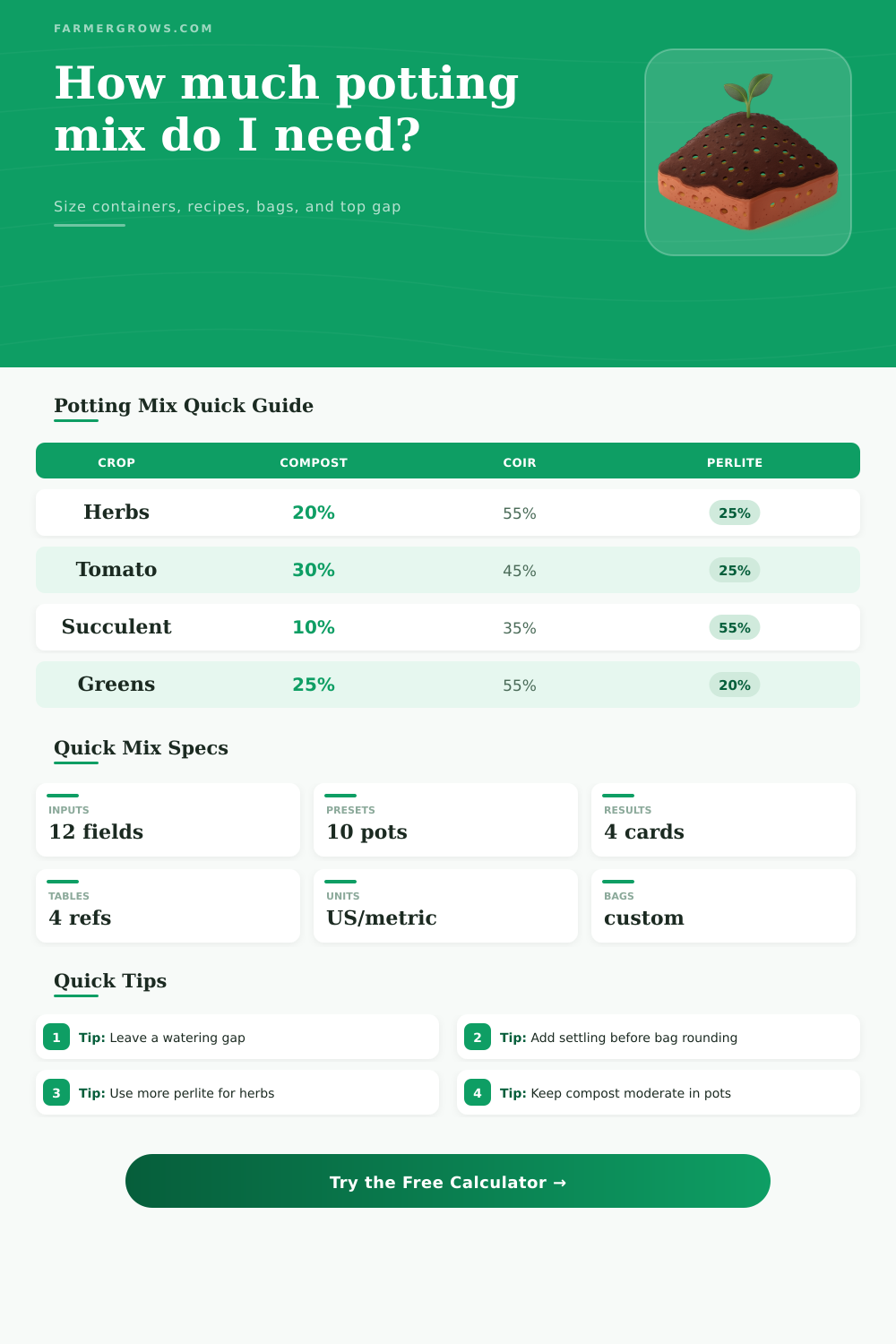
| Tomatoes and peppers | 30% | 45% | 25% |
| Leafy greens | 25% | 55% | 20% |
| Mediterranean herbs | 20% | 50% | 30% |
| Succulents and cactus | 10% | 35% | 55% |
| Bag size | Volume | Approx gallons | 12 in pots filled |
|---|---|---|---|
| 8 dry qt bag | 0.27 cu ft | 2.0 gal | 0.4 pots |
| 16 dry qt bag | 0.54 cu ft | 4.0 gal | 0.8 pots |
| 1 cu ft bag | 1.00 cu ft | 7.5 gal | 1.5 pots |
| 2 cu ft bag | 2.00 cu ft | 15.0 gal | 3.1 pots |
| 3 cu ft bale | 3.00 cu ft | 22.4 gal | 4.6 pots |
| Planning item | Typical range | Calculator input | Why it matters |
|---|---|---|---|
| Top watering gap | 0.5 to 2 in | Top gap | Prevents runoff and wasted mix |
| Settling allowance | 8% to 15% | Settling | Offsets compression after watering |
| Compost in pots | 10% to 35% | Compost % | Avoids dense, soggy container media |
| Aeration share | 20% to 55% | Perlite % | Controls drainage and root oxygen |
| Batch rounding | Whole bags | Bag sizes | Shows what to gather before mixing |
Measure inside the pot: A decorative rim or tapered wall can change volume noticeably, so use the inside diameter and the actual fill depth.
Mix before watering: Blend dry compost, coir, perlite, and bark first, then hydrate gradually so the batch settles evenly without compacting.
To determine the correct amount of potting mix for each container, it is necesary to consider how the amount of potting mix will affect the growth of the plant. Using too little potting mix will mean that the roots of the plants wont have enough room to grow. Using too much potting mix, however, mean that you will waste the potting mix and your containers will become soggy in place.
To calculate the amount of potting mix that are needed for each container, you must consider the shape of the container, the amount of space to leave at the top of the container, and how much the potting mix will settle after you add water to it. The shape of the container can affect the amount of potting mix needed. Round containers often have different amounts of the soil than square containers of the same width.
How to Work Out How Much Potting Mix You Need
The depth of the container is also a factor in the amount of potting mix to be used. It is necesary to leave an gap at the top of the container to allow for irrigation and mulch to be added. Therefore, the amount of potting mix needed will be less than the total volume of the container.
The recipe for the potting mix will change based on the type of plant to be grown. For instance, vegetable plants may require more compost than Mediterranean herbs or succulents, as the vegetables requires nutrients. However, Mediterranean herbs and succulents will require more aeration in the soil for there roots.
Additionally, seedlings may require a different type of potting mix from those other plants. Seedlings require a finer and lightly soil mix that can absorbs the moisture evenly. Each ingredient to the potting mix will have a ratio to each other ingredient, and you must measure each ingredient according to that ratio to ensure the quality of the potting mix.
Another factor to consider is the settling of the soil. When you give the potting mix to the plants, it will settle with the addition of water. If you do not account for settling, you may provide too little potting mix for each container.
Additionally, the starting condition for the ingredients for the potting mix will also affect the amount of potting mix. For example, dry coir will expand when water is added, but moist compost will take up a more large amount of space as is. Therefore, you must account for the starting condition of the ingredients when you calculate the amount of potting mix that will be needed.
The bag size for the ingredients will also have an impact on your calculations. You will not always be able to purchase the amount of potting mix that you calculate. You will need to calculate how many bags to purchase, and this will impact how much you will have to store additionaly.
The calculator will make the calculations for you if you enter the dimensions of the container, the type of crop to be grown, the percentage of each ingredient in the recipe, the settling of the soil, and the bag size. The calculator will provide you with the total amount of potting mix that will be required, the amount of potting mix for each container, the volume of the gap that will be left at the top of the container, and the number of bag that will be needed to purchase the ingredients. This will create a list of the ingredients that you can use to shop for the potting mix.
People often make mistakes when calculating the amount of potting mix needed. For instance, some people treat all containers the same, regardless of there dimension. In addition, people often do not account for the gap at the top of the container.
Many use the same recipe for all of their pots and containers, but using the same recipe for all of your plants may cause problem for the plants. In creating reference tables for the type of crops, the tables show the ratios of the ingredients, as are the bag sizes for each ingredient. To determine the amount of potting mix for the containers, you can measure the dimensions of the containers, determine the recipe for the seedling or plants to be grown, and add a buffer for the settling of the soil.
Following these step will ensure that the amount of potting mix that you prepare for your containers will contain the proper amount of ingredient to grow your plants, and that you will have a shopping list that will contain the items that are available at the store.