
If your citrus trees are blooming but fruit isn’t forming, don’t be disappointed, it’s typically not a mystery, it’s usually a matter of mechanics. Specifically: Is the tree in need of a partner? If so, that’s the issue. Knowing what’s what will help you do your job in yard well.
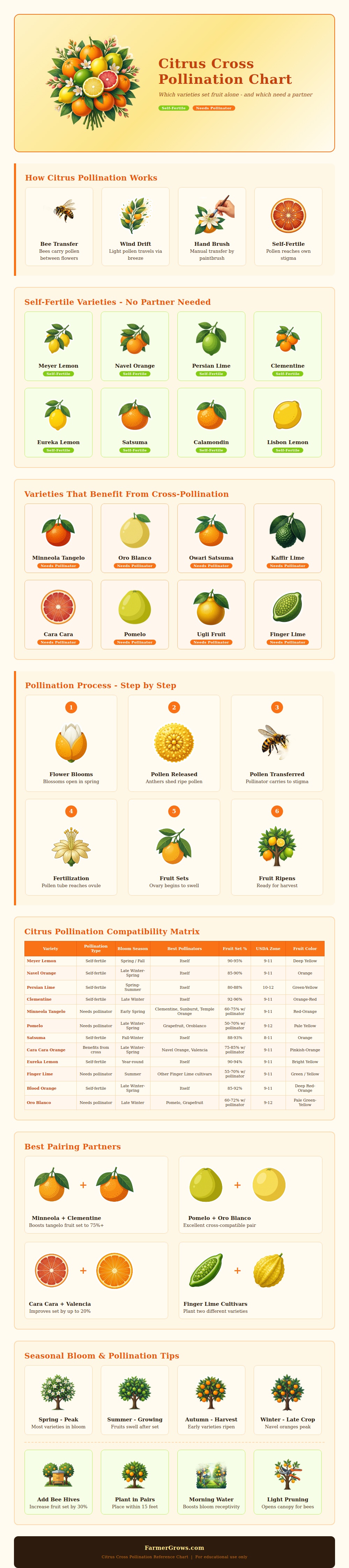
A lot of gardeners think that all citrus needs a neighbor to pollenize. This explains why people squeeze their yards so tight and make such poor use of available spaces. The chart up top divide the self-fertile types from the ones that will appreciate some cross-pollination. These include Meyer lemon, Persian lime, and navel oranges.
Why Your Citrus Tree Is Not Making Fruit
Self-fertility means they won’t require any pollen from another tree in order to bear fruit, just conditions favorable to doing so. Under the right conditions, a single tree can absorbs a large crop. No need to plant a second one on the assumption it will help it reproduce. Good news for anyone with smallish space in yard.
Some species definitely fare better with friendly companions. Pomelos, the Minneola tangelo and finger lime is examples where neighboring trees help them set fruit more better. But even these don’t fall over and die in solitude; they simply produces less consistently and less abundantly if left alone.
The compatibility matrix points out likely productive matches. Plant an Oro Blanco with another kind of Pomelo, for instance, or a Minneola alongside a Clementine. These recommendations is based off both genetic compatibility and overlap in their bloom period. One flower drops its pollen and the next one is waiting to catch it. It’s like pairing up dates. And makes choosing your plants more about matching schedules different than just liking the look of each.
The way all this works is that bees do it, specifically transferring pollen from one flower to another as they go about gathering nectar during their daily forage. Insects are far more reliable than wind, even though breeze can carry very lightweight pollen grains to waiting stigmas. Once fertilized (and the visual guide demonstrates how that happens), the ovary swells out to become fruit. If fertilization doesn’t happen, the flower just drops.
And here’s where canopy health comes into play: A closed-in inner structure, which is what you have with an overgrown shrub or tree, prevents light penetration and befuddles pollinators, who prefer bright, open flowers. Light pruning in late winter will open things up. That way bees can get farther back into the tree and do their thing.
There is timing involved, which does make a real difference, and also helps us support nature’s own cycle. Getting water on early, for instance, helps keep the flower’s stigma soft and ready to accept pollen. Some species is most receptive first thing in the morning. Increasing the number of pollinater around with a hive (or several) of bees, or providing a garden with more natives nearby, can similarly affect the fruit set rate, by a measurable percentage.
Some varieties bloom late winter, the infographic says; others peak in high summer. That means knowing the timing of things, and it all starts with recognizing the seasons. Know what’s self-fertile and what requires a partner. Make smart choices about who gets married; and therefore affects their ability to reproduce. It all boils down to getting some serious fruit from those flowers. You should of known that.
A bee buzzes onto a flower of a self-fruitful variety like the Meyer lemon? You’ve got this thing made: It’ll set fruit on its own. But a bee lands on a pomelo flower, bringing pollen from a nearby tree that will enhance its results. The haul is your reward; for the connections you fostered in the ground and up above.
It would of been better if you had more trees.