Bell Pepper Growth Time Calculator
Estimate pepper germination, transplant timing, first green harvest, ripe color date, frost buffer, bed spacing, plant count, and likely harvest range from real bell pepper growing conditions.
Bell peppers are slow warm-season crops. This planner starts with variety days, then adjusts the timeline for seed or transplant method, soil warmth, growing degree days, spacing pressure, watering, and your frost window.
Bell Pepper Growth Results
Your pepper timeline will appear here after calculation.
| Variety | Typical edible stage | Days to green from transplant | Extra color days | Best use |
|---|---|---|---|---|
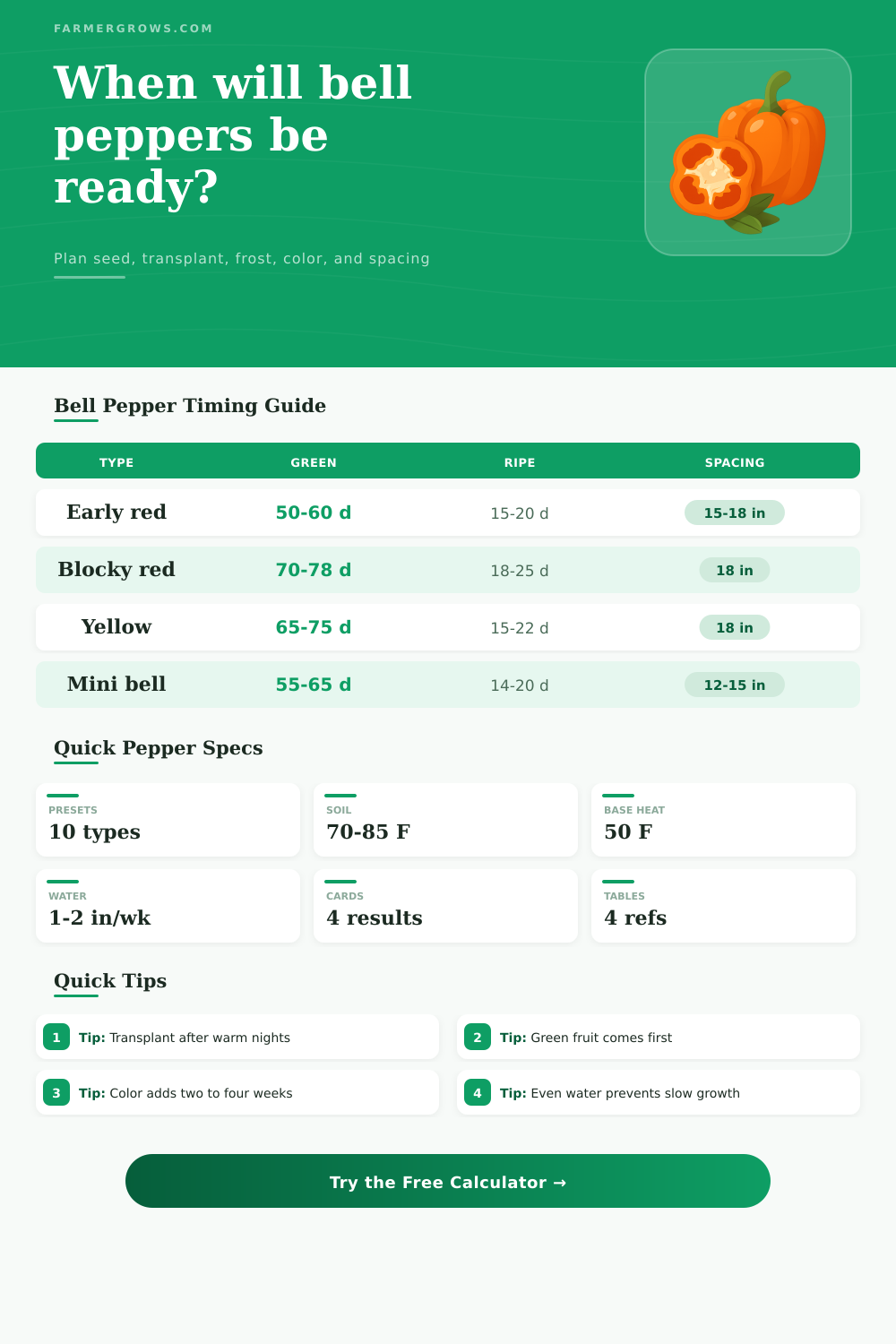
| California Wonder | Green to red | 70 to 75 | 18 to 25 | Classic garden bell, sturdy walls |
| Ace | Green to red | 50 to 55 | 15 to 20 | Short seasons and earlier red fruit |
| King Arthur | Green to red | 60 to 65 | 18 to 24 | Large blocky fresh-market peppers |
| Yolo Wonder | Green to red | 72 to 78 | 20 to 28 | Main-season rows with good support |
| Early Sunsation | Green to yellow | 68 to 72 | 15 to 22 | Yellow ripe bells in warm beds |
| Orange Blaze | Green to orange | 62 to 68 | 14 to 20 | Compact plants and faster orange color |
| Purple Beauty | Purple to red | 68 to 72 | 12 to 18 | Specialty color at the early edible stage |
| Red Knight | Green to red | 65 to 70 | 18 to 24 | Large fruit with steady irrigation |
| Lunchbox Mini | Green to mixed color | 52 to 60 | 14 to 20 | Mini sweet peppers, containers, snacks |
| Sweet Chocolate | Green to chocolate red | 58 to 65 | 15 to 22 | Specialty gardens and moderate summers |
| Soil or media temperature | Expected germination | Growth effect | Calculator adjustment | Practical note |
|---|---|---|---|---|
| Below 60°F / 16°C | Slow or uneven | Seedlings may stall | Adds a large delay | Use heat mats or wait for warmer soil. |
| 60 to 64°F / 16 to 18°C | 14 to 21 days | Slow root growth | Adds 10 days | Transplants often sit without much top growth. |
| 65 to 69°F / 18 to 21°C | 10 to 16 days | Acceptable but not fast | Adds 5 days | Use row cover if nights remain cool. |
| 70 to 74°F / 21 to 23°C | 8 to 12 days | Good establishment | No delay | Good minimum range for spring transplanting. |
| 75 to 85°F / 24 to 29°C | 6 to 9 days | Best early pace | No delay | Best seed-starting range for peppers. |
| 86 to 90°F / 30 to 32°C | 7 to 10 days | Fast but watch drying | Adds 2 days | Keep trays evenly moist, not waterlogged. |
| Above 90°F / 32°C | Uneven if too hot | Heat stress possible | Adds 6 days | Shade containers and avoid hot black pots. |
| Planting style | In-row spacing | Row spacing | Plants per 10 ft row | Timing effect |
|---|---|---|---|---|
| Compact mini bells | 12 to 15 in | 24 to 30 in | 8 to 10 | Fine for small-fruited plants with steady feeding. |
| Standard garden bells | 15 to 18 in | 24 to 36 in | 6 to 8 | Balanced spacing for most backyard rows. |
| Large blocky bells | 18 to 24 in | 30 to 36 in | 5 to 6 | Better air flow and less delay from crowding. |
| Containers | 1 plant per 5 gal | Pot spacing varies | Separate pots | Water stress can add days during fruit fill. |
| High tunnel double row | 14 to 18 in | 18 to 24 in paired | 6 to 8 | Earlier warmth can offset tighter spacing. |
| Harvest goal | What the date means | Typical added days | Quality tradeoff | Best timing cue |
|---|---|---|---|---|
| Green bell | Full-size fruit before ripe color | 0 days after green date | More fruit count, less sweetness | Firm walls and mature size |
| Red ripe bell | Green fruit turns fully red | 18 to 28 days | Sweeter fruit, fewer total picks | Full red color with glossy skin |
| Yellow ripe bell | Green fruit turns golden yellow | 15 to 24 days | Sweeter and milder than green | No green shoulders remaining |
| Orange ripe bell | Green fruit turns orange | 14 to 22 days | Good color but needs warm nights | Uniform orange color |
| Purple edible stage | Purple fruit harvested before red | 0 to 10 days | Specialty color, not always fully sweet | Deep purple and full size |
| Late-season salvage | Pick mature green before frost | Before frost date | Indoor ripening is uneven | Firm fruit with slight color break |
Warmth tip: For outdoor transplants, frost-free dates are only half the test. Bell peppers also need warm soil and nights, so a protected bed or black mulch can move the first harvest earlier than calendar planting alone.
Color tip: A green bell is usually the first harvest date. Red, yellow, orange, chocolate, or fully ripe color fruit can add two to four more weeks and should be checked against the first fall frost date.
The right time to plant bell peppers can be tricky because they reward patience more than almost any other summer vegetable, as too-early planting results in stunted transplants in cool soil, while too-late planting risks that you’ll exhaust your supply of warm days before the fruits finally color up. But it’s not really a matter of what day or even which month you set those plants into the ground.
Instead: How do all the other factors move the calendar ahead, or pull it back? Those factor is things like your frost date, how far apart you space them, how consistently you water, and how warm your soil temperature are.
Why Peppers Need More Than Just a Date to Grow Well
After you plug in your local frost dates, your planting plan, and your chosen variety, the calculator does the rest (above). Because green time isn’t ripe-color time; it distinguish between those two points. In fact most bell peppers will be full-sized but still green, and many gardener pick at that point to maximize overall yield. To get sweeter fruit with all its colors fully developed, though, the tool typically add the extra weeks needed for color to develop. When first frost could of be just a month off, that’s significant.
It’s not just about faster germination: Below about 60 degrees, peppers won’t grow very vigorously at all. The calendar might say it is springtime, but peppers just aren’t having any of that. To make up for that fact, the calculator delay everything if you read a lowish number on your soil thermometer, say, in the low sixties.
The same goes with the water piece of the equation: If you’re not watering an inch each week, inconsistent moisture will stress the plants, slowing their growth (and therefore the size) of fruit. That’s why the tool increases the timeline if you don’t get a full inch each week. It’s not made up; it’s based off how peppers react in less-than-ideal circumstances.
The other kind of pressure (quieter), but no less real (is created by spacing). Close planting means competitive conditions: Plants must fight for air circulation and light, delaying color development (sometimes well beyond what’s promised on the seed packet). You can plug your in-row and between-row distances into the calculator, and it will tell you how many plants you’ll get and flag if your spacing are so close as to invite competition.
Garden style counts, too. Keeping soil warmer at night with heavy mulching or a high tunnel shave a few days off the season. Pots may add some time because they is more prone to drying out.
The calculator will display one of its most valuable features, how many days remain until first frost after your anticipated harvest date. That number tell you whether you have room to wait for color or whether you should pick green fruit and ripen it indoors (the “days remaining” figure is also your reminder: How soon do you want to eat what you planted?).
After inputting the number of rows and their length, the calculator provide a range of likely yields. In other words, with that information about your space, you can determine how much of each crop you can realisticly fit. Therefore, you can figure out how many plants is really necessary for you and yours.
That’s the larger point: There isn’t one number on the back of the seed packet when it comes to bell pepper timing. There are many related factors that overlap. You have to consider the weather, but also things you can control, like whether you’re growing in the open or inside a tunnel. It makes for less guessing and more planning once you get the hang of what you can control.