Potato Plants Per Acre Calculator
Estimate potato plant population from row spacing and seed-piece spacing, then calculate row feet, seed pieces, seed weight, cut-seed bags, stand loss, and a practical yield range.
Use net planted acres and center-to-center row or bed spacing. The calculator keeps seed-piece size, emergence, field skips, order buffer, and expected tuber size separate so the plant population plan stays easy to audit.
Potato Plant Population Results
Results show planned stand, expected live stand, row feet, seed pieces, seed weight, bag count, and a simple yield range from the assumptions entered above.
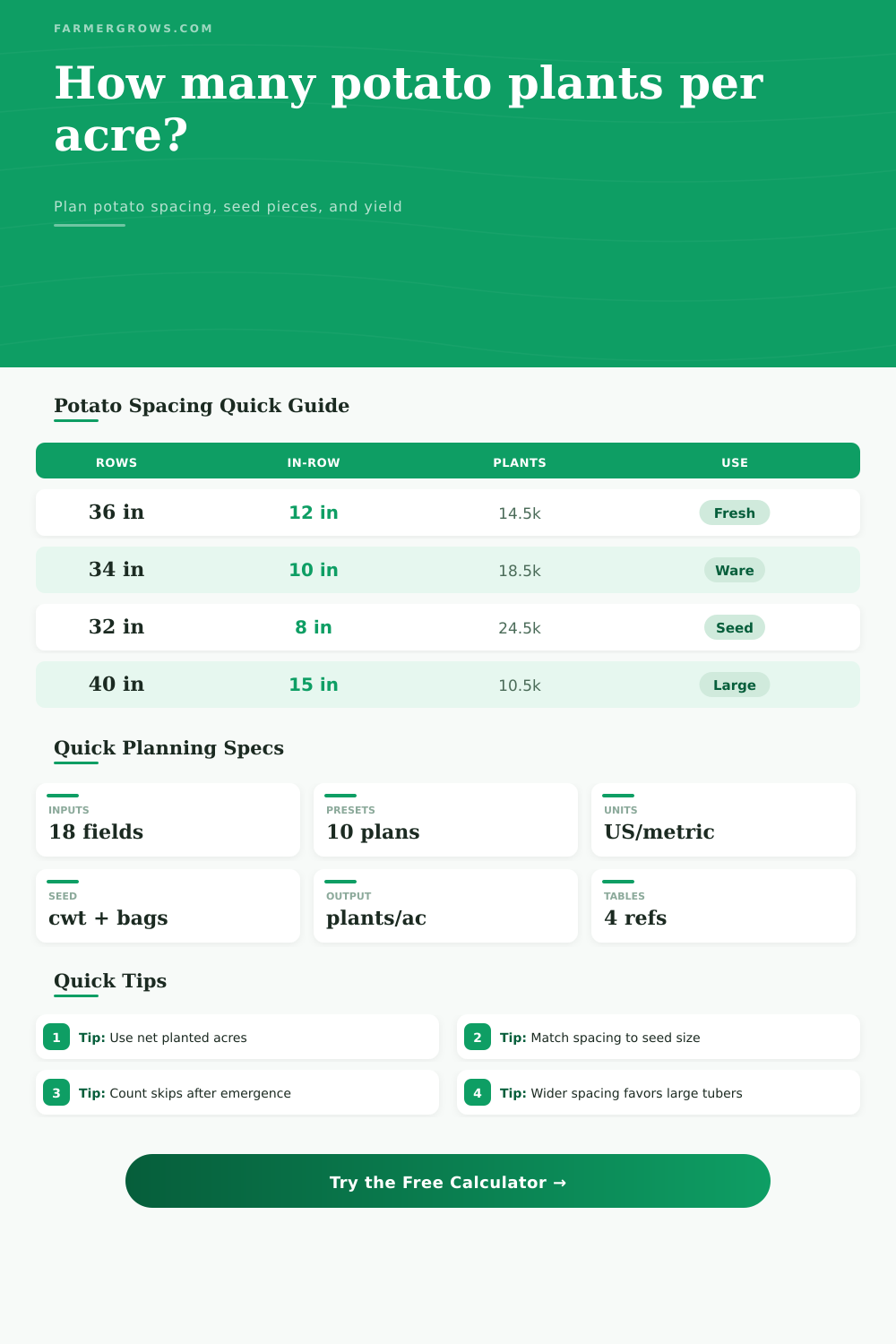
| Row spacing | In-row spacing | Plants per acre | Common fit |
|---|---|---|---|
| 36 in rows | 12 in | 14,520 | Balanced fresh-market spacing |
| 34 in rows | 10 in | 18,448 | Ware potato or processing stand |
| 32 in rows | 8 in | 24,510 | Seed crop or small-tuber target |
| 40 in rows | 15 in | 10,454 | Large tuber or low-density plan |
| 30 in rows | 9 in | 23,232 | Close-row fresh market system |
| Plant population | 1.5 oz pieces | 2.0 oz pieces | 2.5 oz pieces |
|---|---|---|---|
| 12,000 plants/ac | 11.3 cwt/ac | 15.0 cwt/ac | 18.8 cwt/ac |
| 15,000 plants/ac | 14.1 cwt/ac | 18.8 cwt/ac | 23.4 cwt/ac |
| 18,000 plants/ac | 16.9 cwt/ac | 22.5 cwt/ac | 28.1 cwt/ac |
| 22,000 plants/ac | 20.6 cwt/ac | 27.5 cwt/ac | 34.4 cwt/ac |
| 26,000 plants/ac | 24.4 cwt/ac | 32.5 cwt/ac | 40.6 cwt/ac |
| Planting example | Spacing setup | Population target | Planning note |
|---|---|---|---|
| Fresh market acre | 36 in x 12 in | 14,520 plants/ac | Good starting point for many table potato blocks. |
| Processing russet | 34 in x 10 in | 18,448 plants/ac | Higher count for uniform set and canopy closure. |
| Seed potato block | 32 in x 8 in | 24,510 plants/ac | Close spacing favors more small seed-size tubers. |
| Fingerling crop | 30 in x 8 in | 26,136 plants/ac | Dense stand supports smaller elongated tubers. |
| Large baker target | 40 in x 15 in | 10,454 plants/ac | Wide spacing can improve size when the season allows. |
| Measure | US value | Metric value | Calculator use |
|---|---|---|---|
| One acre | 43,560 sq ft | 0.4047 ha | Field area conversion |
| One hectare | 2.471 acres | 10,000 m² | Metric block planning |
| One hundredweight | 100 lb | 45.36 kg | Seed and yield weight |
| One ton per hectare | 8.92 cwt/ac | 1 t/ha | Yield conversion |
| One inch spacing | 2.54 cm | 25.4 mm | Row and seed spacing |
Check row feet separately: Population changes quickly when bed centers, headlands, or planter skips reduce usable row length. Use actual planted row feet for the cleanest after-planting audit.
Keep seed assumptions visible: A small change from 1.8 ounce to 2.4 ounce seed pieces can add several hundred pounds of seed per acre at the same plant population.
Early in the growing season, reality sets in, the space in the field doesn’t match what was marked out on paper. Seed is purchased; the planter are set up; but now it’s time to see if spacing will meet the yield target. A starting point for most growers is simply an estimate of plant per-acre count, but little thought are given to the impact this decision has on others.
Once you enter your seed piece size and row width into calculator above, it does the math for you, saving you guesswork on conversions so you can spend more time strategizing.
How to Plan Your Potato Spacing
There’s only one tradeoff; always: Size or density? Do you want many smallish tubers with most of your plants close together (more tubers but fewer per plant)? Or do you want big baking spuds by spacing the plants so they has room to grow (fewer tubers but each plant gets bigger)? Widening spacing leaves gaps for weeds to exploit and favors larger potatoes, while packing the field tight result in more small ones.
That is, people tend to think of how many plants per acre as something fixed, like a target to aim at, not something they can use to control crop to help it yield whatever size distribution they want.
And then there’s those seed pieces themselves, you aren’t just getting half as many seeds if you buy a bag containing 2-ounce seeds vs. It is a bag of 4-ounce ones. It’s another type of economic input entirely, and they has different emergence characteristics: the small pieces are cheaper per-unit, but they’re more likely to dry out or fail to properly suberize by time of planting. And the tool take into account a buffer for this stand loss, recognizing that not everything you stick in the ground is going to grow a healthy plant.
Maybe you want to shoot for ninety five percent emergence on a balmy Tuesday afternoon… and then along comes a planter adjustment (or a cold snap) and poof! That goes down fast. Getting a ten percent buffer added onto your seed order isn’t paranoia, it’s insurance against the messy business of doing things in fields.
Then there’s the matter of row spacing. Most people does what’s convenient and use 36 inches. This spacing works with their equipment and provides enough canopy closure without letting rows compete too much. If, however, you’re counting plants (like seed potatoes, or those fingerlings) then go down to 30 inches or even less. As the chart below illustrates, this little change in inches will equal thousands of added plant.
Tiny detail, big difference. A one-inch adjustment up or down on row spacing can mean difference of a thousand plants or more an acre. This affects things like when you’ll harvest, how much fertilizer you’ll need, and how many you’ll sell at each grade level.
Don’t overlook field edges. Turns, headlands and wet corners may require work and eat seed, but don’t contribute to harvest yields. Reduce your percentage by a couple of points to reflect what you’ll actualy get to market… Not simply what you’ve planted.
When you plan your seeding using gross acreage but then determine your yield using net yield, your profit margins will appear healthier on paper different than in your bank account. You should of planned better.
The idea isn’t simply to cover the ground; it’s to cover it with enough biological competition that nobody’s starving anybody else or wasting water, while still having enough plants to beat back weeds. As those tubers begin to swell come late summer, you’ll be glad for that advance planning.
Once the vines close in, the whole field becomes a green blanket that covers the soil and concentrates everything into the prize below. At that point, you know the spacing was right.