Potato Plant Spacing Calculator
Plan potato rows, seed-piece counts, bed area, planting density, and seed weight for raised beds, garden plots, field rows, bags, and containers.
Use this as a planting layout tool before cutting seed potatoes. It estimates plant stations from usable bed dimensions, row spacing, in-row spacing, headland room, and a seed reserve for gaps or cull pieces.
Potato Row Plan
Use the row count, plant count, and seed estimate to lay out the bed before cutting and chitting seed potatoes.
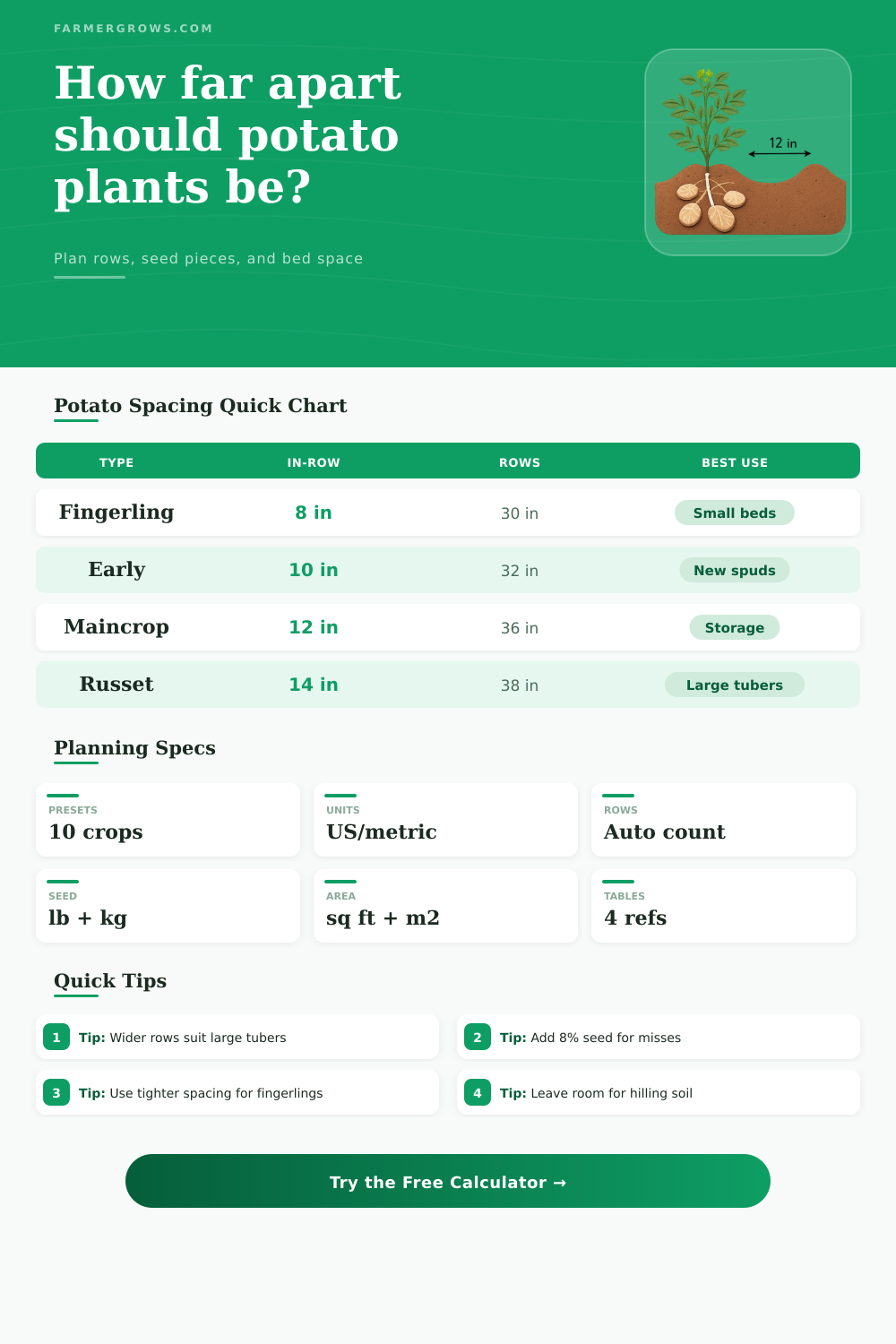
| Potato type | Plant spacing | Row spacing | Planting goal | Field note |
|---|---|---|---|---|
| Fingerling | 8 to 10 in | 28 to 32 in | Many small tubers | Tighter spacing helps size stay modest and uniform |
| Early or new | 10 to 12 in | 30 to 34 in | Quick young harvest | Works well in raised beds or short-season gardens |
| Maincrop | 12 in | 34 to 36 in | Balanced yield | A dependable starting point for most home plots |
| Russet or baker | 14 to 16 in | 36 to 40 in | Larger tubers | Extra room reduces crowding inside the hill |
| Seed increase | 8 to 12 in | 30 to 36 in | More seed-size tubers | Choose spacing by target seed tuber size |
| Row length | 8 in spacing | 10 in spacing | 12 in spacing | 14 in spacing |
|---|---|---|---|---|
| 10 ft row | 15 plants | 12 plants | 10 plants | 8 plants |
| 25 ft row | 37 plants | 30 plants | 25 plants | 21 plants |
| 50 ft row | 75 plants | 60 plants | 50 plants | 42 plants |
| 100 ft row | 150 plants | 120 plants | 100 plants | 85 plants |
| 30 m row | 147 plants | 118 plants | 98 plants | 84 plants |
| Seed piece size | Pieces per pound | Seed for 50 plants | Seed for 100 plants | Metric equivalent |
|---|---|---|---|---|
| 1.25 oz | 12.8 | 3.9 lb | 7.8 lb | 35 g pieces |
| 1.5 oz | 10.7 | 4.7 lb | 9.4 lb | 43 g pieces |
| 1.75 oz | 9.1 | 5.5 lb | 10.9 lb | 50 g pieces |
| 2 oz | 8.0 | 6.3 lb | 12.5 lb | 57 g pieces |
| 2.5 oz | 6.4 | 7.8 lb | 15.6 lb | 71 g pieces |
| Bed or plot | Layout assumption | Plant count | Seed needed | Best fit |
|---|---|---|---|---|
| 4 x 8 ft raised bed | 2 rows, 12 in plants | 16 plants | 2 lb seed | Early potatoes or small maincrop trial |
| 10 x 20 ft garden bed | 3 rows, 12 in plants | 60 plants | 7 lb seed | Home maincrop planting |
| 20 x 50 ft patch | 6 rows, 12 in plants | 300 plants | 34 lb seed | Large family storage crop |
| 30 in grow bag | Cluster spacing | 3 to 5 plants | 1 lb seed | Container potatoes |
| 1,000 sq ft patch | 36 in rows, 12 in plants | 330 plants | 38 lb seed | Market or shared garden plot |
Before cutting seed: Lay out the rows first, then cut seed pieces to match the real station count. A small reserve covers blind pieces, damaged cuts, and row-end adjustments.
Before tightening spacing: Check that you still have enough soil to hill each row. Crowded rows can reduce tuber size and make harvest messier in heavy soil.
Planning your potato garden requires more than just enthusiasm; remember, precise spacing matter. You want big tuber and orderly rows. You also need plenty of room to move about garden without squashing any plants. This means that cramming many plant into one narrow row won’t work. There might simply be no way to hill soil afterward.
It’s too much to visualize in your head, with too many factors at play. Let a calculator do the math, and get on with planning your planting strategy.
Why Spacing Is Important for Potatoes
Spacing: Tubers are greedy thing; they want elbowroom, too. Potatoes don’t grow in straight rows as carrots would. Instead, potato forms stolons (creeping stems) that spread out and eventually form tubers. That’s why tuber-to-tuber contact will ruin a crop, whether through splitting or just making one another lumpy. Spacing is more important then many people realize. You’re creating underground real estate for each plant.
The calculator assumes you will use the entire area within your raised beds (not counting beyond edge of frame). However, keep in mind that you’ll want walking room to add more soil around stems as they grows. This space also allow the soil to drain and breathe. To prevent new tubers from going green in sun, you have to hill up around base of plants by tossing loose soil over them. Crowding the rows doesn’t leave enough room to do this; instead, you end up with greener potatoes and an even tougher time getting them out of compacted ground at harvest.
Some varieties want a different layout than others. Because there are lots of little ones, and their individual tubers stays small, fingerlings can stand closer planting; each one is happy in its own place. They don’t mind being crowded. Baking potatoes (like russets) want some elbow room because they want to get big. A good-sized tuber wants a good-size volume of soil to stretch itself out into without any bumps or bends in it. Instead of the large baking potatoes you want, planting russets like fingerlings will most often result in lots of little misshapen spuds. That’s why variety shapes geometry: the general guidelines is laid out in tool’s reference tables for you to see.
Seed weight is another overlooked variable. Before you begin slicing and dicing your seed potatoes, you want to have some idea of quantity needed. Cutting seed is a fine art; too few means gaps, too many means waste. Aiming for chunks that weigh an ounce and a half to two ounces (each with at least an eye) is typical among most gardeners. Add a little reserve percentage, those who don’t sprout, those who rot…you get the picture. It is a small thing but it makes a big difference when you’re in the dirt with half a row vacant.
If you calculate this in advance, what was once a fuzzy idea becomes real. How many rows can you plant on the width of your bed? How far apart do those rows need to be (with end setbacks included)? How many plants will fit? That way, there’s no scrambling halfway through planting when you realize that it didn’t quite work out as planned or that you ran out of seed (or space). You’ll have an idea of how much you might harvest, too, which will come in handy when thinking about storage requirements or meal plans.
A well-planned-out garden is a well-spaced one, and that makes sense, mechanicaly. After getting the math right, stake out the rows (or tie string between them) and don’t touch a spud until then. Measuring twice prevents having to adjust as you go. Holding soggy seed potatoes in mucky ground isn’t easy. Time yourself when laying things out; haste makes space wonky and it gets worse down the road.
The closer the spacing, the more each plant compete for space and other resources. Each one wants its own room to thrive without competing for resources. There’s no magic to growing potatoes; it’s all about making some space. Make a little space underground for each potato to spread its roots. Make a bit more surface area for yourself to move around during harvest time. Then the numbers will do the rest. You won’t notice the strings (and certainly not the measurements) in the fall when you dig up your tubers, but you will definitely notice how much bigger and better they are.
The reward: Plan ahead, don’t guess along the way. You should of planned better.