Potato Growth Time Calculator
Plan potato emergence, hilling dates, new potato digging, main harvest, and frost safety from variety, USDA zone, soil temperature, seed piece size, maturity days, and spacing.
Potato dates are estimates, because soil warmth, seed condition, moisture, fertility, and heat stress change growth speed. Use this planner to compare timing before planting, then adjust with field scouting.
Fast red-skinned crop for new potatoes and short northern seasons.
Reliable yellow flesh, flexible harvest window, strong garden standard.
White all-purpose tuber that sizes well and stores respectably.
Late russet for baking and storage when the frost-free season is long.
Rich yellow storage potato that prefers steady cool growing weather.
Purple flesh, midseason timing, good for fresh market color mixes.
Specialty shapes need patient sizing and gentle digging.
Blue flesh with midseason harvest and moderate storage potential.
Early purple-skin type often used where spring heat arrives quickly.
Russet-type crop with better northern fit than very late russets.
Potato Growth Timeline
Dates use the selected variety maturity, soil-temperature emergence speed, seed piece adjustment, frost window, spacing, and hilling schedule.
| Variety | Typical days | Zone fit | Harvest style | Planning note |
|---|---|---|---|---|
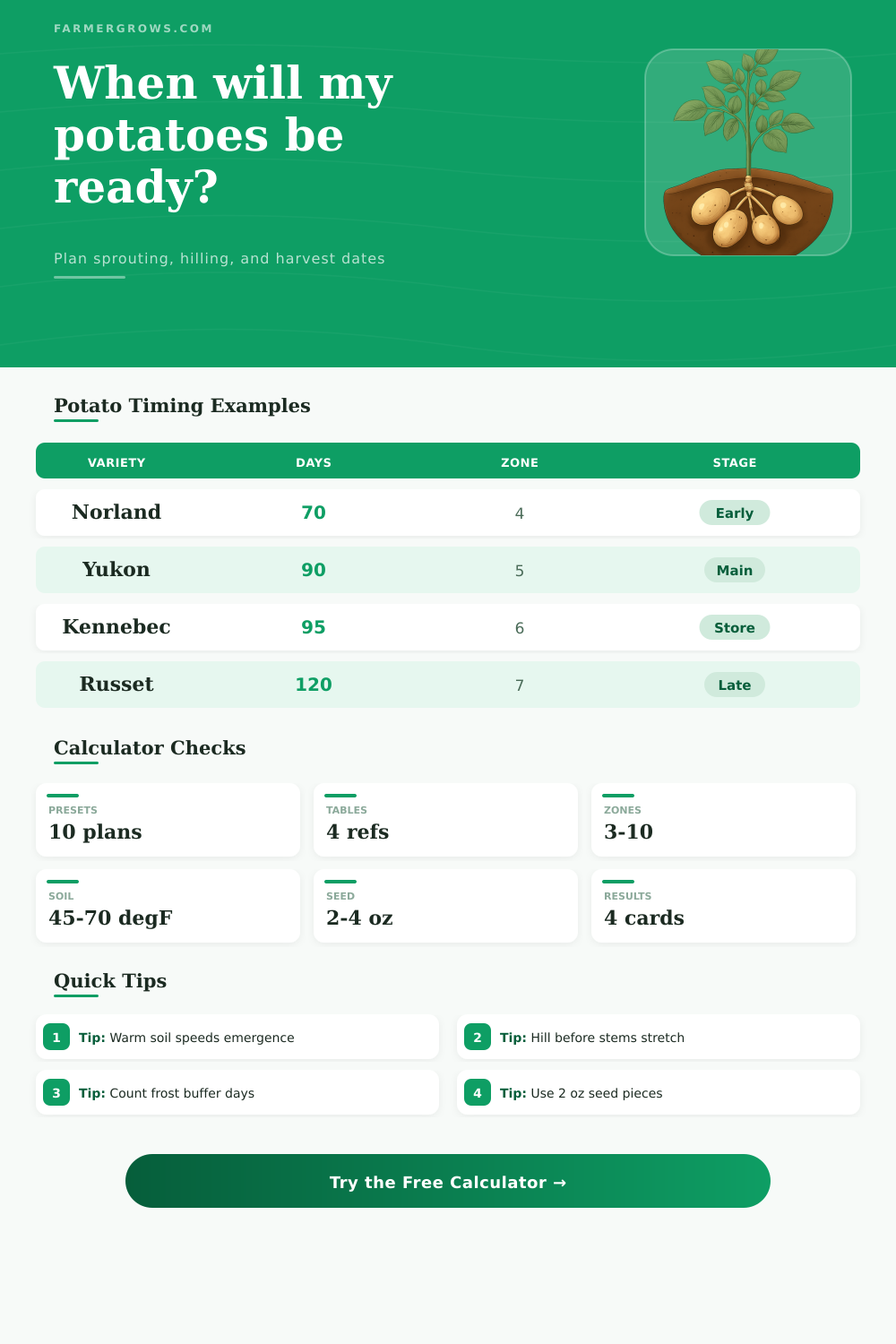
| Red Norland | 65 to 75 | 3 to 7 | Early new potatoes | Good choice where the season is short or an early market window matters. |
| Yukon Gold | 85 to 95 | 3 to 8 | Midseason fresh crop | Versatile garden variety with good flavor and moderate storage life. |
| Kennebec | 90 to 100 | 3 to 8 | Main crop and storage | Large vines and good sizing need adequate row spacing and moisture. |
| Russet Burbank | 115 to 130 | 5 to 8 | Late storage russet | Needs a long frost-free season and steady moisture for quality tubers. |
| German Butterball | 105 to 115 | 3 to 7 | Storage yellow | Best in cooler summers where tubers can finish without heat stress. |
| Purple Majesty | 85 to 95 | 4 to 8 | Color specialty | Dig gently and cure carefully to protect skin color and appearance. |
| Fingerling mix | 95 to 110 | 4 to 8 | Specialty small tubers | Often harvested after good set but before oversizing or knobby growth. |
| Adirondack Blue | 90 to 100 | 4 to 7 | Blue flesh fresh crop | Moderate maturity with attractive color for direct market boxes. |
| Caribe | 70 to 80 | 5 to 9 | Early spring crop | Useful where spring crops must finish before summer heat. |
| Gold Rush | 105 to 115 | 3 to 7 | Northern russet storage | A better long-season russet option for many cooler regions. |
| Soil temperature | Expected emergence | Timing impact | Field note |
|---|---|---|---|
| Below 40°F | Very slow or stalled | Add 18+ days | Seed pieces can decay if soil stays cold and wet. |
| 40 to 44°F | 21 to 30 days | Add about 12 days | Possible in dry, well-drained soil but risky in heavy ground. |
| 45 to 49°F | 18 to 24 days | Add about 6 days | Common early planting threshold for hardy potato starts. |
| 50 to 54°F | 14 to 20 days | Add about 3 days | Steady emergence when soil moisture is even. |
| 55 to 70°F | 10 to 15 days | Normal pace | Good range for sprouting and early canopy growth. |
| Above 75°F | 10 to 18 days | Add 2 to 6 days | Emergence may be quick, but heat can shorten tuber bulking later. |
| Production style | In-row spacing | Row spacing | Plants per 100 ft | Timing note |
|---|---|---|---|---|
| Early new potatoes | 8 to 10 in | 30 to 34 in | 120 to 150 | Tighter spacing favors more small tubers and earlier digging. |
| Home garden standard | 10 to 12 in | 32 to 36 in | 100 to 120 | Balanced spacing for most midseason table potatoes. |
| Main crop storage | 12 to 15 in | 34 to 38 in | 80 to 100 | Extra room helps tubers size before vine senescence. |
| Large russets | 15 to 18 in | 36 to 40 in | 67 to 80 | Wide spacing supports larger tubers in long-season varieties. |
| Fingerlings | 8 to 12 in | 30 to 36 in | 100 to 150 | Moderate density keeps specialty tubers from oversizing. |
| Container rows | 8 to 12 in | Container width | Varies | Use hilling depth and soil volume as the limiting factor. |
| Harvest stage | Plant cue | Typical timing | Best use |
|---|---|---|---|
| First check dig | Flower buds or early bloom | About 45 to 60 days after planting | Testing tuber set without committing the row. |
| New potatoes | Healthy green vines and small tubers | About 55 to 75 days for early varieties | Fresh eating with tender skins, not storage. |
| Main fresh harvest | Vines yellowing, tubers sized | Listed maturity plus field adjustment | Kitchen use soon after digging. |
| Storage harvest | Vines dead or cut, skins set | 10 to 14 days after vine death | Curing and longer storage. |
| Emergency frost harvest | Hard frost forecast | Before soil freezes | Save tubers when season runs short. |
Tip 1: Planting two weeks before the average last frost can work when soil is dry enough and near 45°F, but emerged leaves still need frost protection.
Tip 2: For storage potatoes, the calendar harvest date is not the finish line. Let skins set after vine death, then cure tubers in a cool, dark, ventilated place.
When to plant potatoes? It depends on which variety you choose (some is earlier than others). It also depends on how quickly ground warms up and what kind of weather you have. Even if a gardener plants a crop in one spot each year, adjusting planting date by even a few days make a difference: Late frost might come after sprouting; soil will warm different. It’s little things like that, little adjustments in timing, that make the difference for a good crop more than big changes in practice.
Most people ignore soil temperature as an input (in favor of a date on the calendar), but it’s critical. You want potatoes planted in soil that will be warm enough for sprouts to get started, but not too warm, or the plant will race ahead of itself and struggle when it try to develop tubers. If the soil is cooler, it’ll delay emergence, meaning there’s more time for frost. If the soil is warmer, it’ll speed up emergence…but also change the number of days till the plant reach maturity.
How to Choose When to Plant Potatoes
This calculator figures out those trade-offs for you. Just plug in your soil temperature and variety. You won’t have to guess what happens if you have a cold spring or how it impact your timing.
Similarly, although hilling sounds like an easy chore… Just get out there and do it, it isn’t easy if you have to work around the cover growing over it or around a rainy day. Typically we hill the first time about a couple of weeks after emergence, and then one or two more times depending on how aggressive you want to build the ridge. Too soon and the stems are delicate and small; too late and they stretch out flat and you might break off some vine in the process.
You can set the timing, frequency, and intervals for your hillings. This allows you to follow a real plan that matches what you are planting and what works for you, rather than using hypothetical one.
The outer borders of the season come from frost dates, but those hardly match the days to maturity listed on a variety. If you grow an early variety in a long season, it could be finished weeks before the first frost. This leaves plenty of leeway for a more leisurely harvest and even time to tuck in another sowing. But if you plant a late variety in a short season, it’s likely to reach skin-set just as that first frost threatens, with little margin for error.
The calculator makes this clear immediately; the number of frost buffer directly translates into how reasonable (or not) your selected variety will be before you break out the seed cutter.
The time frame is also influenced by spacing. Tubers will be smaller if they are closer together, which moves the new-potato window forward a bit. If planted farther apart, each tuber has more room to grow, so you must wait longer for the big harvest. The difference may not be dramatic, but it’s consistent. Changing your spacings is one of the easier tweaks on the timing front (without having to change what variety you grow).
What makes any timing tool useful is that it gets you thinking about those tradeoffs (before putting seed into the ground). That warming up will shorten emergence, but could it be more stressful for heat later? A really tight hilling schedule requires that there be enough time between emergence and the closing of the canopy. Those links are trickier to remember when holding a seed catalog and calendar in hand out in the garden. Having the numbers in front of us can make things more clear and season less of a gamble.
You should of used it sooner.