
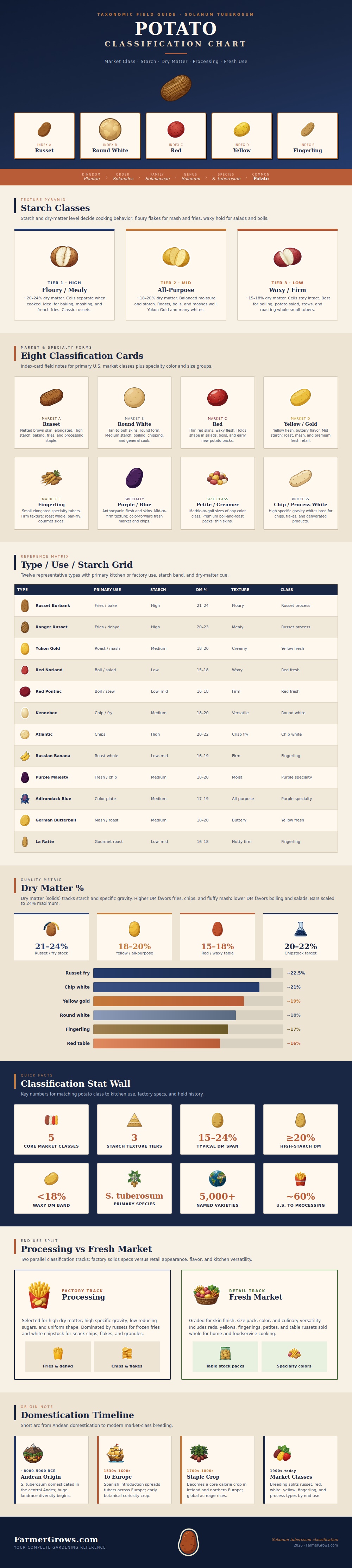
There are a lot of kinds of potato. There are many spuds to be had in the produce aisle where you’re standing. Not all is created equal (and if you assume so, you might ruin your meal). Typicaly it’s about starch. The starch vary by potato, and how that starch reacts with heat and water. Color and size don’t matter.
There are three levels of texture according to the classification chart. This refer to cell structure. When cooked, cells in high-starch potatoes comes apart. That’s nice for frying or baking, it provides a crisp exterior or a light interior. Boil a high-starch potato as part of a salad and it’ll be mush. Its structure fail under heat. Low-starch waxy types has cells that are held tightly together making them suitable for roasting or salads. Because of this they don’t take up a lot of water, nor will they lose their shape.
How to Choose Potatoes for Cooking
Many believe that all potatoes takes in water similar. That’s false. It depend on how much dry matter it has. If it contains fifteen to eighteen percent, then it’s firm; if it’s got twenty-four percent, then it’s floury. Understanding this can prevent gluey mashed potato.
Potatoes have an interesting history. They originated from many varieties in the Andes. Then European explorers returned home with them, forming a genetic library by selecting for various use. Today’s potatoes such as reds or russets are the product of years of selection for use. Some selections was made to look nice. Others to travel well.
So there are two markets for potato. One is the retail market, concerned with versatility and skin. One is the factory market, concerned with sugar and specific gravity. What you don’t see is the delicate, versatile small potato in a vat of fries; you don’t see processing potatoes in grocery bags. As chart illustrates, some are for home cooking. Some are for chips. It’s a system that divide looks from utility. And it works.
For instance, use a potato that is suited to the job: Look in your recipe and then go shopping. Mashed? White or yellow all-purpose potatoes is creamy yet firm. Fries? High-starch russet varieties work best. Salad? Use red or firmer fingerling types. The chart match types with their uses. No need to memorize names of all variety. Simply recall how starchy it is. Also take note of how the food are cooked.
Does it flake apart (like a russet)? Red potatoes stays together. That’s the starch at work. And once you learn this chart, walking through the produce aisle make sense. You know which tool for the task. The dish ends up how you intended.