Peppers Per Plant Calculator
Estimate how many peppers one plant can produce, then scale the count into total harvest weight, weekly flushes, replacement seedlings, and a realistic low-to-high yield range.
Pepper yield depends on variety, mature plant size, pollination, heat, harvest frequency, and how long the plant keeps setting flowers. Large bell peppers usually make fewer fruit per plant; small hot peppers can set many more.
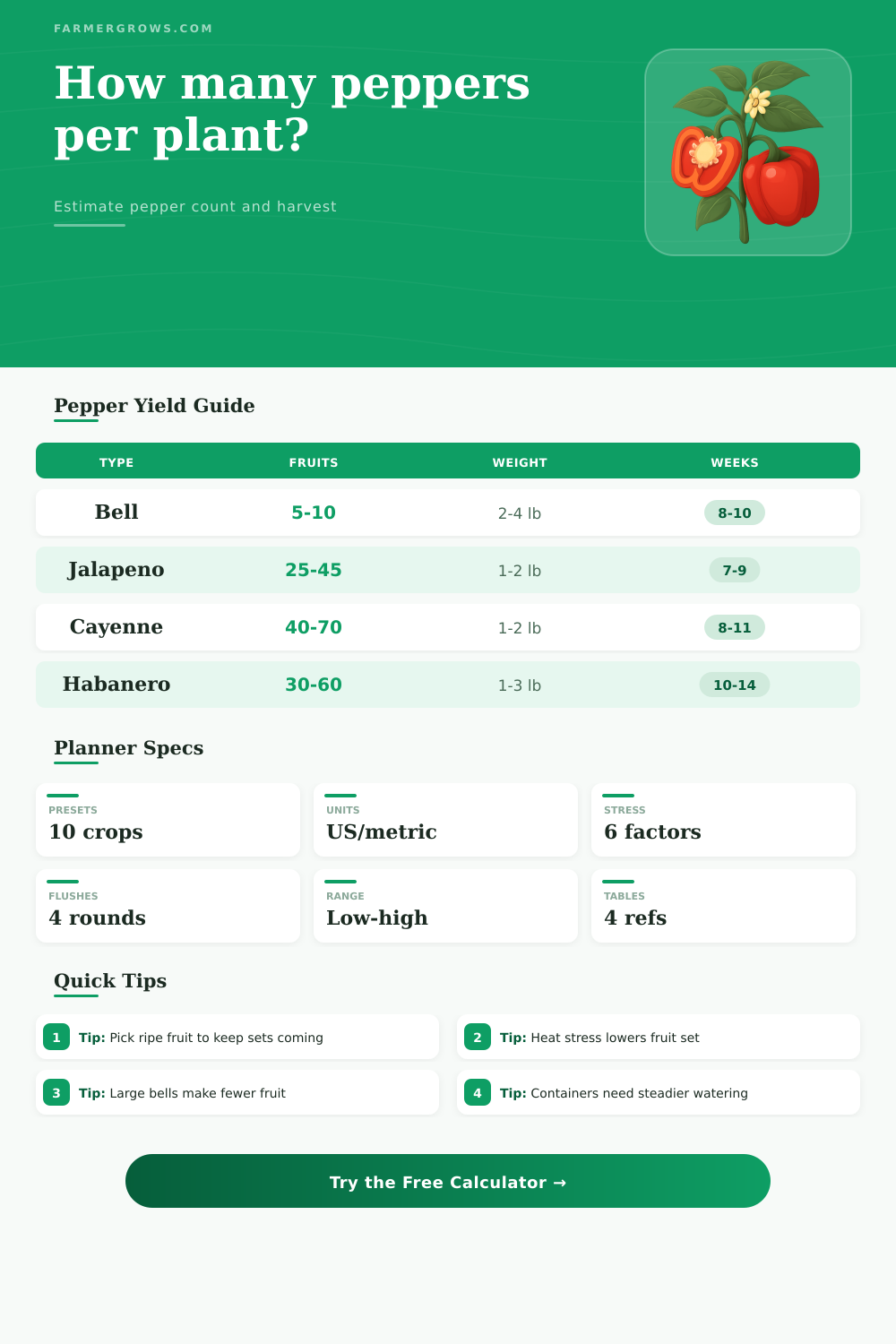
Pepper yield snapshot
Enter the plant and season details, then calculate.
| Pepper type | Typical peppers per plant | Average fresh fruit weight | Useful planning note |
|---|---|---|---|
| Large bell pepper | 5 to 10 fruit | 4 to 7 oz / 115 to 200 g | Fruit are heavy, so count is lower than hot peppers. |
| Mini sweet pepper | 20 to 40 fruit | 0.7 to 1.5 oz / 20 to 43 g | Frequent picking increases later flower set. |
| Jalapeno | 25 to 45 fruit | 0.5 to 1.0 oz / 14 to 28 g | Green harvest usually gives more total fruit than red harvest. |
| Cayenne or Thai chili | 40 to 80 fruit | 0.1 to 0.3 oz / 3 to 9 g | Small fruit counts can be high on healthy plants. |
| Habanero or super hot | 30 to 60 fruit | 0.2 to 0.5 oz / 6 to 14 g | Long warm seasons help chinense peppers ripen fully. |
| Growing factor | Yield effect used | When to choose it | Field signal |
|---|---|---|---|
| Short or cool season | About 30% lower | Late transplanting or early frost risk | Slow ripening and fewer flushes |
| Long warm season | About 20% higher | Warm nights and a long fall harvest | Continued flowers after first picking |
| Very hot flower-drop period | About 25% lower | High heat during bloom | Flowers drop before fruit forms |
| Excellent care | About 12% higher | Even water, mulch, feeding, and support | Dark leaves and steady new bloom |
| Uneven watering | About 22% lower | Dry-wet cycles or small containers | Blossom end rot and small fruit |
| Harvest stage | Fruit count effect | Weight effect | Planning use |
|---|---|---|---|
| Green or immature | Highest count | Moderate weight | Best for jalapeno and frying pepper volume. |
| Mixed color | Balanced count | Balanced weight | Good default for home garden planning. |
| Fully ripe color | Lower count | Slightly heavier fruit | Best for red bells, ripe hot peppers, and flavor. |
| Red-ripe drying | Lower count | Dry weight matters | Use for cayenne, paprika, chili powder, and flakes. |
| Garden size | Example crop | Fresh harvest range | Seedling planning |
|---|---|---|---|
| 2 plants | Patio bell peppers | 4 to 8 lb in good care | Start 3 seedlings for replacement choice. |
| 6 plants | Family jalapenos | 8 to 16 lb fresh green fruit | Start 8 seedlings if survival is uncertain. |
| 12 plants | Mixed hot pepper bed | 12 to 30 lb depending on type | Label varieties before transplanting. |
| 24 plants | Market garden peppers | 60 to 110 lb for productive bells | Stagger varieties by ripening speed. |
A bell pepper plant with eight large fruits can out-weigh a chili plant with fifty small fruits. Use fruit count for kitchen planning and fresh weight for preserving.
Picking green or partly colored fruit often frees the plant to set more flowers. Leaving every pepper to full color can reduce total fruit count.
Heat, uneven moisture, low fertility, and small containers all reduce flower set. The combined factor in the results shows how far the plan has moved from the baseline.
Pepper plants rarely produce one exact number. The low and high range is more useful for seedling counts, preserving days, and weekly harvest expectations.
In April, you plant 10 seedlings, hoping for a bountiful harvest later. In July, perhaps there are just three peppers on every bush: you might wonder if your soil is cursed. Probably not. The usual keys to getting peppers (or any other crop) involve a mix of factors, such as the size of the fruit compared to how long growing season lasts, and certain stresses that few gardeners monitor early enough to make a difference.
Instead of guessing… Or despairing, move into more strategy mode with this peppers per plant calculator. It’s a model of what affects your final harvest weight (weather patterns, level of care, variety). Turn vague hopes into a definite range of expected fruit. This lets you plan for eating, selling, or preserving with confidence.
How to Use the Pepper Calculator
Before I describe how the calculator works, let’s be clear: Count ≠ Weight. For example, one bell pepper plant may yield just eight fruits, but each may total a whopping four pounds. A cayenne plant in the same space might set fifty small pods that barely tip the scale at two pounds. With the calculator, you enter separate inputs for average fruit weight and type. What you need in your kitchen depends on whether you are focusing on bulk for roasting or volume for making salsa. If you know which drives your desire, you can tweak to match.
The baseline comes from Variety; the environment lifts. Or drops, the weight. In general, expect each bell pepper to top out at about a dozen fruits, hot ones (such as habanero, or even a jalapeno) maybe closer to 40-ish, or more. Your season type (how cool or warm it is, and how long) factors in to adjust those baselines. If you’re fighting a cool short season, the calculator will lower the number by perhaps a third because cooler weather cause the flower to drop before any fruit forms. A longer, warmer one will add maybe a fifth, since the plants are really cooking still all fall.
That’s where we get “same variety but different result” with the neighbor and their peppers. One gets the timing right and the other fight against nature. If ignored, this sort of stress compounds fast. Uneven watering, heat stress and low fertility will resulted in much-reduced flower set. This condition is factored into the tool, so you can gauge just how far your plan has strayed from best results.
You might be growing in smallish containers where you don’t feed consistently. Don’t expect as high a yield ceiling as someone who’s got deep raised beds and steady irrigation. It is a harsh reality, but it is an important one when setting realistic expectations. Because the roots are less buffered against drying out, container garden do need more attention to the water balance equation.
There’s also an under-the-radar factor: pollination. Because peppers are self-pollinating, you don’t need bees visiting every flower. But sometimes the pollen becomes stickier than tacks due to excessive humidity, which prevents transfer to the stigma. Or, on a windy day, it gets knocked off before reaching the stigma. The calculator includes those scenarios. That way, you have an explanation when this year’s crop of peppers isn’t as big than last year, even though you cared for them perfectly.
I suggest running the number. Then scanning down to look at the high-low range of possibilities, not just the mean. It’s rare for a garden to deliver on the dot, because of disease, pests, and bad luck with certain things. The calculator includes extra seedlings to account for potential loss when planting, since some will be weak. Starting more seeds takes care of these weaklings who don’t take hold in the ground.
How often do you harvest? You should of harvested more often than you’d imagine because it affects overall crop size. When you pick some (green or part-colored) fruits, the plant’s like, “I’m done!” and goes back to setting another round of flowers. If you let all go right to full color on the vine, the plant may think that’s it; and stop earlier, meaning fewer in all. You can model that decision in the calculator; will you have a bigger volume, or just intense-flavor concentration?
So: Knowing what to expect does make all the difference in how you garden. It shifts your focus from stressing about a slow early-summer start to maintaining steady attention throughout the peak weeks. The master tool takes the personalized math into account; the reference tables gives you instant yardsticks for each type of pepper. You’ll still be doing the watering and the feeding, but now you really know what all that effort is intended to accomplish. And that’s the difference between a productive crop and one that disappoints.