Peppers From Seed Growth Time Calculator
Plan the full crop calendar from sowing to germination, transplant readiness, flowering, first harvest, colored harvest, and useful yield timing for sweet and hot peppers.
Use this as a planning calculator for nursery trays, gardens, containers, raised beds, and high tunnels. It estimates timing from pepper type, seed temperature, plant age, frost dates, sun, and harvest goal.
📋Pepper Crop Presets
🌶Pepper Type, Heat, And Season Fit
Large fruit often set later and may need extra weeks after green size to reach red, orange, or yellow color.
Banana, shishito, and frying types are useful for short seasons because first harvest can begin while pods are still tender.
Jalapeno, serrano, and cayenne usually bridge home gardens and field rows with moderate transplant-to-harvest windows.
Ghost, scorpion, and similar chinense peppers germinate slowly, grow slowly, and need a long warm season for ripe pods.
🌱Lifecycle Inputs
Pepper Growth Timeline Results
Your pepper crop dates will appear here after calculation.
📈Pepper Lifecycle Timing Grid
📚Reference Tables
| Pepper group | Typical heat level | Germination range | Transplant age | First harvest after transplant |
|---|---|---|---|---|
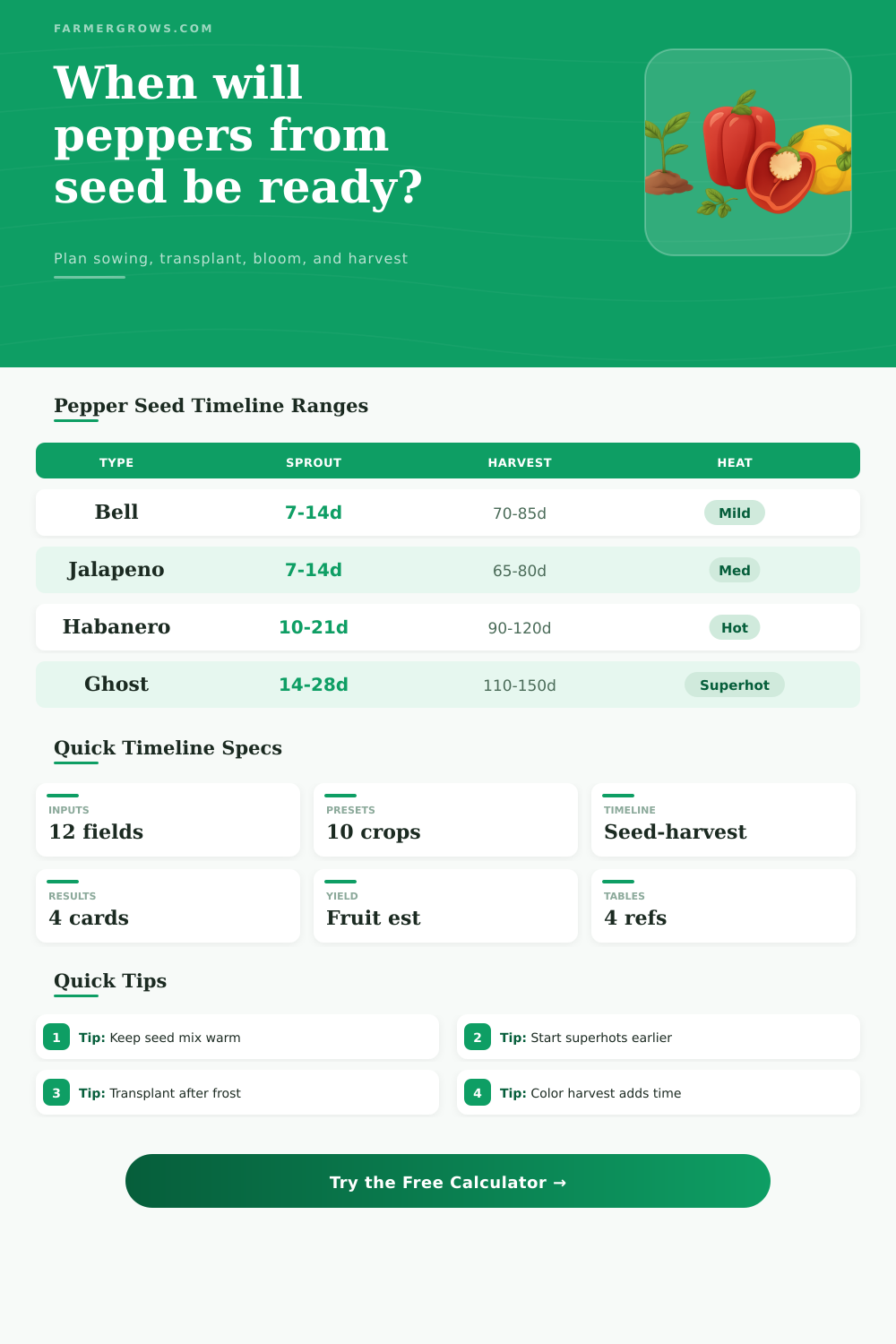
| Sweet bell and blocky peppers | None to very mild | 7 to 14 days in warm mix | 8 to 10 weeks after sprout | 70 to 85 days for green, longer for color |
| Banana, frying, and shishito peppers | Mild to occasional medium | 7 to 14 days | 7 to 9 weeks after sprout | 60 to 75 days, often earlier for tender pods |
| Jalapeno, serrano, and cayenne peppers | Medium to hot | 7 to 18 days | 8 to 10 weeks after sprout | 65 to 90 days depending on green or red harvest |
| Thai, habanero, and Scotch bonnet peppers | Hot to very hot | 10 to 21 days | 9 to 12 weeks after sprout | 85 to 120 days, best with a long warm season |
| Ghost and superhot peppers | Extreme heat | 14 to 28 days | 10 to 12 weeks after sprout | 110 to 150 days, start extra early indoors |
| Root-zone temperature | Expected germination effect | Calculator adjustment | Grower note |
|---|---|---|---|
| Below 65°F | Very slow and uneven | Add about 10 days | Seed may rot before sprouting in wet cold mix |
| 65 to 69°F | Slow but possible | Add about 5 days | Useful only when no warmer area is available |
| 70 to 74°F | Moderate speed | Add about 2 days | Fine for sweet peppers, slower for hot types |
| 75 to 85°F | Best range for most peppers | No delay | Warm, moist, and airy mix gives the most even stands |
| 86 to 90°F | Fast but watch moisture | Add about 2 days | Vent domes once sprouts appear to prevent weak stems |
| Above 90°F | Heat stress risk | Add about 6 days | Too much heat can reduce germination quality |
| Stage | Common target | Formula used in calculator | Field check before moving on |
|---|---|---|---|
| Sprouting | Warm mix and steady moisture | Seed date + adjusted germination range | At least half the tray has emerged before removing heat dome |
| Pot-up or nursery growth | Stocky seedlings, not rootbound | Sprout date + transplant age in weeks | Strong stems, active roots, and 6 to 8 true leaves |
| Outdoor transplant | After frost with warm soil | Later of seedling ready date or last frost + buffer + soil delay | Night temperatures are mild and soil is about 60°F or warmer |
| Flowering | First stable bloom flush | Transplant date + pepper bloom range + sun or shock delay | Plants are not dropping every flower from cold, drought, or heat |
| First harvest | Green, ripe, or drying pod goal | Transplant date + packet maturity days + harvest target adjustment | Pods reach usable size, wall thickness, color, or dry-down goal |
| Pepper type | Heat and use | Season fit | Best harvest target | Planning note |
|---|---|---|---|---|
| Mini bell | Sweet fresh eating | Short to medium season | Green or colored | Choose early cultivars when summers are cool |
| Full-size bell | Sweet stuffing and fresh market | Medium to long season | Green first, color later | Colored bells often need 2 to 3 extra weeks on the plant |
| Jalapeno | Medium heat for salsa and pickles | Reliable medium season | Green, red, or smoked ripe | Early green picking encourages more flowering |
| Cayenne | Hot drying and flakes | Medium to long season | Red ripe or drying | Drying crops need enough late-season warmth for color |
| Habanero | Very hot sauces | Long warm season | Fully colored ripe | Start early and avoid transplanting into cold soil |
| Ghost pepper | Superhot specialty crop | Very long season | Fully colored ripe | Use the earliest indoor start that your lights can support |
💡Timeline Planning Tips
For accurate transplant timing: Count from emergence, not just the day seed was sown. A slow superhot can spend two extra weeks in the germination tray before the true seedling clock really starts.
For harvest planning: Green harvest can begin earlier, but fully colored sweet peppers, paprika, habanero, and superhots need more warm days after full-size pods appear.
In late winter, the first time you plant those pepper seeds in moist soil is an anxious moment. Seventy degrees says the heat mat… But who wants to wait? Get up! Make them sprout! Patience, grasshopper. Peppers are slow starters, longer than lettuce or radishes. More important: Peppers realy want heat. They won’t just take their sweet time sleeping if root zone is cool; they’ll rot.
Knowing the timetable from seed to harvest is worth far more then any given plant-out date in a regional almanac. Let the frost buffer and the germination window calculator above does the math. Instead of wondering when that might be, concentrate on making sure that seedling has a warm and moist home until it’s ready for outdoors.
Why Peppers Need Heat and Time to Grow Well
Probably the biggest error most home gardeners commit with their peppers is that they lump them all together as one single crop. In reality, a hot pepper and a sweet pepper (like a bell or a shishito) are practically different species in terms of pacing. While sweet seeds typically pop pretty fast (usually within a couple of weeks here), if conditions reach nearly 80 degrees Fahrenheit… Hotter ones (particularly superhots) dawdle. Habaneros can remains in the darkness of the soil for more than a month, waiting for their moment to poke through.
But the tool takes those varietal considerations into account as well. All you do is choose what kind of pepper you’re growing, and it will adjust the expected germination window accordingly. That way, it won’t trick you into throwing up your hands at week two on a habanero and assuming it’s failed, when really it’s just taking its sweet old time. Small difference, but again, it keeps so many pound of seed mix from being thrown away prematurely.
When the first set of real leaves emerges, it’s time for the second gear. You enter a waiting game to firm up before planting out, waiting until it’s safe outside. This is where it gets tricky; where knowing what weather is coming your way can really help. If you’re not careful, you’ll put those peppers into cold soil, and the root system shut down. The whole thing stalls and sets back your entire harvest schedule by weeks. You may or may not even have time for that in a short summer season.
The chart below explains clearly why you must wait for warm soil during this growing period. And most people add a couple more weeks as a safety cushion beyond their final frost date so they know nights won’t be to cool. Why be patient? A stunted-out seedling doesn’t catch up again when it is tomato time. It just sags there moping while the tomatoes are going nuts right beside them.
Timing your harvest is all about how you’ll use the fruit: Pulling peppers early (such as if you’re eating them green) reduces the load on the plant, meaning less stress (and perhaps triggering another bloom), too. But if you’d like red color for sauce-making or drying, you’ll need to tack on big chunks of time to the calendar. For colors, they realy need plenty of time to reach maturity. This includes building up capsaicin and sugars, which come from prolonged warmth.
Depending on which option you chose… Green or colored harvest, this calculator makes adjustments in the final timing dates. If you have an early-maturing variety, it will help you determine whether your local frost date will be long enough for a full-color crop of giant bells or if you should of chosen something else. Do this before you order the seed.
In the end, growing peppers is a test of biology against what you expect to happen. Heat mats can hastens germination… But push a plant past its genetic programming for maturation and you compromise quality of the resulting fruits. A clear outline of those steps eliminates guessing from the nursery calendar. It tells you just when to sow seed for transplanting at a time of safe weather. It explains which kinds is ready to go in a few days. It also explains which will require more indoor time or will grow much faster than others.
The process of planning takes the ragged edge off the frantic start to spring, turning what might have been a jumble of haphazard experiments into a doable series of events. There’s less feeling of blind chance at work. Instead, it feels like the day each green capsule first emerges on the vine was simply the naturaly result of a plan that honored the biology of both the plant and the season. That’s how any chaotic garden experiment becomes a predictable crop year after year.