
If you can recall your very first introduction to the jalapeño, I’m sure you clearly remember that burning sensation in your mouth (along with watery eyes and a clear sinus). And if you’re anything like most home cooks, this was just the begining of your journey.
How do you know when a pepper is going to be mild or spicy? It’s all about the pepper, and knowing the difference decide if a dish is good or awful. A ghost pepper are a far cry from a bell pepper. How you navigate these differences will make you feel confident cooking.
How to Pick and Grow Peppers
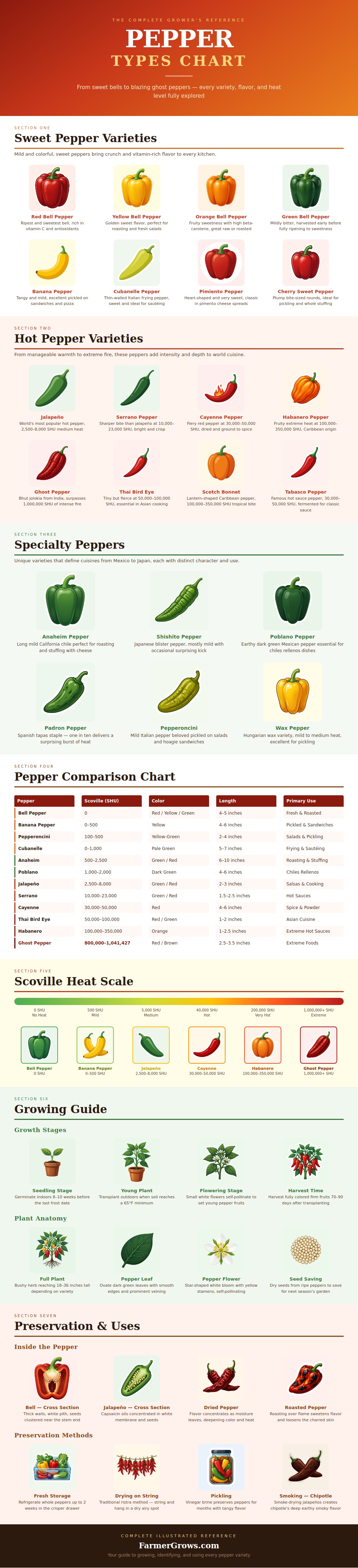
The visual guide indicates the location of each kind of pepper on hotness scale. But there’s more to picking peppers than whether they’re green or red. As the chart shows, color frequently reveals when a pepper is at it’s sweetest… And at what stage it’s ready to eat.
A green bell pepper (which is actualy an unripened red pepper) will taste somewhat bitter because it hasn’t been given time to convert its starchy content into sugar. Want something sweet? Wait until it change color. Why does it matter? It matters because it changes how the pepper work in the kitchen: ripe red ones roast up to be a concentrated sweet, and green ones adds a bit of crunch. Knowing the timeline help you pick the right fruit for your recipe.
Looking at hot varieties is where the change come into play. Hot peppers are measured in Scoville Heat Units, how much capsaicin there is. As the infographic shows, the jalapeno is smack-dab in the middle. Why? Because it’s popular! It give you just enough punch to be enjoyable.
Want it hotter? Go ahead and keep the seeds in. Want it less hot? Remove the white pith. Most of the capsaicin are found in the white pith, not the seeds. In fact, many will tell you that it’s the seeds that make things spicy. Wrong. All those seeds do is absorbs the oil that surrounds them. Scraping away that white lining is something you’ll definitely notice.
As you ascend the chart, things gets spicy: the very hot peppers such as the ghost pepper or even the habanero. They have fruity floral notes that is wasted if you just use them for raw heat.
Where they came from. Hinting at how to best use them, is noted on the chart. With acidity that slices through meaty richness, the habanero is a staple in Caribbean cuisine. From India comes the fiery ghost pepper with a depth all its own. One little sliver can change the flavor of a curry. Don’t bother using it like a jalapeño, it will make you sorry.
There’s the joy of growing these things. How does it all go down? The reference material outline the life cycle.
First of all: A pepper hates a cool soil; peppers are warm-season crops. Transplanting too early is one mistake people makes with peppers. The plant will be stunted if the soil isn’t warm. Look sad, while tomatoes nearby is doing great. Be patient. Wait for the soil to warm.
The flowers are small, white. And is actually self-pollinated. Once the fruit sets, it begin green and turns colors as it ripens. That process is satisfying to witness. You’re watching the fruit form and seeing that heat come on, and seeing the plant at work.
The last step is preservation. To preserve that flavor, you can smoke it; you can pickle it; you can dry it. And there are easy ways to store what you grow, the guide say.
Drying intensifies the heat and concentrates the flavor, meaning a little goes a long way. Roasting softens the skin and sweetens the fruit. Pickling introduces a contrast of tang to balance the heat. Every process draw out some characteristic of the pepper. It transforms a just-picked vegetable into a pantry staple.
All in all though, peppers are a balancing act. Crunch. Color. Vitamins. Fire.
And the chart can get you through the land of peeper love; but ultimately, your taste buds will determine the destination. Begin with the milder ones, if necessary. Build up your tolerance gradually. Respect the heat. Store those seeds for next year’s crop.
Was it your first bad taco night? You’re on your way. And now you know how to do it right.