
Oh yeah, that’s just a regular jalapeño. It won’t be too hot.” So you take a bite, and holy smokes that thing pack some heat. You thought it would be mild, but turns out you were wrong about how hot it was.
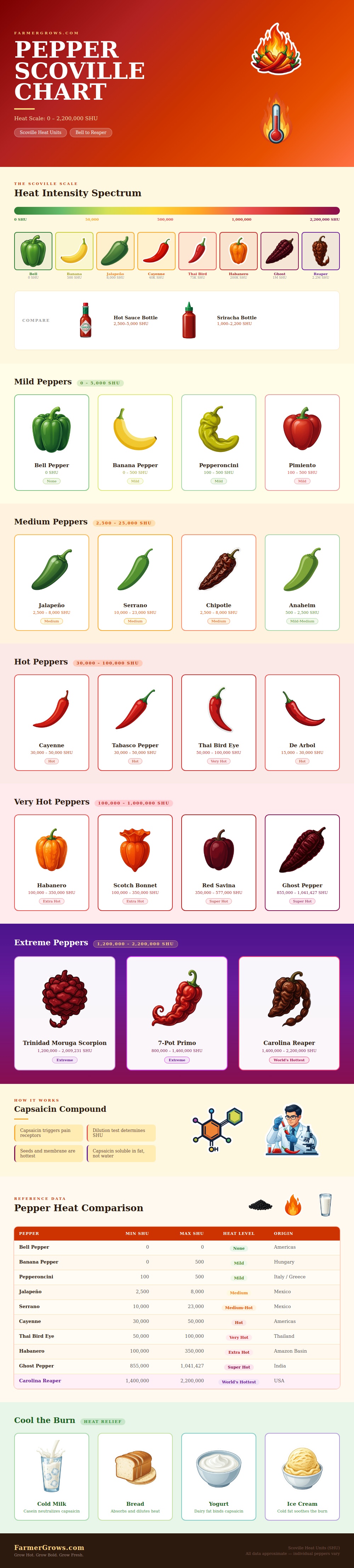
That’s because many folks don’t understand the Scoville scale. It isn’t just a straight-up slider. Think of it more as a map with different regions and each region has its own approach to dealing with spiciness. The visual breakdown makes that clearer, because they categorize the peppers visually. Mild peppers is on one side. Medium pepper on another. Hot on another. Extreme on another.
Understanding the Heat Levels of Peppers
And that’s important, because now I know what to expect going in. If I’m making something for people with different heat tolerances, staying in the mild-medium zone keep everyone happy. Now we’re getting close to hot so someone should of warned people about that. Extreme? Careful. It’s not much but it makes all those family dinner conversation more fun.
On the other end off the spectrum, there’s zero: bell peppers. These are standard used to judge all others. There is a slight kick to banana peppers and pepperoncini, you’ll notice them more then anything else for their acidic punch and crispiness. The medium range include jalapeños and serranos, peppers that home cooks across the country use often. You get some zing without getting too weepy-eyed.
And that’s where people think all spicy peppers are alike; a habanero is nothing like a jalapeño. That is a big jump in spiciness, and not a small one, either. As the temperature rise, so does the chemistry. These peppers contain more capsaicin, which activates the pain receptors on your tongue. Your brain reads that message as “burning” and no, water doesn’t assist.
Fat dissolves capsaicin; water and capsaicin don’t mix. Milk, however, does. The casein in cold milk draws the capsaicin off of those pain receptors. Ice cream (and yogurt) coats your tongue. Bread will absorb the oil and further reduce the capsaicin concentration. If you’re dealing with hot peppers, keep milk handy. It’s an easy rule to remember, and one that will save you from panicking.
At the top of the list is ghost peppers and Carolina Reapers. They are not kitchen staples. They’re for making an impact. The Carolina Reaper has been measured at 2.2 million Scoville Heat Units. That’s some serious fire. Adding it to an ordinary dish change that dish completely. Think of them more as novelty peppers. Most home chefs should only use small amounts when making their own hot sauces so they can control the level of heat.
So what do we take away from all this? Have a little respect for potency. It makes food a decision. How much heat do you want? What level will work for you? Know your limits. And start slow. Have some dairy on hand. You’ll want to enjoy the food, not regret it.