
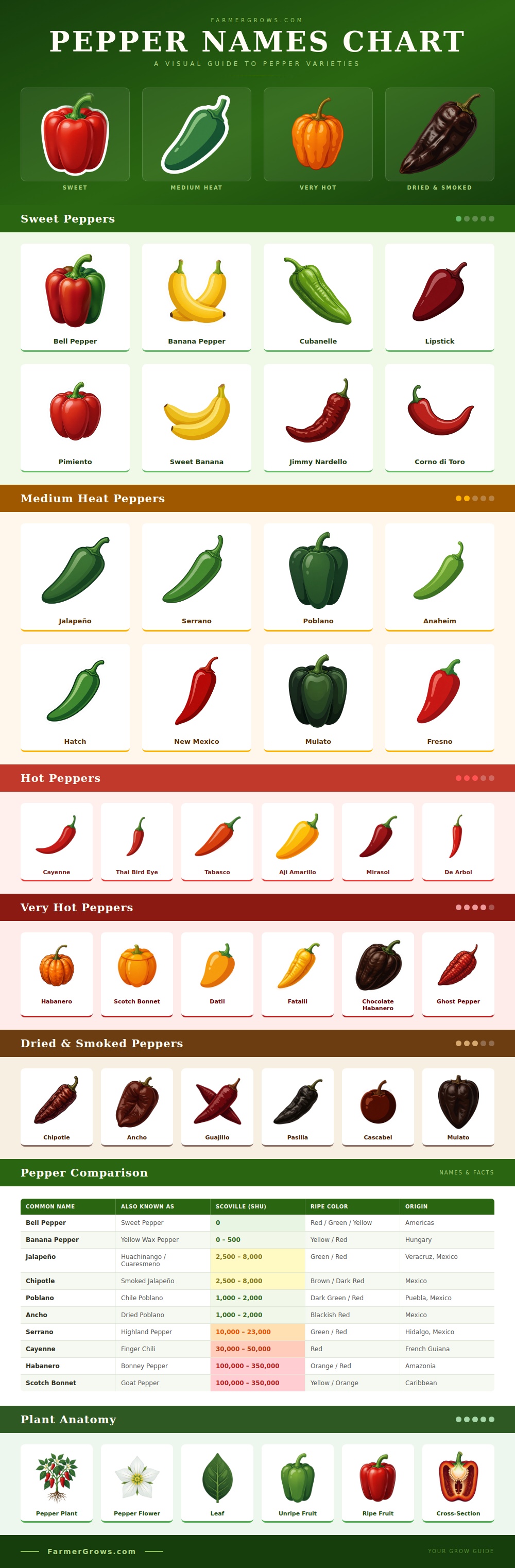
If you’ve ever been to a grocery store, I’m sure you’ve found yourself standing in front of various peppers in the produce section. They throw all kinds of peppers into categories like Sweet Bell Peppers and Hot Jalapeños. There are also many different names depending on where you are. Each type of pepper also come in different sizes.
Pepper charts like these can help clear that up and show which peppers is which, based off country of origin and heat level. Of course, knowing what it’s called will help. But knowing how to use each pepper will be even more helpful.
How to Choose the Right Pepper
Start with sweet peppers. If you don’t like it hot, bell peppers makes a fine starting point. Bell peppers measure as zero on the Scoville scale. This is scale used to measure capsaicin concentration.
If you’re after something crunchy but less fiery, think banana pepper (or even pimiento). These go into things that need crunch but no burn; they are typicaly pickles served alongside or inside sandwich. Because their heat level is so similar, the chart lumps these in a group. For chefs serving to diners whose preferences is unknown, this area is where to play it safe.
Poblanos, serranos, and jalapeños are common medium heat peppers found in Mexican and other culinary traditions. The Scoville unit of a jalapeño vary between 2 thousand, 8 thousand. That is a big spread. Because of that, they is difficult. What you think is a mild green jalapeno could turn out to be a fiery red one. Ripeness and growing conditions causes this.
Milder and bigger than jalapeños are the poblano peppers. It are often dried to make ancho peppers. When dried the flavors change dramaticly with smokiness added. A common mistake many people make is to assume that fresh and dried chilies are the same thing. They aren’t. Drying also concentrates the fruit and sugars, giving it a fruity flavor that fresh chilies do not has.
Thai peppers and cayenne are in the hot and very hot categories. They delivers sustained heat in stews and sauces. Habaneros and scotch bonnets is much hotter, and the ghost pepper is even hotter. All surpass three-hundred-thousand Scovilles. Careful; too much of this heat will overpower your taste buds.
On the chart, you’ll see where they’re from, which gives some clue to flavor. Habaneros hail from the Amazon region and scotch bonnets from the Caribbean. Their tastes reflect where they come from. Fitting right with the jerk seasonings, scotch bonnets offer a bright fruitiness. Habaneros has a citrusy floral kick. It’s not just about the heat, but also the flavor of a particular regional cuisine.
To understand how peppers develop, you must first understand the plant. Looking at this diagram of the plant (chart) with its parts labeled (leaves, flowers, fruits), you will see that a chili is actualy a fruit. Fruits can change color as they mature. They grows on a vine. A chili develops heat and sugar content over time.
Green chilies are unripe; they tend to be sharp. Sweet ripe chilies tends to be red. This is a biological fact. That’s why a green jalapeño doesn’t taste like a red jalapeño. It is the same variety in different stage of life.
Another alternative is dried and smoked peppers. Guajillos are dried mirasol peppers. And chipotles are smoked jalapeños. Using these forms of pepper lets you work with their flavor all year long. They has a depth that fresh peppers lack.
Getting this connection between fresh and dried will make your cooking better. It moves away from remembering recipes to understanding what’s in them. You start to read the name of a pepper and understand its logic.
When you go shopping, look past the color. Know the history of the pepper, where it came from, how hot it is. That way, grocery shopping becomes a smart mission. It should of not been guesswork but a knowledgeable choice.