Peas Per Plant Calculator
Estimate pods per plant, peas per plant, harvest weight, weekly picking pace, and how many pea plants you need for snap, snow, shelling, dwarf, and tall climbing pea crops.
Pea yield shifts with pea type, vine height, support, picking interval, weather, spacing, flower set, and losses. This calculator starts with practical pod and pea counts, then adjusts them for your planting conditions.
Pea Yield Estimate
Choose a preset or enter your pea crop details to estimate yield.
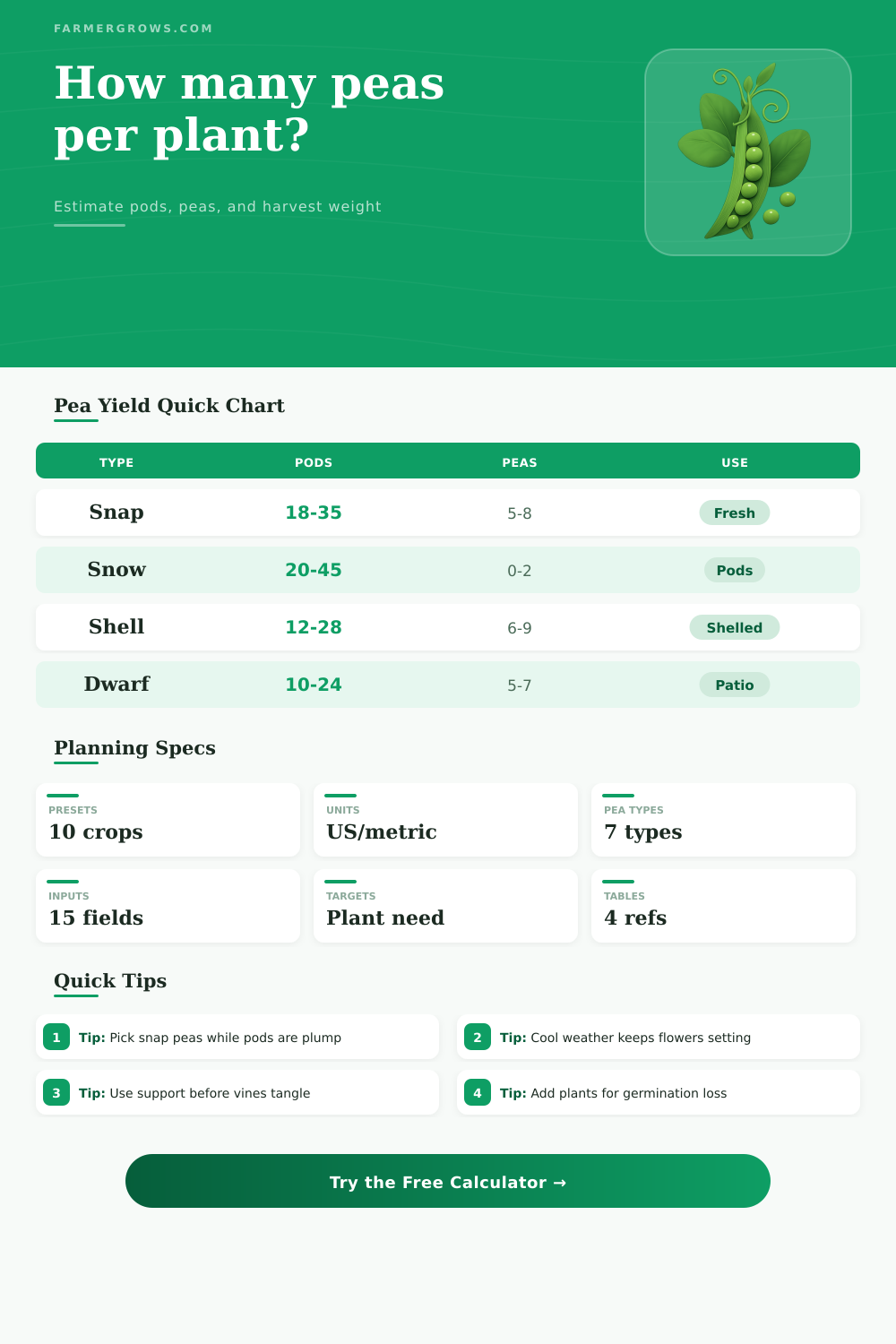
| Pea type | Typical pods per plant | Peas per pod | Best harvest measure |
|---|---|---|---|
| Sugar snap pea | 18 to 35 pods | 5 to 8 peas | Whole fresh pod weight |
| Snow pea | 20 to 45 pods | 0 to 2 developed peas | Flat pod weight |
| Garden shell pea | 12 to 28 pods | 6 to 9 peas | Shelled pea count and weight |
| Dwarf or patio pea | 10 to 24 pods | 5 to 7 peas | Fresh pods or shell peas |
| Tall climbing pea | 24 to 55 pods | 6 to 9 peas | Supported fresh crop |
| Factor | Lower yield signal | Better yield signal | Calculator effect |
|---|---|---|---|
| Weather | Hot, dry, or cold wet bloom | Cool steady spring weather | Changes flower set multiplier |
| Picking interval | Pods left too long | Picked every 2 to 3 days | Adjusts marketable pod capture |
| Support | Unsupported vines flop | Netting, brush, or fence | Improves pod access and airflow |
| Moisture | Dry swings during bloom | Even soil moisture | Changes pod fill and pea size |
| Sunlight | Less than 5 hours | 6 to 8 hours | Adjusts plant energy for pods |
| Planting layout | Spacing | Plants per 10 ft row | Planning note |
|---|---|---|---|
| Close trellis row | 2 in plants | 60 plants | Good for snap and snow peas |
| Moderate shell row | 3 in plants | 40 plants | Easier picking and pod fill |
| Dwarf pea row | 4 in plants | 30 plants | Useful for short vines |
| Double trellis row | 2 in plants x 2 rows | 120 plants | High yield per trellis length |
| Container strip | 3 to 4 in plants | Varies by pot | Keep moisture steady |
| Goal | Snap pea plants | Snow pea plants | Shell pea plants |
|---|---|---|---|
| 5 lb fresh crop | 25 to 45 plants | 30 to 55 plants | 70 to 110 plants |
| 10 lb family harvest | 50 to 90 plants | 60 to 110 plants | 140 to 220 plants |
| 25 lb freezing batch | 125 to 225 plants | 150 to 275 plants | 350 to 550 plants |
| Market pea row | 300 plus plants | 300 plus plants | 500 plus plants |
Measure the harvest you use. Snap and snow peas are weighed as edible pods, while shelling peas are much lighter after pods are removed.
Keep picking on schedule. Frequent harvest keeps pods tender and helps vines keep setting flowers during cool weather.
Set support early. Vines that tangle before netting is installed are harder to pick and can hide mature pods.
Plan extra seed. Cold wet soil and birds can thin stands, so seed need should include germination and a small buffer.
If you stare at your pea patch and discover yourself looking at just a handful of plant. But intend to feed a family from it; you’ll be in panic mode. That’s the gap between harvest math and hope, where most garden plans goes wrong even before seed touches ground.
Yes, peas produce; but producing isn’t the same thing as making a lot. One plant can yields enough nibbles to snack on for several people for a couple of weeks. This seem like a lot until you need to feed six people for dinner or fill a freezer bag.
How Many Pea Plants Do You Need?
And there’s this: How do I get from vague, “I’m going to grow some peas” optimism to actualy math? How many plants will it take to make me happy? That’s what this tool above does. It removes the guesswork of how much space to plan for and instead calculates exactly how many plant you will need to get weight you want.
But: What are you actually weighing? Are your peas going to be eaten as snow peas or snap peas… Whole pods? Their weight in the hand can feel heavy, despite tiny and underdeveloped seeds within them. Or are they shelling peas? In that case you’ll remove the pod, which will result in a much lighter yield then if they were an edible pod variety, per plant. If you’re planning to cook with your peas or freeze them, that difference should of matter, since you’ll require more (or fewer) plants to reach desired ten pounds of usable product.
The calculator automatically accounts for the difference between shelling peas and edible pods. This means you don’t have to guess how much smaller your yield might be if you grow shelling crops.
The difference is in the support structures. You’d be surprised at how much a vine draped on the ground hides its pods. It also has trouble getting good air circulation, which encourages rot and make picking messy. Well-designed trellis work, whether vertical netting or tall twine, keeps foliage open to sunlight, and all those pods reachable for easy picking early. By picking out the young ones, you continue to get more flowers (as opposed to shutting down when several big seeds is set) and thus prolong your yield. The tool’s table of references shows exactly what each level of support translates to in potential crop, so you know your starting point realisticly, before weather or other mishaps thwart your intentions.
Pea yields suffer in high summer as well, particularly if it’s hot when they’re blooming. Because peas are cool-season crops, when the temperature spikes up into the mid-seventies and above, they stops setting flowers. So your “real” harvest will be far below what the catalog descriptions promise, if your early part of spring gets hot fast.
To account for this possibility, the calculator will ask you to input expected weather conditions (such as expecting warm days during bloom time). It will then adjust the potential yield downward to match. This helps avoid disappointment from overplanting based off the assumption of a bumper crop that never happens because plants are heat-stressed.
The last practical obstacles is those related to spacing and how many seeds will actualy grow. Cold, wet weather slows down germination or sometimes kills sprouting seeds before they emerge. Always sow more seeds than you think you’ll need to allow for germination loss and other pest that may eat seeds before they get going. To ensure you’re left with enough growing plants to reach your desired harvest quantity, provide yourself with a safety margin: an additional number of seeds that account for both potential sprouting failure as well as pest damage. By doing this, the tool will tell you exactly how many seeds you’ll need by taking germination loss and potential pest damage into account. You won’t need to dig out half-dead rows only to buy another pack of seeds, and there is no need to buy extra packs in advance!
THE KEY TO growing peas, whether fresh or frozen, is not so much hoping for the best as it is managing expectations; that’s why planning a pea patch is a bit like doing some careful arithmetic before you even start. How do you plan for the weather in your area… How does that predictably affect such fragile blossoms? What do you intend to eat, and how much of each type? To turn this guesswork exercise into a workable food-production strategy, run the numbers first. Knowing exactly how many plants are required to close the gap can mean the difference between a full freezer and a sparse harvest.