Peas Per Person Calculator
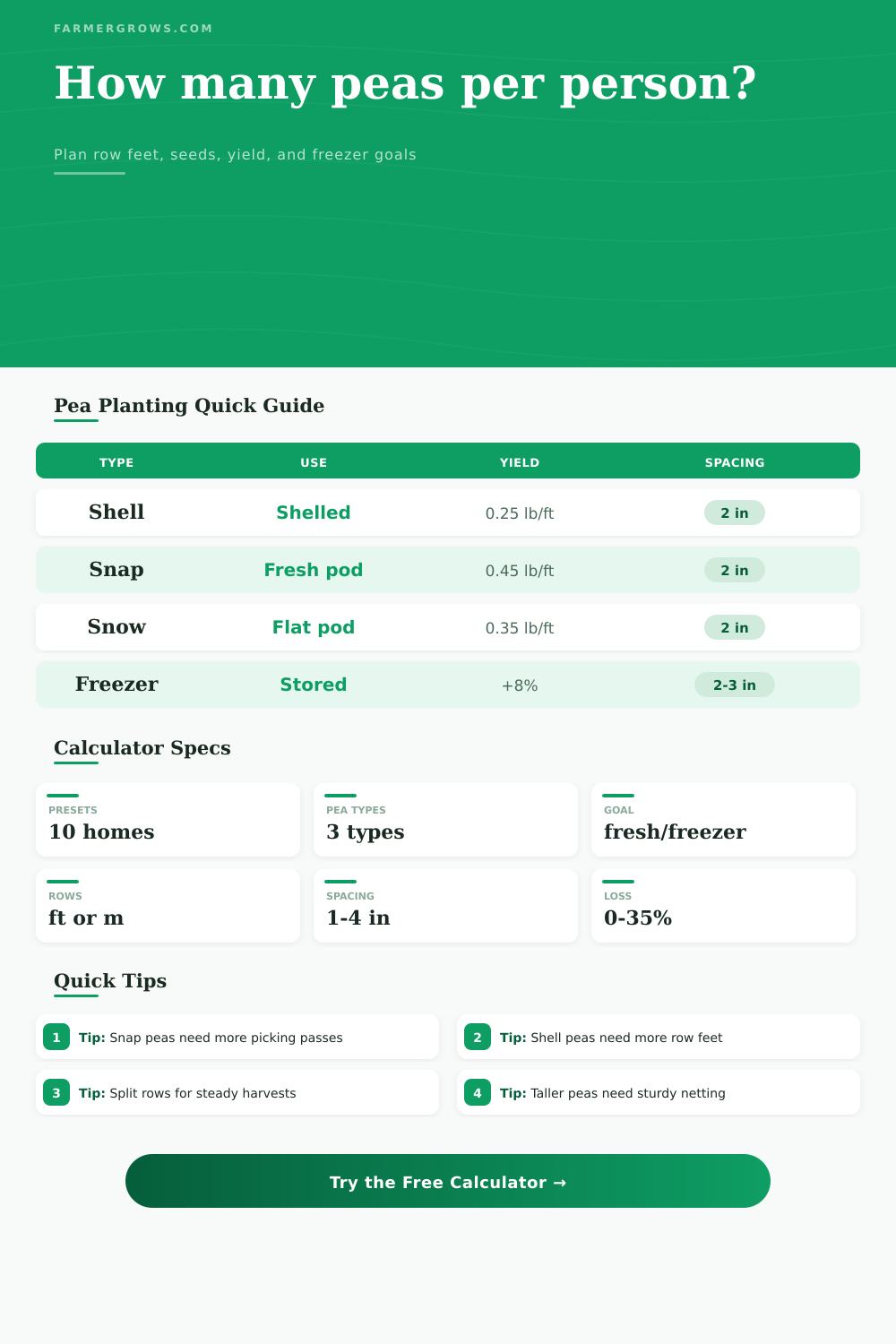
Plan shell peas, snap peas, or snow peas by household size, fresh eating or freezer goals, row length, succession count, harvest loss, trellis height, and seed spacing.
Choose a household pattern, then adjust the pea type, pounds per person, row yield, row length, and harvest loss for your garden.
Your Pea Planting Plan
Calculated from your household pea goal and row setup.
Use when the goal is bowls of shelled peas. They take the most row footage because the pod weight is discarded before eating.
Use for whole edible pods. A smaller row can feed more people by weight, but harvest timing matters because pods mature quickly.
Use for flat young pods. They often yield less weight than snap peas, yet stretch well in salads, stir fries, and mixed freezer packs.
| Household Plan | People | Pea Type | Typical Goal | Suggested Pounds Per Person |
|---|---|---|---|---|
| Light fresh garnish | 1 to 2 | Snow or snap | Salads and quick meals | 2 to 3 lb |
| Regular fresh eating | 2 to 4 | Snap peas | Snacks and side dishes | 4 to 6 lb |
| Shell pea dinners | 3 to 5 | Shell peas | Shelled peas for meals | 5 to 8 lb |
| Freezer household | 4 to 6 | Shell or snap | Stored bags for winter | 8 to 12 lb |
| Shared garden row | 6 to 10 | Any type | Multiple pickers | 5 to 9 lb |
| Pea Type | Editable Yield Range | Seed Spacing | Trellis Height | Planning Note |
|---|---|---|---|---|
| Shell pea | 0.18 to 0.35 lb per ft | 1.5 to 2.5 in | 3 to 5 ft | Use edible shelled weight, not pod weight. |
| Snap pea | 0.30 to 0.65 lb per ft | 1.5 to 3 in | 4 to 6 ft | Pick often to keep pods tender and producing. |
| Snow pea | 0.25 to 0.50 lb per ft | 1.5 to 3 in | 4 to 6 ft | Flat pods weigh less but harvest over many passes. |
| Dwarf pea | 0.18 to 0.40 lb per ft | 2 to 3 in | 2 to 3 ft | Short vines save trellis height but may yield less. |
| Total Row Feet Needed | One Planting | Two Successions | Three Successions | Good Use Case |
|---|---|---|---|---|
| 20 ft | One 20 ft row | Two 10 ft rows | Three 7 ft rows | Small snap pea snacks |
| 40 ft | Two 20 ft rows | Two 20 ft plantings | Three 14 ft plantings | Family fresh eating |
| 75 ft | Three 25 ft rows | Two 38 ft plantings | Three 25 ft plantings | Shell pea dinners |
| 120 ft | Four 30 ft rows | Two 60 ft blocks | Three 40 ft blocks | Freezer or shared harvest |
| Goal Type | Calculator Adjustment | Why It Matters | Best Pea Fit |
|---|---|---|---|
| Fresh eating | No freezer factor | Plan for edible harvest used soon after picking. | Snap and snow peas |
| Freezer bags | Add 8% blanching and trimming factor | Accounts for sorting, trimming, and moisture change. | Shell and snap peas |
| High loss garden | Add 20% to 35% harvest loss | Useful for heat, pests, missed pickings, or low germination. | Any pea type |
| Steady harvest | Use 2 to 3 successions | Spreads picking windows instead of one large flush. | Snap and snow peas |
Separate shell peas from edible pod peas. Shell pea pounds are edible peas after shelling, while snap and snow pea pounds count the whole pod you harvest.
Match succession count to weather. Cool spring areas can use repeated sowings, while hot climates often get better results from one spring crop and one fall crop.
Can you plant peas in early spring? Yes, because you crave a taste of things to come, fresh produce to eat during growing season. Only problem: Enthusiasm may have gone past the garden’s real ability to support it.
Plant a long row of peas and you’ll get 40 pounds of snaps before they goes starchy on you. Plant unwisely, and all you’ll ever see is three handfuls here or there. Why the disparity? The difference depends as much on what shelled means than what fresh means. Even experienced growers fall into this trap.
How to Grow Peas in Your Garden
They say shell peas are the most deceptive of bunch, and they’re distinct from snow and snap types. The part you eat isn’t big: What’s available on the supermarket shelf, those frozen peas, are just the seeds weight, not the pod’s. To grow the thing and then hand-shuck it in garden? That’s the pod…plus its green seed innards. There is a big difference between how many feet of row are required to produce the same pounds of edible food compared to a snap pea, which go straight from vine to plate unshucked.
Want to freeze some peas for eating out-of-season later? Remember: There will be volume lost during freezing; adjust your plan to match before sowing. An easy-to-use calculator can help determine how large these rows should of be, so you don’t end up with too many bare shells.
Spreading the work around; succession planting, is one thing. Another is that peas are cool-season crops that burn out when heat arrives; sowing all your seeds in late February will yield a magnificent two-week harvest in April and then nothing till fall. By splitting the seed among two or three plantings, you spread the pickin’. You don’t battle a headlong rush but has tender pods to enjoy instead.
And then there’s the fact that shelling 20 pounds of peas at once is hard. Five pounds spread out over a month? No problem.
The health of your crop depends off its spacing, and how high you make the trellis. Peas are strong vines that will climb anything they can get their tendrils into. Whether it’s you or the twine that does the job, the plants requires some kind of support. Supporting peas is not just for aesthetics; it helps keep foliage off wet ground and keeps the pods from rotting by keeping them dry.
Crowding peas makes for poor air circulation, mildew is always a risk. Spacing them too far apart wastes precious garden real estate to expanses of empty earth. Two inches apart produces maximum yield, while still allowing for healthy plants.
You must plan for harvest loss, because it happens. For peas, you pick them in the dewy morning with slugs. The system is never perfect. You’ll miss some pods. Pods will fall off and lie on the ground before you get to them. Birds might nab some en route. A little margin for such losses means no freakouts before first frost. You reach your freezer goals. Small margins buy peace of mind.
How do you decide among shell peas, snow peas and snap peas? Do you prefer something that’s good in a stir-fry or is it snack food you crave? Crunchy sweet snap peas are snackable. Delicate and flat, snow peas shine as stir-fry material. And then there are those shell peas, the workhorses of freezer.
You need to consider the space required and the yield profile. It’s all about figuring out where your garden can fit another crop, and how hungry your family will be once it’s time to eat. After that, it’s just logistics. Eat peas while they are still good and tender; don’t wait till they get tough or spoiled. That’s the job. You have to match supply with demand and spread things out so there is no extra work at any time. And it means that the initial chomp of spring will be as it should be. You can taste it in the first tender pod when it pops off the vine, knowing you got the math just right.