Peach Seed Sprouting Time Calculator
Estimate when cleaned peach pits may root after shell cracking, cold stratification, fridge storage, warm sprouting, seed age, moisture level, and transplant readiness.
📋Peach seed sprouting presets
Start from real peach-pit situations: fresh cleaned pits, cracked shells, already chilled seeds, old dry pits, over-wet bags, and outdoor-planted pits.
Peach sprouting forecast
Calculated results will update after you enter the peach pit details.
Detailed peach pit breakdown
🍑Pit source, cleaning, and seed age
Peach pits sprout best when taken from fully ripe fruit, scrubbed clean of pulp, dried briefly, and stratified before the embryo loses moisture.
❄Cold stratification schedule
Most peach seeds need weeks of moist chilling. The calculator estimates how much dormancy-breaking chill remains and whether fridge temperature is helping or slowing the process.
🌱Warm sprout phase and transplant cue
After chilling, peach kernels usually root before the shoot appears. Warmth, root length, and frost timing decide when to pot up or transplant.
📊Peach sprouting planning metrics
🕒Stage timing reference
Clean and dry
Crack shell
Cold stratify
Warm sprout
📘Peach pit reference tables
| Cold condition | Range | Effect | Action |
|---|---|---|---|
| Near ideal fridge | 34-41°F | Strong chill | Check weekly |
| Cool but slow | 42-45°F | Partial chill | Add days |
| Too warm | 46-55°F | Weak chill | Move colder |
| Freezing risk | Below 32°F | Embryo stress | Avoid freeze |
| Treatment | Speed | Risk | Best use |
|---|---|---|---|
| Whole pit | Slow | Low damage | Outdoor burial |
| Sanded seam | Moderate | Low | Beginners |
| Cracked shell | Faster | Medium | Fridge bags |
| Bare kernel | Fast | High | Careful checks |
| Feel | Water | Oxygen | Correction |
|---|---|---|---|
| Wrung sponge | Damp | Good | Keep steady |
| Almost dry | Low | Good | Mist lightly |
| Wet pockets | High | Lower | Add dry medium |
| Standing water | Too high | Poor | Replace medium |
| Warm temp | Root speed | Concern | Check |
|---|---|---|---|
| 60-64°F | Slow | Delay | Weekly |
| 65-75°F | Best | Drying | 3-5 days |
| 76-82°F | Fast | Mold | 2-3 days |
| 83°F+ | Stress | Rot | Cool down |
Scrub peach pits until no sweet flesh remains, then dry the shell surface before bagging. Pulp residue feeds mold during the long cold phase.
Use a vise, nutcracker, or pliers slowly along the seam. Stop as soon as the shell opens; a nicked kernel may rot before rooting.
The medium should clump lightly without dripping. If the bag fogs heavily or smells sour, refresh with clean damp medium.
Pot rooted kernels before the root curls. Set the kernel sideways or root-down, cover lightly, and keep evenly moist under bright light.
Will this be a tree? Or is it just some waste, and is that all you’re holding in your hand, a heavy pit in your palm? That’s the initial question asked by anyone who wants to grow peaches. And then there are questions such as this one: What if I’ve killed it with good intentions, made everything too wet? And how long am I going to have to wait to see something happen?
Cold stratification is sort of a magic freezer spell, most people thinks. Toss those seeds into the freezer and hope for spring. That’s not at all what happens. Put in your conditions, and the tool (above) does the math. After you plug in the variables you can actualy control, whether you left the seedling shelled or not, or if the pits were already chilling awhile before you got them; the tool spits out a likely window for rooting. So you know when to move things inside, or when to go back in and check the bag, without having to guess. No need to remember any biological formulas. Just understand what those inputs mean in terms of your success rate.
How to Grow a Peach Tree from a Pit
First, let’s talk about fruit. If you have a tree-ripe peach, its embryo is fully formed and raring to go. If not, one pulled from still-firm but underripe fruit may has a dormant embryo that will never respond to chilling, or it may be an empty pit altogether.
Cleanliness is more important then many people think. Sugar in the peachy flesh sticks and is sugary; if there’s any pulp left clinging to the shell, that’ll feed mold spores hanging around in your moist vermiculite. Seed-killing mold works far faster than cold ever could. Scrub it off, let it dry a bit and bag it up. That little act makes keeping the air exchange reliable while in storage.
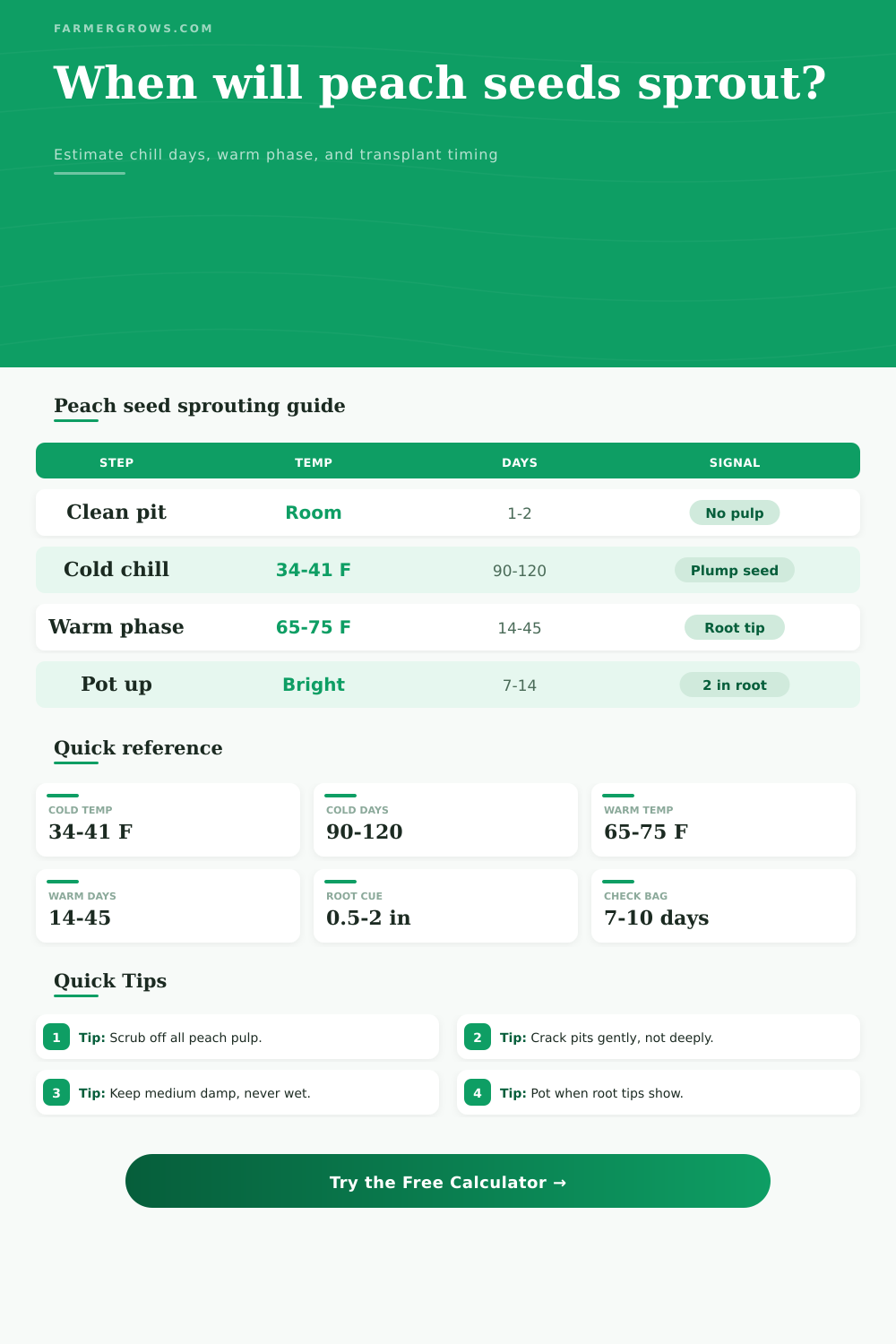
Patience is required during the stratification phase. To break dormancy, peach embryos requires a prolonged chill period. Ninety to one hundred twenty days worth of consistently cool conditions. The temperature must range from thirty-four to forty-one degrees Fahrenheit inside your fridge. Too low (below freezing) and you’ll kill the embryo; too high (in the forties and fifties) and the chill will be too slow, causing indefinite waiting. This is where the calculator factors in temperature accuracy, adjusting the time line to match.
Is that chill doing anything? Or are you merely storing wet rocks in a box? Moisture management is the silent killer of seed projects. You’re aiming for a medium that’s like a wrung-out sponge. It should be damp, not dripping. Sealed bags with water pooled on the bottom create an anaerobic zone; roots will rot away, suffocating. Once a week or two, check your bag. Squeeze the corners. Does it squirt? It is too far. Top up with dry soil to soak up any extra moisture. Bone-dry? Lightly mist. That’s the right balance: hydration and oxygen all at once.
Shell cracking accelerates…but at a cost. Because the hard shell impedes water penetration, a full pit will take longer to soak. Cracking the shell open helps the pit get wet sooner, shaving weeks from the soaking time. But there’s a catch. One misstep with the pliers and you’ll gouge the embryo in the kernel. A mangled kernel goes bad in no time. It’s a give-and-take, it’s fast or safe. Newbies are generally better off skipping cracking, or just sanding down the shell seam lightly.
When the chill’s over, the root tip warms up. Before there’s even a hint of a green shoot, you’ll notice white roots poking through. That’s your signal to pot them up. No waiting for leaves; otherwise their roots might stretch and tangle and eventually snap off in a plastic bag. Pot the kernel sideways with the root pointing down, cover it lightly, and keep it under bright light.
How do I know when? At what point does it switch from potential energy to kinetic? The sprouting calculator guesses, taking into account how long you want the root to be. It tells you when that time is coming so you can get ready for actual transplanting instead of letting the roots wander around in a plastic bag.
Growing a peach from seed is an act of delayed gratification. It’ll be years before you can taste if it is sour or sweet. That’s part of the fun: in the meantime, it’s all about the process. Witnessing a tough pit soften, then split open and expel a tender little root reminds us that there’s life even when the pressure is on.
Trust your eyes over the prediction; use it as a guide, yes, but let your hands respond to what they see. Does something look amiss? Go go go. Mold grows. Roots dry up. Time doesn’t wait for any orchardist. Stay tuned and make sure to keep things moist (not dripping) with frequent checks.
Those quiet choices in the dark of winter matter. They’re what grow into your future tree.