Paperwhite Bulb Bloom Time Calculator
Plan when to start paperwhite narcissus bulbs indoors for a chosen display date, with forcing method, room temperature, bulb size, staggered starts, bloom window, and height control built in.
Paperwhites are different from tulips and hyacinths: they do not need a cold chilling period. Most timing differences come from forcing method, bulb size, starting stage, indoor temperature, light, and whether starts are staggered.
Fast and decorative, but stems often run taller because roots stay warm and wet.
A steadier method for grouped pots, especially when the room is cool and bright.
Good for a single large bulb when you can keep the water just below the basal plate.
Start multiple containers a few days apart to stretch fragrance and bloom coverage.
Paperwhite Forcing Plan
Timing is estimated from no-chill indoor forcing behavior, then adjusted for method, bulb grade, room temperature, light, starting stage, and display window.
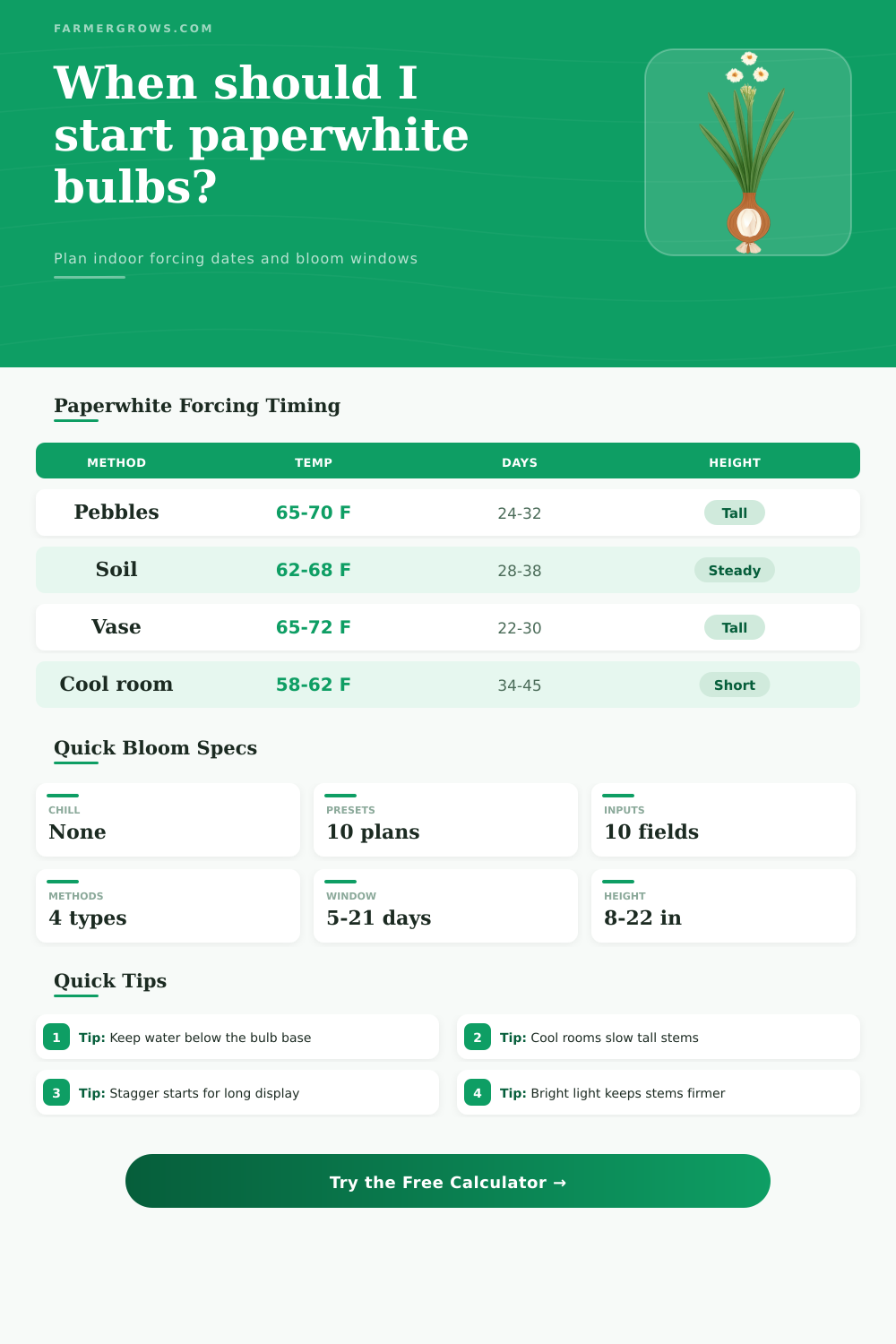
| Forcing method | Best indoor temperature | Typical first bloom | Height tendency | Use when |
|---|---|---|---|---|
| Water and pebbles | 65 to 70 F after roots show | 24 to 32 days | Tall unless kept bright and cool | You want visible roots and a decorative bowl |
| Soil or potting mix | 62 to 68 F with bright light | 28 to 38 days | Steadier and easier to support | You want a centerpiece that is less top-heavy |
| Bulb vase | 65 to 72 F until roots fill the base | 22 to 30 days | Often tall from constant water access | You are forcing one large bulb quickly |
| Cool room finish | 58 to 62 F after shoots reach 2 inches | 34 to 45 days | Shorter, firmer stems | You can trade speed for height control |
| Bulb size | Timing adjustment | Bloom count tendency | Height note | Best use |
|---|---|---|---|---|
| Small 12-13 cm | Add about 5 days | Fewer stems and later flowers | Shorter but less dramatic | Budget bowls or practice forcing |
| Standard 14-15 cm | Add about 2 days | Reliable single display | Moderate height | Small gifts and windowsills |
| Large 16-17 cm | No timing change | Strong display with multiple stems | Classic tall paperwhite look | Most holiday containers |
| Jumbo 18+ cm | Subtract about 3 days | Fullest, fastest display | Can become top-heavy | Late starts and showy bowls |
| Display goal | Stagger gap | Containers to start | Expected coverage | Planning note |
|---|---|---|---|---|
| One dinner or party | 0 days | 1 container group | About 4 to 7 strong days | Start all bulbs together for one full flush |
| One week table display | 3 days | 2 containers | About 8 to 10 days | Move the fresher bowl forward as the first fades |
| Two week holiday run | 5 days | 3 containers | About 14 to 17 days | Good balance for fragrance without too many pots |
| Long winter windowsill | 7 days | 4 or more containers | About 21+ days | Use cooler rooms for the later waves |
| Symptom or target | Likely cause | Timing effect | Height effect | Correction |
|---|---|---|---|---|
| Flowers opening too early | Warm room or very large bulbs | Speeds bloom by several days | Often taller stems | Move to bright 55 to 60 F location |
| Slow roots | Water too high, cold room, or weak bulb | Adds 4 to 10 days | Can weaken support | Keep water just below bulb base |
| Stems flopping | Low light, warmth, or no support | No big timing change | Adds several inches | Use cool nights, bright light, or stakes |
| Need shorter stems | Display space is tight | May slow 2 to 5 days | Reduces height | Cool finish or dilute alcohol after roots |
For pebble bowls and bulb vases, keep water just below the bulb base. Roots should reach moisture, but the bulb itself should not sit in water.
Once roots anchor, brighter light and cooler nights slow stretch. For very short displays, a properly diluted alcohol solution can reduce paperwhite stem height.
Force these narcissus indoors if you haven’t yet; treat it like a calculation of timing and heat rather than just a decoration. How far in advance? You should of started before the holidays since you are aiming for that day. However, the bulbs responds to warmth in a hurry and will not thank you later. Unlike hyacinths or tulips, they don’t need a chill period first. Easy to make happy, but hard to get right. Why’s that? Warmth makes them grow fast, and then what happens?
First comes timing: Your desired display date is the starting point. That’s the date that you want the first blooms to open; a calculator does the rest of the math. It factors in your chosen forcing method (soil? pebbles? It factors in your chosen forcing method, such as using soil, pebbles, or a special vase, and also your room conditions.
How to Calculate Timing for Forcing Narcissus
A different set of variables affects the speed at which the shoot pushes up into view… Water vs. Pebbles, for instance, will change the stability of its rooting environment, affecting how quickly the shoot breaks through. Generally, the taller the stem, the more water used, so water and pebble set-ups tend to yield longer stems. Why? This happens because the roots is warm and stay consistently moist.
Soil provides greater strength of support and resistance, but usually requires extra time to be at a similar stage of development. The type of potting mix also counts. But so does the size of the bulbs you’re planting in it. Because jumbo bulbs contain more stored energy, they’ll try to rush their green growth onward faster then a small one would. You’ll require fewer days to get to the point of flowering if you start with a big bulb versus small. Therefore, you need to know your bulb size when using the tool.
Starting with a small bulb means you’ll be disappointed if you use the same timing that you would for a bigger one. Those little packages has less fuel; the math takes this into account, so you don’t wait too long before starting them and have tight buds on New Year’s Day.
It all has to do with temperature, which nobody can see. Anything warmer accelerates it, and if your home climate is always on the warm side (for instance, your living room is around seventy degrees F), you’ll want to be starting those bulbs sooner. Otherwise, they’ll bloom sooner in the living room compared to the coolish office or bedroom. The calculator factors in your daytime and nighttime temperatures to fine-tune its calculation. It also takes into account how much light there is. The bulbs are stronger and their stems stays more compact when grown in bright indirect light. Low light makes them stretch for any light they can find, so they grow tall but floppy because they are top-heavy.
Instead of packing everything into one week, staggering your starts can extend the display period: Plant several container of something, wait a few days and repeat until you have enough fragrance to last during that two-week holiday visit. The tool will help you space those intervals out… Not too many flowers opening on any given day, then none! That’s how you stagger things visually (and also labor-wise) so you don’t overwhelm yourself or your space either. It is a no-fuss way to control both visual impact and workload.
Then there’s height control; many gardeners find themselves with narrow window-sills or tight tables to contend with. Once the roots have been established, cooler nights will slows down any tendency to stretch upwards. Alcohol solutions (in very weak dilutions) work for some gardeners, but that must be timed carefully and the solution strength adjusted correctly or else you will harm the bulb. Whether you choose one of these height-management tactics or not, the calculator has a place where you can enter them into the program to see how they affects when you’ll get flowers.
No matter what tactic you take, it’s important that water never rises higher than the bulb’s base. Sitting around in water invites rot; bad news long before the show starts.
Are you forcing bulbs? Get it out of your system now so there’s no stress because then you can plan in advance. You’ll know exactly when each one will want to enter the bowl, and you’ll know how your own living conditions will speed up or slow down that process. Then, you just plan, wait, and maintain. A few early green shoots pushing up are reward enough, but a flower opening right on cue feels like a victory all my own. A plain old bulb becomes a timepiece that performs according to schedule, tailored to fit right into yours.