
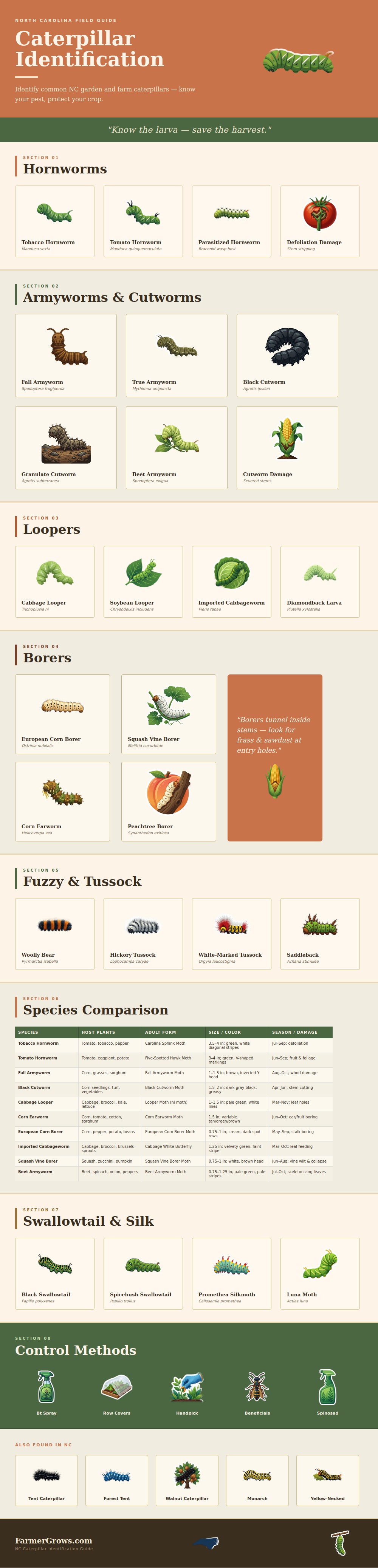
The leaves is lacey: No wonder you’re disappointed in this years crop of tomatoes (or cabbage, or broccoli). Something ate them at night. In fact, it’s probably small, green and very efficient, a tiny, hungry caterpillar.
Here’s what to do next, and why it is important to identify them: not all larvae need chemical treatments. Many become butterflies and moths; some are crop-devourers and must be dealt with immediately. If you don’t know, you’ll spend more money, endanger pollinators, and poison your vegetables unecessarily.
How to Identify and Stop Garden Pests
In North Carolina, there are several major suspects that you’re likely to encounter, and they is grouped by behavior rather than just appearance; which makes all the difference because treatment depends on what the pest is doing to your plants.
The most dramatic example is the big green larvae called hornworms, which has either diagonal stripes or V-shaped marks on them. These guys hide really well against the plant’s leaves, eat a lot, and in days can destroys a tomato plant. If you discover one of these worms with white, rice-like cocoons on its back, don’t kill it; those are larvae of beneficial parasitic wasps that help control such pests. Letting an infected hornworm be will contributes to building self-regulating backyard ecosystem.
Other sneaky ones: cutworms, armyworms. Armyworms march in battalions; they can destroys a field of corn or sorghum and then…move on. Their head has an upside-down Y mark, distinguishing them from other green larvae (and making it easier for you to identify). Cutworms are tricky; they do their work at night, underground. So when you see seedlings toppled over by morning, you think maybe disease or some kind of wind damage did it, but no: The culprit is a dark creature who hid in the soil. Knowing its trick helps: Place barriers or traps earlier in the evening instead of around high noon.
Other challenges include cabbage worms and loopers. Unlike those with prolegs in mid-body, loopers arch back when crawling, and prefer to munch on leafy brassicas such as kale, broccoli and cabbage, chewing irregular holes in foliage. Though they don’t typically kill the plant (except if infestation is huge), you’ll know they’re around. Ditto with imported cabbage worm, though usually it’s less damaging.
It is more insidious: borers tunnel into fruits and stems. You won’t see borers till some squash suddenly wilts, or signs of fruit rotting from inside appear on corn. By then, it is already to late. Damage is already done in the interior tissue, which is beyond the reach of sprays.
Begin by using the least-toxic method first. If you check regularly, handpick larger pests: cabbage loopers, hornworms and so on. Smaller larvae or those hiding can be tackled with biological controls like Bacillus thuringiensis (which targets just caterpillars, no harm to birds or bees). Physical barriers, such as row covers, excludes moths from laying eggs completely.
Manage; don’t sterilize. In a healthy garden ecosystem, there will always be some chewed-up leaf. Once you know which larvae are which, you won’t fear every bug and that shift in perspective alters what you spray, how you tend your soil, and what lands on your plate. You should of known the larva, save the harvest.