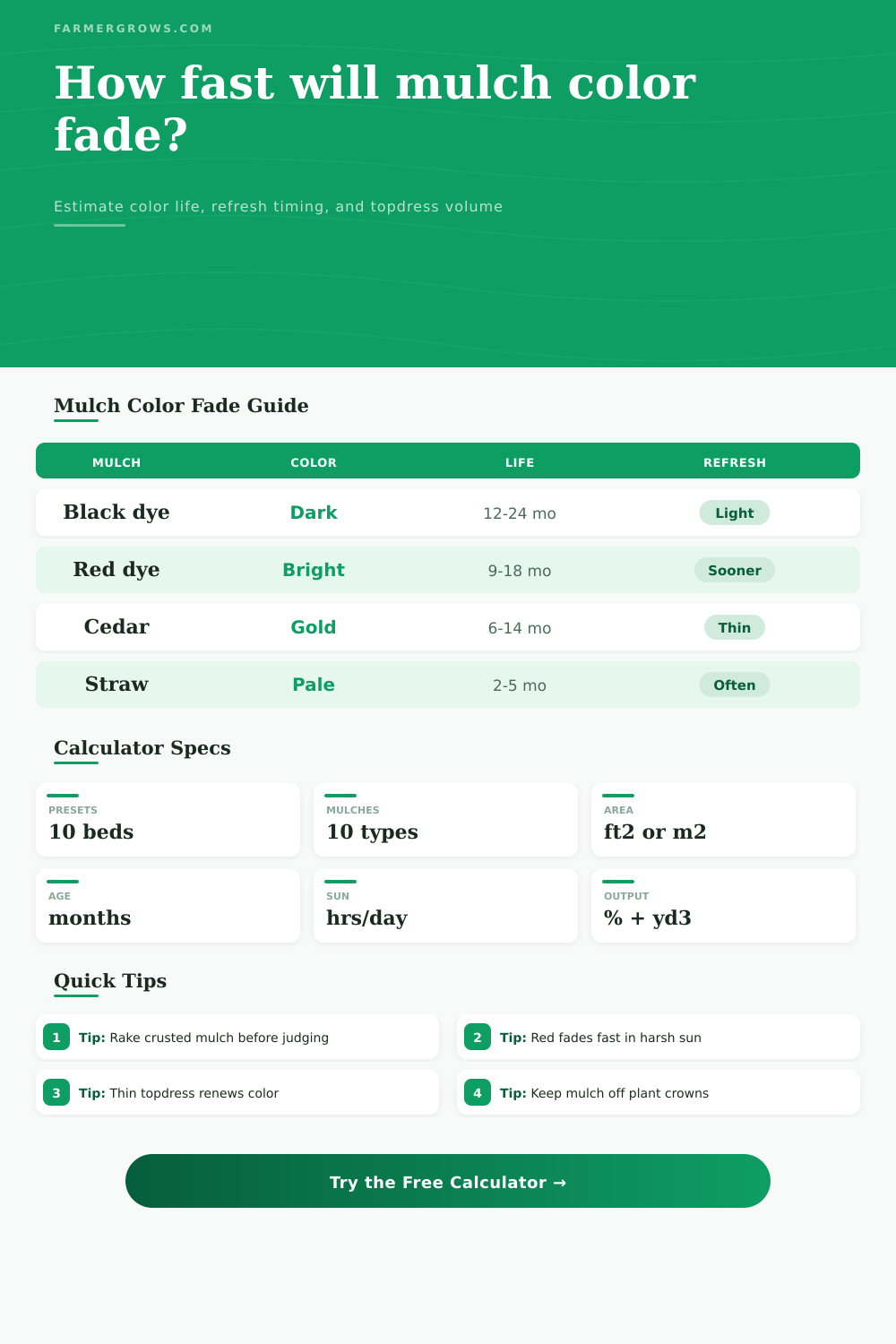
Mulch Color Fade Calculator
Estimate how much color remains in dyed, natural, bark, straw, leaf, rubber, or cocoa mulch and plan the next topdress before beds look washed out.
Load a common garden, orchard, landscape, or play-area mulch situation, then adjust exposure, age, depth, and target color for the bed in front of you.
Mulch Color Fade Results
Adjust the inputs to estimate color life and refresh volume.
Looks crisp when fresh, but pale dust and sun-bleached chips stand out sharply against the dark surface.
Often reads tidy for longer because faded pieces still sit close to natural bark and soil tones.
Good for bold beds, though UV and rain fade the red-orange tone sooner than darker brown blends.
Cedar, pine, leaf, and straw mulches fade as part of normal aging and often need thinner seasonal refreshes.
| Mulch type | Typical color half-life | Bulk density used | Fade behavior |
|---|---|---|---|
| Black dyed hardwood | 18 months | 700 lb/yd³ | Strong first-season color if raked clean and not overwatered. |
| Brown dyed hardwood | 16 months | 680 lb/yd³ | Fades gently because color remains close to natural bark. |
| Red dyed wood mulch | 14 months | 650 lb/yd³ | Bright pigments show UV loss and surface dust earlier. |
| Natural cedar chips | 12 months | 430 lb/yd³ | Gold shifts toward tan, silver, and gray with weather. |
| Pine bark nuggets | 10 months | 520 lb/yd³ | Bark dries and lightens, especially on exposed nugget faces. |
| Shredded cypress | 13 months | 460 lb/yd³ | Fibers hold shape but surface tips bleach in open sun. |
| Clean straw mulch | 3 months | 140 lb/yd³ | Light color and decomposition make color refresh seasonal. |
| Shredded leaf mulch | 4 months | 380 lb/yd³ | Dark brown fades as leaves dry, curl, and break down. |
| Colored rubber mulch | 48 months | 850 lb/yd³ | Slow color loss, but dust and wear can dull the surface. |
| Cocoa hull mulch | 5 months | 360 lb/yd³ | Fresh cocoa brown darkens when damp and pales when dry. |
| Exposure condition | Multiplier range | What drives fade | Planning note |
|---|---|---|---|
| Deep shade or covered bed | 0.70 to 0.90x | Low UV and less splash | Raking may restore enough color without topping. |
| Average open bed | 0.95 to 1.10x | Normal sun, rain, and cleanup | Annual light topdress is usually enough. |
| Hot full-sun slope | 1.20 to 1.55x | UV, drying, wind, runoff | Use darker browns or plan a midseason topdress. |
| Paths and play areas | 1.25 to 1.70x | Abrasion and repeated disturbance | Judge both color and maintained safety depth. |
| Topdress depth | Coverage per yd³ | 2 cu ft bags | Typical use |
|---|---|---|---|
| 1/4 inch | 1296 sq ft | 13.5 bags per yd³ | Color dusting over mostly full beds. |
| 1/2 inch | 648 sq ft | 13.5 bags per yd³ | Normal color refresh after a season. |
| 3/4 inch | 432 sq ft | 13.5 bags per yd³ | Visible new surface without burying crowns. |
| 1 inch | 324 sq ft | 13.5 bags per yd³ | Heavier cosmetic renewal or thin areas. |
| 2 inches | 162 sq ft | 13.5 bags per yd³ | Partial rebuild of depleted mulch beds. |
| Project size | Area | 0.75 in topdress | 2 cu ft bags |
|---|---|---|---|
| Small border bed | 60 sq ft | 0.139 yd³ | 2 bags |
| Foundation strip | 120 sq ft | 0.278 yd³ | 4 bags |
| Tree ring, 8 ft diameter | 50 sq ft | 0.116 yd³ | 2 bags |
| Vegetable paths | 200 sq ft | 0.463 yd³ | 7 bags |
| Play zone | 225 sq ft | 0.521 yd³ | 8 bags |
Rake before you topdress. Dust, leaves, crusting, and upside-down chips can make mulch look more faded than it is. A light rake often lifts darker material before new mulch is needed.
Topdress lightly near plants. Fresh color can be restored with a shallow layer, but keep mulch off stems, trunks, crowns, and vegetable seedling bases to reduce rot and pest pressure.
It’s early spring, and your landscape looks like a construction zone, not a garden. Last year, you used black dyed mulch to improve the curb appeal; but now the mulch has gone all gray, looking faded. This look bad. It sends a message to neighbors that things is being neglected. Or, maybe the mulch is breaking down too fast as moisture barrier.
A simple calculation (above) show whether there’s enough color left, and if not, when to do something about it. It turns a fuzzy sense of decline into solid maintenance plan.
How to Keep Your Mulch Looking New
Fade is not all about sunlight. Sure ultraviolet light are the culprit. But more frequently it’s water that removes the surface dye and then UV cooks what’s left. Rain and spray-in watering (like sprinklers), remove surface dye first, followed by UV. Washing away has a bigger impact different than heating up. So if your beds is uphill (meaning they receive runoff) or if they’re getting lots of soaking, water strips away color quicker then heat does. That’s where the question of exposure comes into play. The tool help distinguish between slow fade in shaded spots versus aggressive fade in exposed, wet locations. Guessing at this factor is most peoples habit, but math matter.
The color stays for different amounts of time depending on what is used. Hardwood that has been black-dyed will last longer than hardwood colored with red dye, which fades more rapidly and turn into a orange-brownish mud in just a few months. Cedar that’s left natural starts out rich gold but goes silvery gray fairly fast; it’s fading naturaly, not failing. These built-in fade rates factor into the calculator, since it applies multipliers to those rates depending on the type of rubber or wood you choose.
It also factors in how deep current layer is. If there was once a thicker layer and now only thin layer of mulch covers bare ground, the underlying soil may show through. This makes the mulch appear a little darker because of high contrast, even though the chips themselves has faded. When mulch gets too thick, it traps dust on top and hides how bad things might be below.
Maybe the best use of that refresh window is that it tells you how long (in months) until the color becomes less than what you selected as the threshold. So you can time a topdress instead of a full replacement. Full replacements are costly, and usually not necessary. Half an inch of a new topdressing will add a renewed layer of color, while maintaining the water barrier function of the mulch, but won’t be deep enough to hide the tops of plants’ crowns. That’s where the calculator figures in amount required for that skinny layer, with some extra to cover any odd-shaped edges. You won’t run out of mulch because you forgot about gaps between plant or empty spaces under it from an unevenly shaped bed.
Once the bed’s totally bare, it’s too late, you’ve forgotten about the signs of fade. But by then the mulch is probably also gray, which means the bed had been on its way down for months. A little care, regular care… Prevent that drastic drop-off. To prolong the life of the bed a few more weeks, rake up what’s there; this will lift up some of the darker (undyed) chips below and recirculate them back on top. It would of bought much time, but just enough to reset the clock a bit.
The calculator considers how often the mulch is walked on and raked, because rubbing against it wears off the layer of dust that hides fading. No one walks or runs through your mulch? Color lasts longer than it would in an ornamental border with low traffic. Kid or pet activity will shorten color life.
All in all, remember: Mulch is consumable. It fades. It washes away. It breaks down. Getting real about that saves you both effort and money.
That doesn’t mean you have to replicate the look of the day you put it down every other day. All you want (and need) is a workable routine. This tool will help you discover your rhythm. It replaces guesswork with a planned approach. If you know exactly how many bags you’ll require for a light topdress, chances are you’re going to be more likely to follow through. Just buy what’s required and apply when the numbers tell you to apply.
That’s why people tend to get this wrong. They think about color, when they should of thought about timeline. Light, regular touches make the beds appear crisp longer than an infrequent but heavy overhaul. The gray stuff comes back each year, but if timed right, never lingers long enough to notice.