
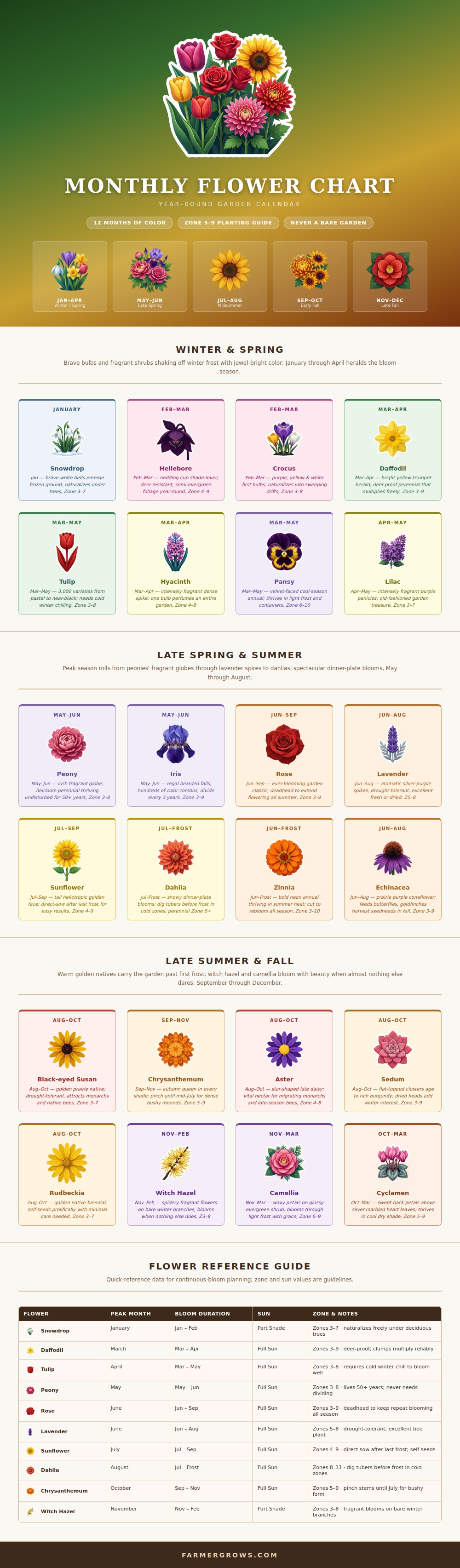
The secret to making better garden is to plan for blooms instead of working harder. “It’s so frustrating when it is the end of October and everything outside here is brown and muddy,” says many a gardener. Why? Because there is no plan for color all year long in the garden.
Get the rhythm of plants; then have blooms every month of the year. Not all January-February are dead. Just look at those snowdrops emerging from frozen earth, pushing their way onward: There’s life there yet! And so it goes with hellebores (among others) emerging in the dark places, while other things wait frozen out until they can unfurl again.
How to Plan a Garden with Flowers All Year
The earliest bloomers color up and add structure to an otherwise bleak landscape. In addition: they gets the year’s earliest pollinators moving. It is another small but mighty ecological plus.
As temperatures begin to warm up, it’s time for bulbs: For a classic springtime look, plant daffodils and tulips together, but keep in mind that tulips are fussy; they want some realy cold winters to perform best. If you’re in a mild-winter area, consider skipping tulips altogether, or select ones that don’t require deep freezing.
Add fragrance with hyacinths (a bulb that adds scent, which is often overlooked in garden planning). A fragrant April makes the garden feel more alive than just something that looks good.
Pansies are transitional plants between cool and warm weather. These colorful beauties stands up to light frosts. Peonies are the stars of late spring. Give these guys some room and time; decades later, they return big fragrance and bigger flowerheads.
The chart says that peonies likes neglect. This is not how people garden today, as we love to dig things up and shift things around constantly. Neglect is best care for a peony.
Next up are irises, which come in lots of colors. June stars is roses; but roses need deadheading to really shine. Cutting off blooms fools the rose into flowering again, which means a much longer bloom time.
Tough Plants For Hot Days: What about lavender? They is easy to care for, drought-tolerant, and have silver-purple spires. Sow sunflowers directly after final frost with no fuss. Just sow and watch them go.
Dahlias are big flowers in July-August, but they must be protected from frost in cold zones. Zinnias are heat-proof beauties that hold their color till the first chill hits, making them a summer favorite.
Fall is typically the point when most garden give up…but it doesn’t have to be so for you. September and October are chock-full of color from chrysanthemums. Pinching them back in mid-July makes them bushier rather than leggier. This tiny trick makes a huge visual difference.
The asters, and Black-eyed Susans feeds the pollinators right through the season. This helps support migrating monarchs. Flat-topped clusters of sedum add architectural interest…and burgundy color even after their flowers go by. Texture, even without petals.
And then there are the winter bloomers that put it all together. Nothing blooming? Nothing but bare branches…and then you have witch hazel. Spidery, fragrant flowers that know how to bloom even on naked branches.
Camellias has waxy petals against a backdrop of evergreen plants. They defy light frost. Cyclamen add a touch of elegance in cool, dry shade. Plan for this group of late-season stars and make your garden have something to say…all year long.
IT’S an ongoing work in progress: To me, gardening is all about creating a year-round show, not simply planting flowers. No, you won’t have to grow everything on this list. Choose a couple plants for each season to assure that no matter what time of year it is, there’s something going on.
This way, your patch of ground becomes a living calendar. Pick one fall perennial and one spring bulb. Go from there. When you need it most, your garden will deliver.