
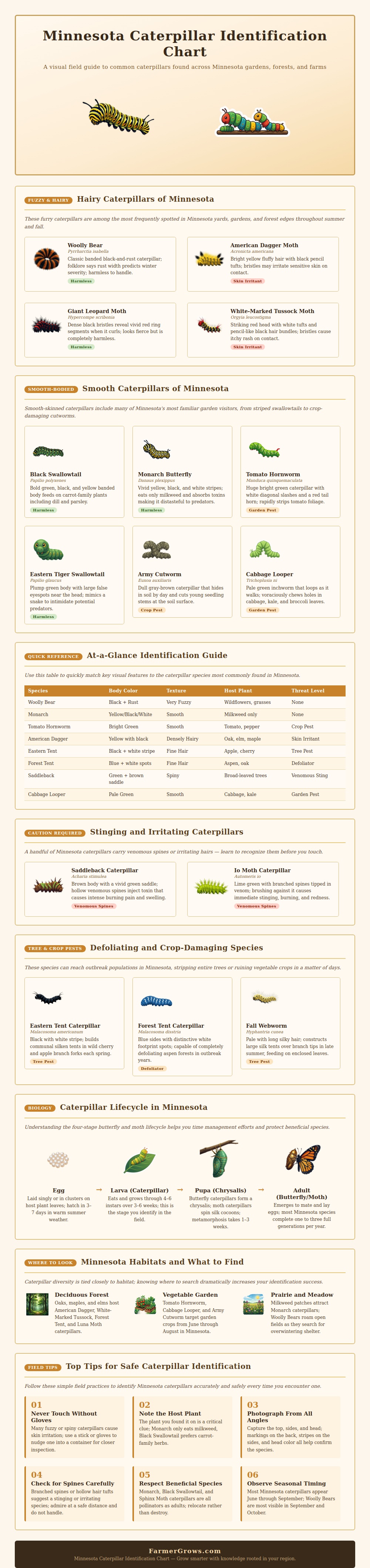
Late July in the yard in Minnesota can feel more like a controlled mess. Weeds win again. Water the tomatoes. Oh, my. What’s crawling across that leaf where there wasn’t anything yesterday? A helpful friend. Or an enemy poised to ravage your harvest? Knowing what it is make all the difference in whether to leave it alone or do something else.
When most of us spot a caterpillar, we think bird food, or maybe pest. Not so. That way of thinking, pest/no pest… Is a binary one. These creatures also fits into the local ecosystem, and understanding that can change everything. Common species is broken down in the visual guide above by their behavior and texture.
How to Identify Good and Bad Caterpillars in Your Garden
Why does that matter? Because texture becomes your first safety signal. If it’s furry or fuzzy, pause before you touch. For instance, the American Dagger Moth caterpillar appear soft and fluffy with a bright yellow fuzziness to it, but reach out and touch it and those hairs will irritate your skin. It is nature’s way of saying hands off. By contrast, the Woolly Bear are also furry, but harmless. He roams around during the day among wildflowers and grasses, not bothering anybody. Knowing the difference would of saved you from a painful rash, while keeping your curiosity alive.
Not all caterpillars are smooth bodied, which can cause other troubles in garden. One example is the Black Swallowtail, which is beloved by anyone who grows fennel or dill. If you’re patient enough to watch, it’ll turn into a yellow- and-black butterfly, as if a reward. Its foodplants is those of the carrot family, so it may devour some of your parsley first. But the payoff comes when it gives way to adult butterfly later on, an exchange generaly considered worthwhile.
And then there’s the Tomato Hornworm, a big green guy (or gal) with a red horn on the end of its body, no friend here. It will chew up tomato foliage at a surprising rate (and by the time you spot him or her), there may be only munched-upon stems left. Catching it early, and picking it off by hand prevents destruction of an entire plant.
When you’re stumped about who’s out there, clues from the plant itself will help: For instance, did you spot a striped caterpillar feeding on something different than milkweed? No matter how closely its color matches, it’s no monarch. That kind of detail go a long way in narrowing things down fast.
The chart above shows the relationships between crops and visitors. For example, the Cabbage Looper (above) targets brassicas like broccoli and kale. It help you direct your inspection efforts where it matters most: Where your susceptible crops grow. There’s no reason to examine each leaf across the yard if you know which ones is at risk of certain threats.
It’s not just what you look for, but when. Tent caterpillars appears in early springtime. They create silken nests in cherry and apple trees. By the time summer hits, cutworms will be lurking in your seedling’s soil looking for trouble. The same goes for leaf-eaters (loopers) in vegetable beds. Knowing their schedules can help you avoid panicking when you see something you don’t recognize. Chances are it’s simply a creature being itself, at the proper moment.
Take care: Always consider the good guys when you weed or prune. “Oh, I’ll just get all the caterpillars” is not a good motto; that’s how you lose the coming crop of pollinators. It’s all about the selective approach. Know whom to leave alone, and know which plants you really need to protect from specific pests. Observe first; intervene later. A sharp eye and a set of gloves serve better than the knee-jerk solution. Knowing whom you have on hand, and why, means less war with nature, and more livig alongside it. Shift that attitude, and everything else shifts, too.