
And so it is with mini watermelons. It’s not that you’re unlucky; it’s mostly a matter of timing. No one wants to cut into a watermelon expecting pink flesh, only to find something pale inside. No, mini watermelons will forgive you; but only up to a point. They don’t wait around while you figure out your calendar. The peak comes and you’ve got maybe three or four days before it’s gone. It’s all the difference between flavor and dampness: all the difference in the world.
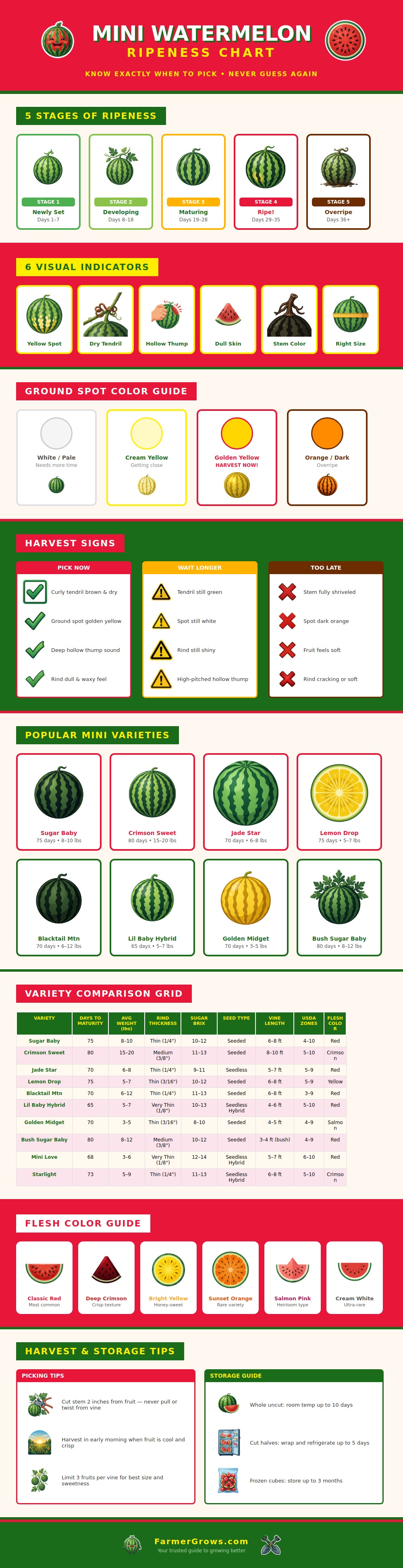
It’s also about following the fruit itself, visually: When does its stage of development match up with each clear-cut visual change in its appearance? Week one, the fruit hasn’t even started forming; week two or three, those stripes comes into focus, but no picking time yet. The true indicator occurs when the ground spot begins changing from creamy white to deeper shades of yellow (as in gold). That’s the sugar-migration sign. Wait till it’s gold (not pale), then take it home.
How to Pick Ripe Mini Watermelons
A second clue: While the melon is developing, its stem will have a curly tendril that remains green and flexible. When the melon is ready for harvest, the plant shut down the resources going to its completed meal. The tendril browns and dries out, becoming brittle and easy to snap off. This is a better clue different than judging by girth alone, though with mini types, where weight depends on rainfall and soil type, look to the tendrils instead.
You can test ripeness by knocking on the rind. To test ripeness this way, you’ll tap on the rind with your knuckles and listen for variations in sound. If the melon is unripe, it will have a dull, solid-sounding thud of a wall; when ripe, it will be hollow sounding and ring as its fibers separate inside. It’s not something you’ll notice right away, but it does become second nature after a bit. Glossy skin mean young, so you’re looking for matte (mature) skin.
If it’s decided to cut, do so cleanly with some sort of shears. Leave two inches of stem on the end to maintain the seal, and never pull the melon from the vine by hand; pulling tears the stem open and invites bacteria. The goal is to keep it sweet for as long as possible after harvest.
Once they’re picked, mini watermelons behave differently than large field varieties. You can leave a whole mini on your counter up to 10 days with no loss of quality. At room temp, mini watermelons is hearty and last well. If you cut one open and don’t eat all of it, wrap the pieces snuggly in plastic and refrigerate. The halves will be fine for five days, or cube the melon flesh and freeze it for even longer. Frozen chunks work great as they are (straight out of the bag) on a hot afternoon or in smoothies.
How do you know? You might be growing a different type, such as a thicker-rinded one like Crimson Sweet or an earlier-maturing one like Sugar Baby. However, visual clues is still similar regardless of variety. With some practice, you’ll never be disappointed in pale fruit again. A hollow sound, dry tendril and gold spot mean it’s time to reward yourself with sweet, crisp results right on cue. You should of waited for the right moment.