
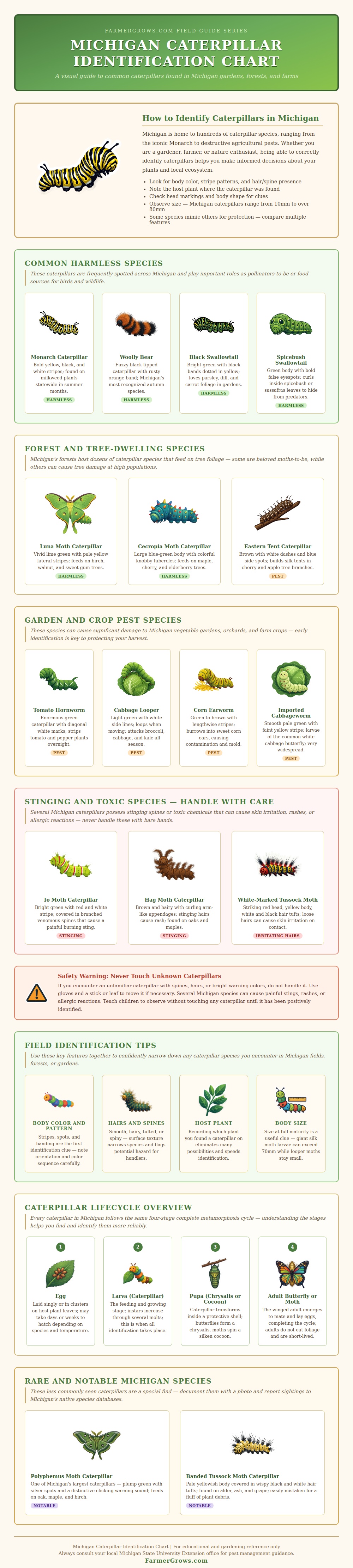
Identify the critters in your Michigan garden and take action accordingly. That’s the mantra: Identify, then do something about it. Which might be nothing at all if it isn’t realy a problem. Knowing who is there change everything. Will you step aside or spray? Is this a real menace or a good guy (or gal)? The visual key tells them apart. How not to panic… And learn what’s on your hands.
The Monarch caterpillar are a beneficial neighbor, and he is boldly striped in yellow, black, and white. Leave it be if you encounter him on milkweed; no, he won’t chew up your peppers or tomatoes. No, he doesn’t create overpopulation issues to speak of. He just produces more pollinators for down the line. Those pollinators will then head south. Knowing which creatures is harmless helps keep the garden ecosystem in balance.
How to Identify Garden Bugs
The truth is, many gardeners think all caterpillar are bad. But not all crawling bugs are bad. Others are actualy crop pests! And this chart will point out which ones can ruins your garden’s harvest.
Take the Tomato Hornworm for instance. The white markings on its green smooth skin make it a perfect match to foliage. And it can completely defoliate a plant overnight. Then there’s the Cabbage Looper, who efficienty chews up brassicas. When it do, it’ll raise its back end, creating an arching motion while eating kale or broccoli. Recognize their behaviors early and you’re best doing a little hands-on work, rather than letting them go unchecked. Handpicking is good, better different than chemical sprays after plants have been damaged.
Some are outright dangerous to the touch: Certain caterpillars has protection strategies, and they can hurt you! Take the Io Moth caterpillar (above). It is strikingly colored in shades of green and orange, plus red and white stripes. It is covered in poisonous spines that sometimes branch out. Brush it lightly with your finger, on exposed flesh, and you’ll feel a searing burn and start to swell up immediately. Another culprit is the so-called Hag Moth caterpillar (below). This one resemble an odd-looking brownish clump of hair with dangling curled appendages. Just because something’s fuzzy doesn’t mean it want to be friends. Yes: curiosity kills…really. Kids should of never approach mystery hairy larvae.
All of this makes sense if you understand their life cycle. Each of those caterpillars began as egg on a host plant. Why do some insects seems to be limited to one crop? It’s all in the life cycle: the larval phase consists of nothing but eating and growing. And then there is shedding skin a few times over, followed by the pupal stage, or transformation. That is how we notice them; they are out eating, so we see them because they need to eat. Then comes hiding out in cocoons or chrysalises until…they’re gone. Vanished. Gone from view. That’s where the pupal phase begins. Understanding their life cycle help you know when populations will surge and when to step back from monitoring them.
For those who take the time to really look: The Polyphemus Moth caterpillar adds some interest. A giant of a green larval creature with silver dots, it can even make a clicking sound, and that’s its warning sign. Observations like this help the larger picture, too, by contributing to ecological data being gather. When you learn to really look at what is growing in your garden, gardening becomes more like exploring natural history. Informed observation (not just pest control) is the game. Once you know what something is doing, you stop reacting out of fear. Then you begin to manage your garden with a plan. Before you do anything about movement, take another look. That moment of pause could be the difference between a saved crop…and a future butterfly.