
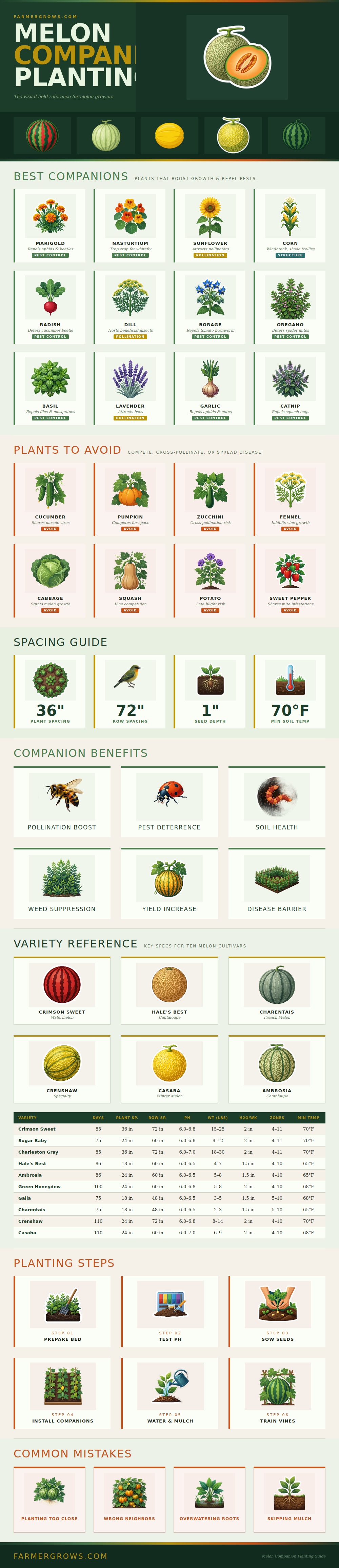
To get the most flavorful melon, it’s less about luck then it is about strategy. The visual guide is a guide to what helps vine grow strong, and what will hurt your harvest. Knowing relationship makes the melon patch a productive ecosystem, not just a patch of garden.
Begin with good company: Beneficial neighbors includes marigolds (top of list on the chart) and nasturtiums; both give off substances that repel beetles and aphids, among others. Sunflowers and dill is also useful because they attracts beneficial insects. Ladybugs hang out around dill in search of their prey, and bees love sunflower. Less chemical spray means lower pest numbers due to this built-in natural predation.
Simple Tips for Growing Great Melons
Another factor are structural support. Melons do well with corn as a companion plant. The tall cornstalks shields the lower-growing melon vines from sun and wind, which regulates summer heat buildup on the soil. Vines spread out in that cooler pocket.
It is just as important not to grow certain things together. Squash family members (zucchini, summer squash, pumpkins, melons) can stunt each other’s growth, the chart cautions; they also compete for nutrients and space and may carry disease such as mosaic virus. If one plant in the group get infected with a virus, all of them will. Fennel inhibits other growing things around it, so keep that far away, too. Sweet peppers and potatoes is also bad neighbors because they can shares pests and disease; you don’t want late blight on your watermelon.
Space: It’s important to provide air circulation around your tomato plants, the how-to says; they recommend a spacing of at least a foot in all directions (36 inches from plant to plant, with an additional 6 feet between rows). Why? Because crowded conditions creates high humidity, prime for fungal diseases. A bit more breathing space also help keep their roots happy by letting the leaves dry off between waterings.
The specifics of each variety matter. For example, the space between plants and time until they’re ready varies depending on whether you are growing Hale’s Best canteloupe or a Crimson Sweet watermelon. The latter is bigger and takes longer to mature; it requires wider spacing than the former, which is smaller in size. Knowing that will help you plan out timeline for when things should of been planted in garden. That way you don’t end up with everything ripe all at once… And can stagger planting accordingly.
Common mistakes in impatient gardening include skipping soil testing, planting too many plant too closely, and not using mulch. Why mulch? Mulch keep soil cool and retains moisture. It also suppresses weeds, which rob nutrient. Another overlooked step is training vines. Keeping fruit off damp ground helps with harvest, easy if they’re trained on a trellis.
Apply the concept of companion planting: this is a use of ecology. Choose right neighbors to support growth. Build a barrier against pests. The chart shows how they work. Eliminate guesswork when planning out what to plant where. Space plants out. Select companions carefuly. Let marigolds handle pest control. That’s one reason why harvesting comes easy here.
You know what the steps were that got you to the melon, and it tastes better.