
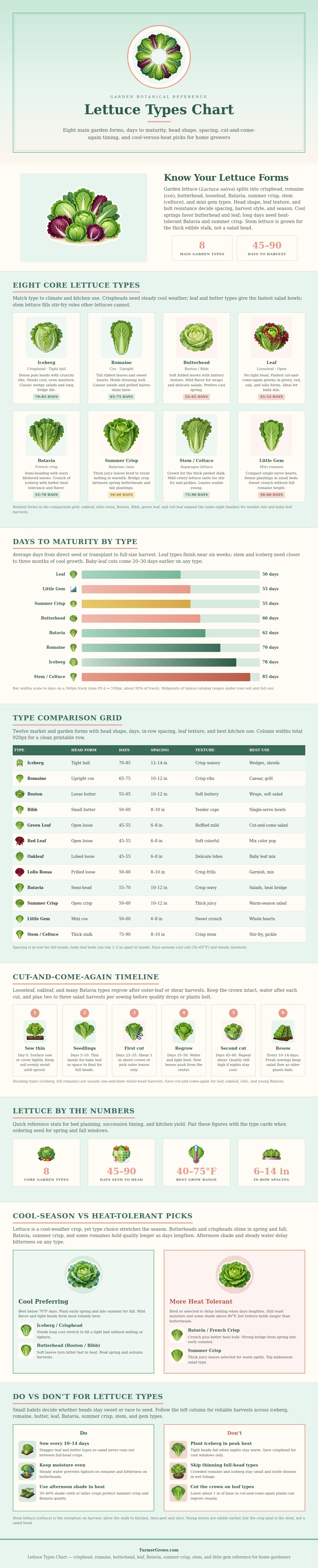
Let’s face it: Most of us (as gardeners) regard lettuce as a one-trick pony. Any kind of green leaf will do in salad bowl, right? That’s why we has predictable failure when it comes to growing it. Perhaps you’ll wind up with some bitter heads. Or perhaps they’ll bolt (go to seed), before you can even enjoy them. Truth be told, it’s not that simple. There are eight very different kinds of lettuce and each requires something slightly different. Here’s how to know the difference; and how to grow better-organized lettuce then ever in your own garden.
Varieties is organized by head shape (above) and days to maturity. Why does that matter? Spacing is dictated by texture, so is your harvest strategy. For instance, crispheads (including Icebergs) want a cool, long stretch to tighten into their watery ball shapes. Warm weather is no good for them. If the nights remains mild, they won’t head up right; you’ll find yourself with lots of lush foliage but few head. Looseleaf (such as lollo rossa and oakleaf) types will reward your neglect. Want quick returns? Need little structural support? Grow these. That’s why some gardeners has lush foliage; others look out at bare dirt. Knowing which variety matches the plant’s needs help you match them to soil. No more frustration about planting wrong variety in the wrong season.
8 Ways to Grow Lettuce
The other big reason crops fail: timing. As the infographic emphasizes, maturity times vary widely: some crops, like slow-growing stem lettuce, take 90 days, while quick-cutting leaf varieties takes just 45. Leaf types finish near six weeks. That means more than one sowing per springtime. Getting it in early helps ensure constant supply. You should of not let a bed stay empty. Because if the fast stuff isn’t harvested soon enough, it bolts, goes to seed, and shoots up a central stalk. This make the leaves bitter. See how staggered sowing keeps the salad bowl full in time line visualization? This avoids that huge mass harvest that then goes bad in the fridge.
Most people’s season plans fall apart at this point: heat tolerance. Crispheads and butterheads like it cool, under seventy degrees. They is perfect for a fall crop or an extra-early spring one. But not as the days gets longer and hotter. When they do, these kinds of heads just can’t cope; their sweetness fades. Midsummer (according to the chart), switch to the summer crisp or Batavias, which is less prone to bolting. They stay crunchy despite hot sun. There’s no point sowing an Iceberg in July. A Batavia will stand up to attack. Offer some more greenery, when everything else wilts.
Different varieties are harvested in very different ways. The guide explains that part. Lettuces that form heads (usually called heading lettuces) tend to be one-and-done deals: When the head is firm you just pick them out and that’s it. Cut-and-come-again tactics works best with leaf lettuces. With these, you don’t take off the crown but rather the outermost leaves, encouraging the lettuce to regrow. This will effectively multiply your yield from the same seed. This also takes some careful cutting and some patience. Mess up the central growth point and the plant stop producing. A form of Lactuca sativa such as stem lettuce, or celtuce, is good for something else entirely: They’re grown not for their leaves but for their edible stalks. Use them to pickle things and add a little extra oomph to stir-fries. Actualy, they are great.
Let’s talk about tools. Successful lettuce growing isn’t about forcing one variety to work for all seasons; it’s about picking the right tool for the job. The trick? Use a reference chart that groups varieties by their strengths, then lets you plan based off climate. Plan with it, don’t try to go against it. Consistent success come from respecting each variety’s biological needs. Sweet, crisp leaves result. The idea: Grow the right lettuce at the right time. Match your planting schedule to these qualities and the garden will reward you. A short spring luxurius becomes a year-round staple.