Lettuce Seed Viability Calculator
Estimate germination rate, cool sprouting score, thermodormancy risk, usable seedlings, seed packet needs, and succession sowing adjustments for lettuce seed lots.
📋Lettuce seed lot presets
Start with a realistic lettuce seed situation, then adjust the germination test, soil temperature, age, storage, seed type, and succession target.
🥬Seed lot and germination inputs
Use an actual germination test when you have one. If not, estimate seed age and storage to create a conservative planting adjustment.
Lettuce seed viability result
Your lettuce seed plan will appear here after calculation.
Calculation breakdown
🌱Succession plan checks
Direct test rate or age-storage estimate before lettuce-specific stress adjustments.
Rates how friendly the entered temperature is for lettuce germination.
Suggested interval after adjusting for viability and stand risk.
📊Lettuce seed reference tables
| Range | Effect | Risk | Action |
|---|---|---|---|
| 40-50 F | Slow sprouting | Low heat | Allow extra days |
| 55-70 F | Best range | Low | Normal sowing |
| 71-75 F | Uneven stand | Moderate | Shade and water |
| 76-85 F | Dormancy likely | High | Pre-chill seed |
| 86 F+ | Poor sprouting | Severe | Delay or cool tray |
| Storage | 0-1 yr | 2 yr | 4 yr |
|---|---|---|---|
| Sealed freezer | 95% | 88% | 70% |
| Sealed fridge | 94% | 84% | 62% |
| Cool dry room | 92% | 78% | 50% |
| Room dry | 88% | 65% | 34% |
| Warm or damp | 75% | 42% | 15% |
| Seed form | Benefit | Storage note | Use when |
|---|---|---|---|
| Raw | Longer life | Keep dry | Most gardens |
| Pelleted | Easy spacing | Use sooner | Tray seeding |
| Primed | Fast start | Shorter life | Cool successions |
| Organic raw | Untreated | Test older lots | Organic beds |
| Style | Common target | Extra seed | Interval |
|---|---|---|---|
| Transplant tray | 72-200 cells | 5-20% | 10-21 days |
| Direct heads | Final plants | 20-50% | 10-14 days |
| Baby leaf | Dense stand | 10-30% | 7-14 days |
| Containers | Plants per pot | 10-25% | 14-21 days |
🧪Germination test and sowing metrics
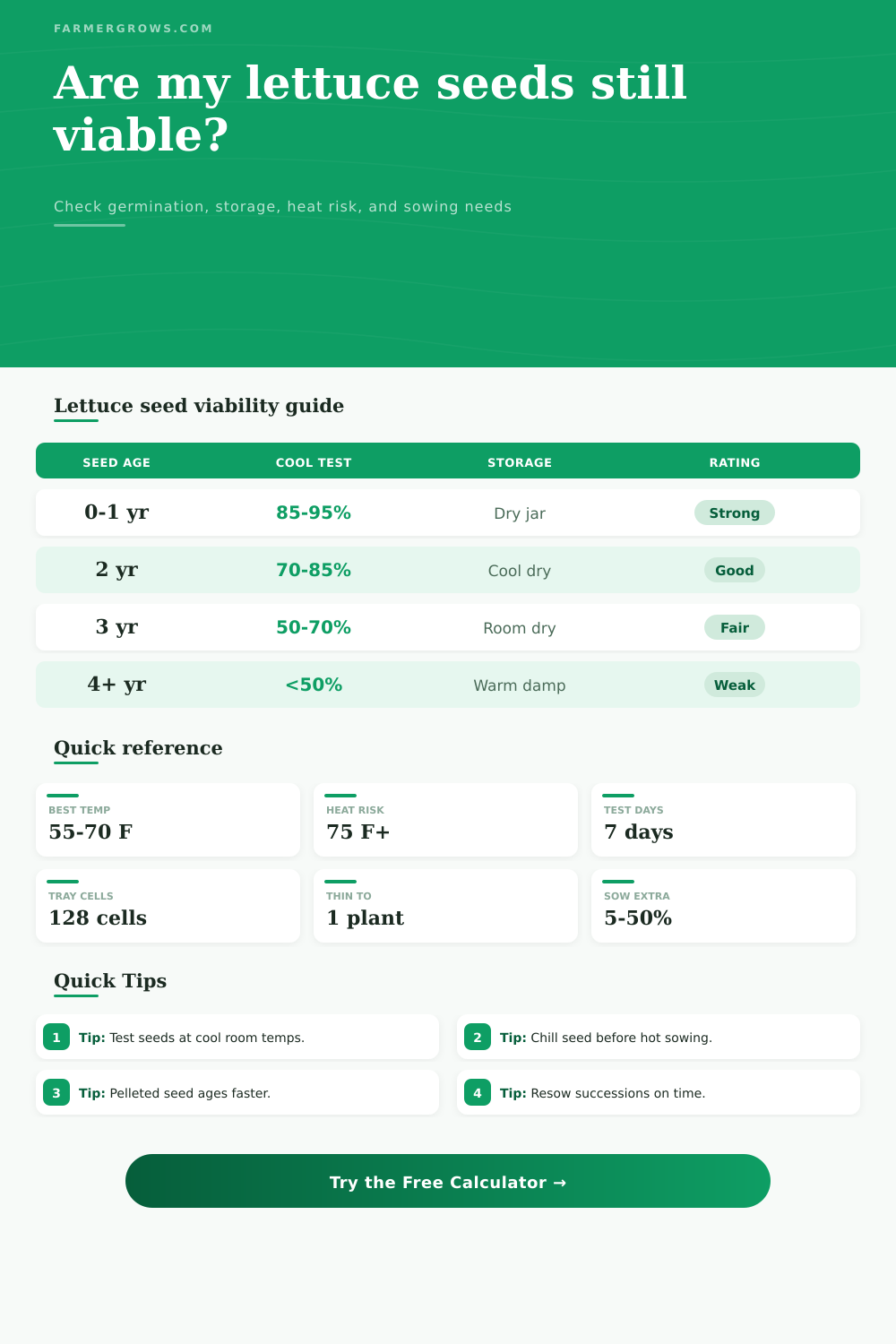
Place lettuce seed on a moist towel or tray at cool room temperature, then count normal seedlings after a consistent number of days.
For hot weather successions, chill seed overnight, sow in the evening, shade the bed, and keep the seed zone evenly moist.
The calculator estimates planning needs and should be checked against your seed label, cultivar behavior, local temperatures, and a fresh germination test when available.
Gardeners often plant lettuce in May only to watch soil stay bare if it gets too warm. Rake your bed, water lightly, and wait and wait…and…nothing happens. Why? Because the seeds didn’t rot, they’re just refusing to wake up. When soil temperatures rise above seventy-five degrees F., lettuce, like other cool-season crops; triggers what’s called thermodormancy, or a kind of survival mechanism triggered by high temperature as a stressor. The seed isn’t dead. It is just resting and unwilling to grow in warmth.
It isn’t enough to hope your seeds are viable. The right answer involve understanding the biology behind the seed: What is it? How has it been stored? What’s the temperature of soil into which it will be planted? Enter the numbers, and a calculator can does the math for you. It eliminates guesswork about just how much life is left in that packet dated two springs back, saving you wasted tray cells and all those hopes for a viable crop.
Why Your Lettuce Seeds Will Not Grow
First: Where are all these seeds? How have they been stored? A packet in a warm garage shed is not the same as a packet in your fridge which is tightly closed. Heat plus moisture breaks down enzyme necessary for the embryo to sprout. If your seed was stashed somewhere cool and dry, it probably stayed viable for a year or two (or more). But when it has been held in warmth or humidity, its chance of sprouting drop. Not only do years matter; so does knowing how your seeds were stored.
The other half is temperature. Fifty-five to seventy degrees F are the happy temperatures for lettuce seed germination. When weather reaches the high eighties, the seed goes dormant rather than sprout… Why bother when things don’t seem hospitable? So a March sowing succeeds but a June one doesn’t. The reference table on the page illustrates just how risky higher temps become. It’s no mystery; it’s biology, the plants sensing stress signals.
But what if you don’t know? There’s no guessing with a quick germination test. Wrap 25 seeds in a damp paper towel. Place them at room temperature for five to seven days, then count the sprouters. Less than half sprouted? Then your viability rate is low; re-sow some seeds to be sure to have a full stand. That reality is included in tool’s calculation of how much seed to sow. How many seeds to plant to attain how many heads. It includes buffers for possible loss in the field, such as birds or damping off.
That’s one more twist: succession planting. Meaning, don’t toss a handful of seed around and then count on enjoying a crop all season long. Aim at timed intervals… Typically every two weeks, for repeated plantings so that there’s always something coming on as the previous crop bolts and gets bitter. If your seed doesn’t emerge well, those time intervals should of be closer together (because you’re battling lower percentage emergence). The calculator tweaks timing so you have enough seed on hand for each round, and not run out while it matters most… During your key planting window.
Primed or pelleted seeds are treated so they will be ready to go fast, good if you want to use them immediately, but not so good if you expect to store them longer. Such treated seed may not keep as well than untreated (raw) seed; again, check at first opportunity, then adjust your plans. Convenience has its cost.
Growing lettuce well involves understanding your seed, and what it can and cannot do under your conditions. What it can’t handle? It is weather, so make sure to plan for that by learning its limitations (test viability, account for temperature risk). Plan successions with care; take steps to prevent possible failure. If you know how old they are, and give them a cool start, the rest will follow: The seeds will rise up.