
The lettuce seeds goes in the ground, but then you watch them and watch them and…well, something eats leaf before they’re big enough for salad. Nearby plants is causing mischief. That’s what companion planting is all about, not just about who gets planted where, but whose company help a crop get off to a good start (and also guards against pests).
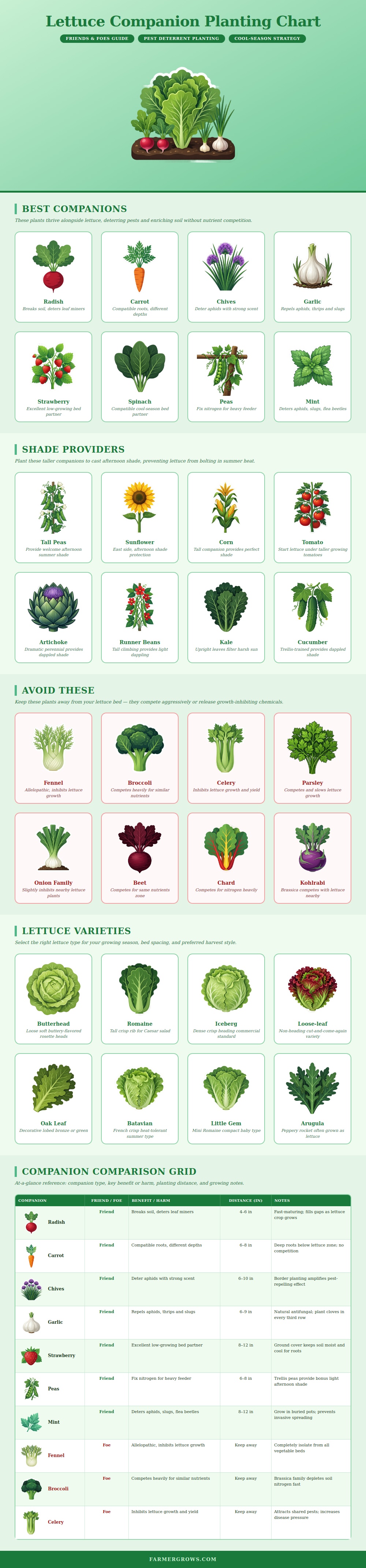
What works best with lettuce? See the chart above.
Best Plants to Grow with Lettuce
Lettuce is a cool-season crop that loves cooler temperatures and goes to seed (bolts) as soon as it get hot. So what does she want for company? A partner that doesn’t hog nitrogen or sun. Fast-maturing radishes fits the bill. They will keep soil broken up and prevent pests such as leaf miners. They also fill the void between two adult-sized sofa of lettuce heads.
Root vegetables like carrots and radishes is good choices here, since their root systems grow down, not competing with lettuce’s shallow root system for things like light and moisture. Layering your root crops this way benefit the soil, and you harvest two crops without one outcompeting other.
Pests hate garlic and chives (Alliums in general). These pungent plant repel various pests such as slugs, thrips, aphids and more, confusing them and keeping them off the lettuce foliage. Planting them in every third row, or along borders, will further enhance your pest protection.
Mint is another flea-beetle deterrent, but growing it in a container sunk in ground will prevent it from taking over garden. Mint in A container sunk in the ground will deter flea beetles, to. So many of us have could of free-lanced with mint and lost our gardens to its stubborn roots. Containing mint is key.
Late spring lettuce should of some protection from heat of sun, too. It will start to get hot, and lettuce bolts (goes to seed) and becomes bitter. A tomato plant, a corn plant, even peas if you’re not using them yet, all cast afternoon shade and keep those greens cool. A row of sunflowers on the east end of bed blocks the worst of the midday sun and allows morning light through. Such an easy adjustment, and it can add several weeks to your harvest. You’re shaping the microclimate to grow happy plants.
There are also things you don’t want to plant with lettuce (though these is exceptions). Lettuce does not like broccoli or other brassicas; they’re heavy feeders when it comes to getting Nitrogen for their foliage. Chard and beets will compete with lettuce, too. And since fennel emits substances into the soil preventing neighboring plants from growing, it’s also no friend to lettuce. Parsley and celery may inhibit lettuce development. The opposing plant will slow the crop’s growth.
How you plan your bed will depend based off in part on what kind of lettuce you select. Romaine and butterhead varieties needs more space for their heads to develop, whereas you can pick from the outer leaves of loose-leaf kinds again and again. Knowing this will help position them appropriately relative to shade-providing taller neighbors. You want a balanced arrangement of all parts. Give each plant its due.
Growing lettuce takes some know-how: the importance of shade, the strength of fragrance, the role of root zone. If the lettuce is being grown with other crops, those with resource and protection potential, the lettuce become part of an overall garden plan. Respect the soil chemistry, plan how things will be spaced out before they are planted, and use companions. All this make for clean, crisp results.