🐔 Layer Chicken Feed Calculator
Plan daily feed, egg output, crude protein, calcium, and a two-ingredient ration blend around a real layer phase. The calculator uses a feed-total formula plus a protein target formula and blend-share formula so the ration stays practical, not generic.
Pick one of the phase presets first. Each preset seeds flock size, intake, production, protein target, calcium target, waste allowance, and a starting blend suggestion.
Layer Feed Output
Calculated from flock size, phase days, daily feed, production rate, waste allowance, protein target, calcium target, and the two-ingredient blend formula.
| Preset | Typical days | Feed cue | Target cue |
|---|---|---|---|
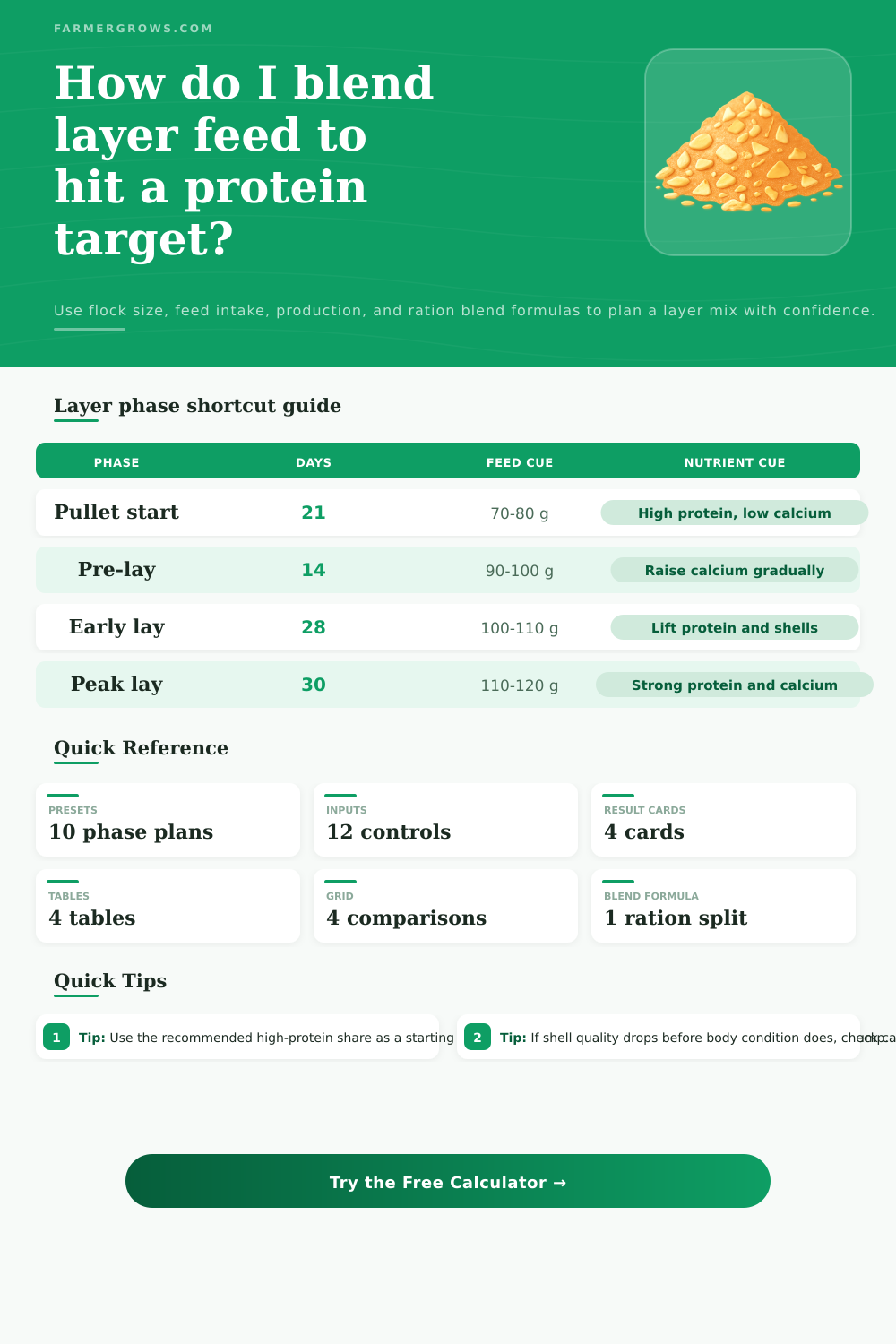
| Pullet start | 21 | 70-80 g/day | High protein, low calcium |
| Pre-lay | 14 | 90-100 g/day | Protein steady, calcium rising |
| Early lay | 28 | 100-110 g/day | Lift shells and output |
| Peak lay | 30 | 110-120 g/day | Hold protein and calcium high |
| Mid lay | 28 | 104-112 g/day | Balance production and body condition |
| Late lay | 35 | 100-110 g/day | Support shells while intake eases |
| Heat stress | 24 | 94-102 g/day | Protect intake and density |
| Winter support | 30 | 112-118 g/day | Compensate for extra maintenance needs |
| Free-range | 30 | 106-112 g/day | Allow for variable intake |
| Calcium boost | 28 | 106-112 g/day | Raise shell support quickly |
| Ingredient type | Typical protein | Role in ration | Blend note |
|---|---|---|---|
| Corn or maize | 8-10% | Energy base | Usually the low-protein anchor |
| Wheat | 11-13% | Energy plus fiber | Useful when intake is steady |
| Canola meal | 36-40% | Moderate protein boost | Good middle-ground ingredient |
| Soybean meal | 44-48% | High-protein driver | Common strong ingredient in the blend |
| Sunflower meal | 28-32% | Fiber and protein | Use carefully if amino acid balance matters |
| Fish meal | 55-62% | Very high protein | Use at lower inclusion rates |
| Formula | Expression | What it returns | Why it matters |
|---|---|---|---|
| Feed total | Flock x days x daily feed x (1 + waste%) | Total planned feed | Sizes the batch before ordering |
| Eggs expected | Flock x production% | Eggs per day | Shows output pressure on the ration |
| Protein mass | Total feed x target protein% | Crude protein pounds or kg | Turns the target into nutrient mass |
| Calcium mass | Total feed x target calcium% | Calcium pounds or kg | Tracks shell-support demand |
| Blend share | (Target protein - base protein) / (high protein - base protein) | High-protein ingredient ratio | Solves the ration blend |
| Blend protein | Base protein + share x (high - base) | Actual mix protein | Checks the planned ration against the target |
| Band | Status | Feed cue | Blend cue |
|---|---|---|---|
| 70-79% | Steady | Moderate daily intake | Blend can stay conservative |
| 80-89% | Strong | Normal intake and output | Protein formula should stay on target |
| 90-95% | Peak | Higher feed pressure | Blend share often rises |
| 96%+ | Very high | Top intake, more stress risk | Watch shell quality and waste |
Feeding layer chicken require understanding how the nutritional needs of chickens changes with the life stage of the chicken. The nutritional needs of an chicken change with the life stage of the chicken because when a chicken is a pullet, its needs is different from when it is a seasoned hen. Because of the changing nutritional needs of layer chickens, there is no single type of feed for each life stage of the chicken.
Instead, there are different types of feed for each life stage of the chicken. For instance, the needs of a chicken in the laying phase of its life are more different then the needs of a chicken in other phases of its life cycle. When the chicken is a pullet, it require a slow growth rate for the prevention of skeletal issue.
How to Feed Layer Chickens at Different Life Stages
Conversely, when the chicken is in the laying phase of its life, it require more protein and more calcium in its feed because it is producing egg. However, providing too much calcium to a pullet can lead to kidney damage in the chicken. Additionally, if you do not provide enough protein to a chicken in the laying phase of its life, the hen will use the bodys mass to produce eggs.
In addition to potentially leading to exhaustion in the laying hen, this behavior also makes the laying hen more susceptible to disease. The protein blend in the feed is one of the critical component of the feed. The protein blend in the feed determine the nutrition level of the feed.
Base grains, while useful for layer chickens, do not contain enough protein. Therefore, some high-protein ingredient must be added to the base grain. A calculator can help to determine how much of the high protein ingredient is required to provide the desired nutrition level to the chickens that will eat the feed.
Another factor to consider when creating feed for layer chickens is the possibility of waste. Some of the feed may be lost due to the wind, or the chickens may scratch the feed into the bedding in the chicken pen. Therefore, you must make allowances for the chickens to receive the amount of nutrients that was planned for them in the feeding plan.
If 100 pound of feed is calculated for the chickens, but 5 pounds of feed is lost to waste, then the chickens will not receive the same amount of nutrients as were calculated in the feeding plan. Production rates indicate how much a flock of layer chickens is producing. A high production rate indicate that the flock has high nutritional needs.
If the rate of egg production is high, then you can increase the amount of protein and calcium in the feed. Soft eggshells indicate that there is not enough calcium in the diet of the layer chickens. If the diet of the layer chicken does not contain enough calcium, then the eggshells will be soft due to the insufficiency of calcium in the eggshell.
Environmental stress can also indicate the changes in the feeding needs of the layer chickens. For instance, during the winter, the layer chickens may eat more feed to compensate for the extra calories that are burned to maintain their body temperature. In the heat, the chickens may eat less feed due to heat stress.
In this situation, the feed that the layer chickens do eat must contain more nutrients per unit of feed to compensate for the decreased consumption of the feed. Reference tables exist to help determine the changes that each ingredient to the layer chicken feed will make to the protein profile of the feed. For example, ingredients like fish meal and sunflower meal contain a high amount of protein.
These ingredients should be used carefully with the feed because adding too much of a high-protein ingredient to the feed can make the feed too rich for the layer chickens to eat. The ingredients should be selected in a way that ensures that the feed will contain the necessary protein to meet the needs of the layer chickens, but not too much protein that the feed becomes too expensive or too palatable for the chickens. By balancing the protein and the minerals in the feed, layer chicken farmers can ensure that their layer chickens have the nutritional needs to produce eggs, but dont consume too much nutrition that would negatively impact the health of the laying hens.