Kent Pumpkin Growth Time Calculator
Estimate Kent or Jap pumpkin vine growth, female flowers, fruit-set cutoff, harvest maturity, curing, frost-free window, plant spacing, fruit count, and storage readiness.
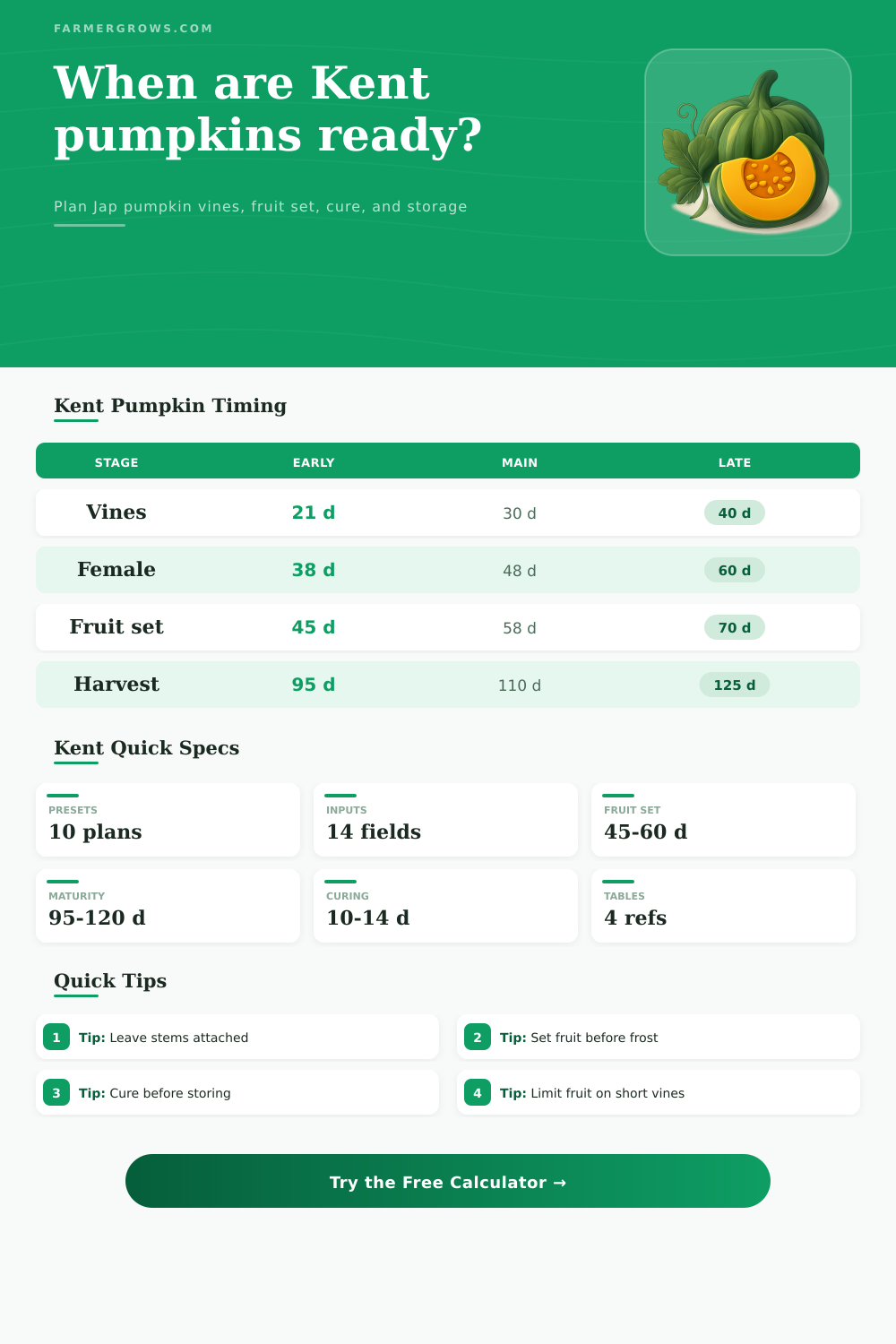
Kent pumpkins are compact, dense-fleshed Jap or kabocha-style pumpkins. This planner treats them differently from long butternuts, decorative Cinderella pumpkins, and giant pumpkins by focusing on early vine fill, reliable fruit set, harvest color, corked stems, curing time, and eating quality after storage.
Kent Pumpkin Growth Schedule
Dates include vine establishment, female bloom, the last safe fruit-set window, mature harvest, curing, storage readiness, spacing, and fruit count.
| Kent growth stage | Typical timing | What to look for | Calculator use |
|---|---|---|---|
| Seed germination | 7 to 10 days in warm soil | Large cotyledons and a strong first true leaf | Direct sowing adds this before vine timing starts |
| Runner growth | 18 to 35 days after start | Main vine runs, side vines begin to branch | Shows whether spacing can support fruit load |
| Male flowers first | 28 to 45 days after start | Several male blooms before female blooms open | Normal; do not count first flowers as fruit set |
| Female bloom and fruit set | 38 to 65 days after start | Small pumpkin behind the flower, bees active in morning | Starts the 45 to 55 day fruit-fill clock |
| Mature harvest | 95 to 125 days after start | Grey-green Kent color, hard rind, corking stem, fading vine | Harvest window and frost buffer are based here |
| Curing and rest | 10 to 14 days, then short storage rest | Dry skin, intact stem, no soft spots | Storage-ready date is harvest plus cure days |
| Kent or Jap type | Days to harvest | Fruit habit | How it differs from other pumpkins |
|---|---|---|---|
| Standard Kent / Jap | 105 to 120 days | Medium grey-green fruit, dense orange flesh | Shorter storage than many hard butternuts, smaller than giants |
| Early small Kent | 95 to 108 days | Smaller fruit and quicker set | Better for cool seasons than large ornamental pumpkins |
| Large Jap or seed-saved line | 115 to 130 days | Longer vines, heavier fruit, later stems | Needs more room but still not a giant pumpkin crop |
| Subtropical Jap type | 100 to 118 days | Sets well with warm nights if pollinated | More humidity tolerant than many cool-season squash types |
| Cool-climate Kent selection | 100 to 115 days | Useful with transplants and fruit thinning | Focuses on finishable fruit before frost, not maximum vine size |
| Season window | Frost-free days needed | Best Kent strategy | Risk warning |
|---|---|---|---|
| Short cool season | 100 to 115 days | Start seedlings warm, transplant after frost, keep 1 to 2 fruit per vine | Late-set fruit may color but lack eating quality |
| Temperate spring to autumn | 115 to 135 days | Direct sow or transplant into warm soil, keep 2 to 4 fruit per vine | Powdery mildew can shorten late bulking |
| Warm frost-free garden | 110 days or season cutoff | Use dry-season timing and hand-pollinate if bees are scarce | Wet-season rot can replace frost as the deadline |
| Late sowing | Less than 100 days | Thin hard, protect warmth, accept early eating rather than storage fruit | Fruit set after the cutoff may not mature fully |
| Protected tunnel | 95 to 115 days | Vent flowers in the morning and support fruit on slings if trellised | Heat above comfortable bloom range can reduce set |
| Harvest and storage check | Ready sign | Kent-specific note | Action |
|---|---|---|---|
| Skin color | Expected mottled grey-green or mature line color | Kent color alone can appear before full seed fill | Pair color with stem and rind checks |
| Rind hardness | Thumbnail does not easily mark the skin | Dense eating flesh depends on full maturity | Delay harvest if frost or rain is not forcing you |
| Stem corking | Stem dries, firms, and begins to brown | Kent stems should be kept attached for storage | Cut with a handle, do not pull fruit off vines |
| Curing | Warm dry air for 10 to 14 days | Improves storage life and dries small surface scars | Keep fruit off wet soil and out of heavy rain |
| Storage rest | Cool, dry, airy room after curing | Kent eating quality often improves after a short rest | Check weekly and use marked fruit first |
Fruit-set tip: Mark the first well-pollinated Kent pumpkins with soft tape or a garden tag. Fruit set date is more useful than color alone because mature eating quality usually needs about seven to eight weeks after pollination.
Storage tip: Cure Kent pumpkins with stems attached, then rest them in a cool dry room. Use any fruit with bruises, missing stems, or soft patches before the clean storage pumpkins.
When you know that a grayish-colored Kent pumpkin isn’t automatically ripe for picking, you won’t be heartbroken. Watering diligently and following the calendar aren’t guarantees of success; sometimes the inner flesh remain watery, even if the exterior turns an indicator color. Even though it appears ripe on the outside, its seeds within may still be developing.
If you’re growing a late crop, you can enter your sowing date into a calculator and find out whether there’s sufficient time for fruit to ripen up before freezing temperatures arrive. No more guesswork on picking day, right?
The Best Time to Grow and Pick Pumpkins
Jap-style pumpkin growth is not linear. There is no straight line from 0-60. Instead, there are overlapping windows of opportunity. The soil must be warm enough to germinate or else those seeds will rot in cold mud.
Once germinated, vines grows till the plant has built up enough leaf mass to support eventual fruit. The male flower comes early (which throws beginning growers for a loop: Where are my pumpkins? Wrong question. It’s just biology. The plant wants to spend its energy building pollen producers. Then female blossoms comes along and that is when clock really starts ticking.
Most growers fail to consider the cutoff date for fruit-set. What’s the point in having a giant pumpkin if it set two weeks later than the final safe pollination period? A week later, that fruit will be better off forming a tough rind (to try to protect itself from frost) then it’ll be filling out with starches and sugars (for seeds).
Use the tool to figure out exactly when that cutoff is for you, depending on your variety type and what day you started. Because each kind of pumpkin has its own biology, you choose if yours is an early small variety, a larger seed-saved line, or old-fashioned Kent, and go from there.
An early one may reach maturity at ninety-five days, while a large Japanese type take about one hundred twenty days. Three weeks can mean the difference between a crop rotting on the vine or a heap of squash keeping you fed all winter long in the pantry.
These timing factors are hugely affected by spacing, as well. Even though cramming in the vines may be space-efficient for a small garden they’ll then have to struggle for resources instead of devoting themselves to ripening fruit. Overcrowded Kent pumpkins creates long, skinny vines; they flower profusely but soon abort.
By allowing plenty of elbow room (six feet per hill), the vines will run freely without stressing and creating excess water needs or inviting powdery mildew. This mildew deprives them of leaves and stops their ability to make sugars just at fruit-ripening time. Your total number of vines translates into your final yield count, and the reference table on the page illustrates that wide spacing typically outperforms more densely packed vines…most of the time.
The last step. What makes great pumpkins good; is curing. Most gardeners don’t bother with it; they’re rushing to get harvest stored before a storm arrives. But curing is required if you expect a long storage life. It’s just setting the cut pumpkins out in a warm, dry place for two weeks or so. Minor stem cuts heals, and the skin of the pumpkin gets even harder.
If I don’t cure them, the Kent pumpkins turns shriveled fast in storage. You are aiming for a corked stem still connected to the fruit, not a tear where the vine was pulled away. That stem is the seal that keeps moisture inside the dense orange flesh.
So in the end, there are no tricks to growing Kent pumpkins; it’s all about understanding time, not the dirt… And working within that reality. You can’t control the sun or the night temperature. You could of made the night any less cold, nor can you command the heavens to light up for one more second. But what you can do is plant accordingly: pay attention to those key seed-to-cure days and make sure each pumpkin you pop gets as many of them as possible.
Not only will its outer shell be hardy, but inside, its flesh will be sweet and dense and waiting to get roasted. That’s when you know you’ve honored the biological window over the calendar page. And that’s when the storage fruits realy store. You learn how to convert the work of the garden to the reward of the kitchen.