Kennebec Potato Growth Time Calculator
Estimate Kennebec seed-piece prep, emergence, hilling, bulking, maincrop harvest, skin set, storage readiness, and yield from your planting date and field conditions.
Kennebec is a dependable white maincrop potato, but its calendar changes with seed handling, cool soil, hilling, moisture, disease pressure, and how long you wait for skin set before storage.
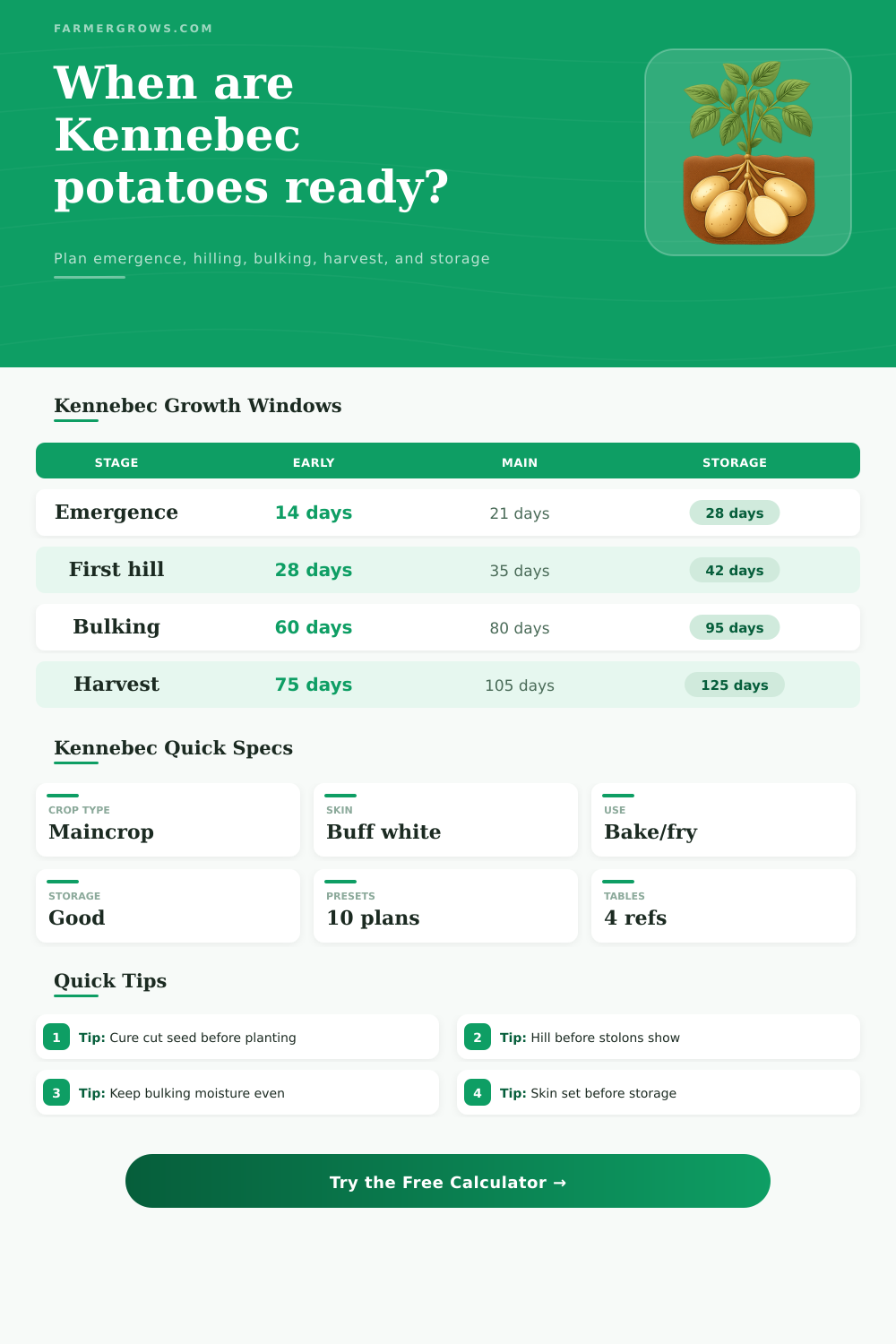
Kennebec Growth Schedule
Dates include seed prep, soil temperature, planting depth, hilling, disease pressure, and a storage skin-set buffer.
| Growth stage | Kennebec timing | What to look for | Management note |
|---|---|---|---|
| Seed piece cure | 1 to 3 days before planting | Cut faces dry and corky | Use blocky pieces with at least one strong eye |
| Emergence | 14 to 28 days after planting | Green shoots breaking the row | Cold soil and fresh-cut seed can stretch this window |
| First hilling | 28 to 42 days after planting | Vines about 6 to 8 in tall | Cover lower stems without burying the growing tip |
| Tuber initiation | 35 to 50 days after planting | Small white tubers forming on stolons | Avoid drought and exposed stolons during this phase |
| Bulking | 60 to 95 days after planting | Canopy is full and tubers size quickly | Even moisture helps Kennebec make smooth, usable tubers |
| Storage harvest | 110 to 135 days after planting | Vines dead, skins set, tubers firm | Harvest gently and cure before long storage |
| Seed and soil condition | Emergence effect | Yield effect | Kennebec-specific caution |
|---|---|---|---|
| Chitted, cured seed | 5 to 7 days faster | Usually steadier stand | Handle sprouts gently when placing pieces |
| Cut seed planted fresh | 3 to 6 days slower | Higher rot risk | Worse in wet or cold beds |
| Soil below 50°F | 7 to 14 days slower | Lower stand vigor | Kennebec waits in cold spring soil |
| Even loam moisture | Normal timing | Best tuber finish | Supports white skin quality for storage |
| Wet compacted soil | 8 to 14 days slower | Major yield penalty | Raises seed decay and disease pressure |
| Harvest use | Target days | Skin and storage | Best Kennebec handling |
|---|---|---|---|
| Early table potatoes | 65 to 80 days | Thin skin, use soon | Lift only what you need and leave plants to bulk |
| Fresh maincrop | 90 to 110 days | Better size, short hold | Good for baking, frying, and general kitchen use |
| Storage crop | 110 to 130 days | Needs skin set | Wait 10 to 21 days after vine death or vine kill |
| Late storage hold | 120 to 140 days | Firm skins, cured tubers | Avoid leaving tubers in wet soil after maturity |
| Spacing and crop factor | Typical Kennebec range | Timing impact | Yield impact |
|---|---|---|---|
| In-row spacing | 10 to 14 in | Little calendar change | Closer spacing gives more but smaller tubers |
| Row spacing | 30 to 38 in | Little calendar change | Enough soil is needed for clean hilling |
| Hilling count | 2 to 3 passes | Protects tuber initiation | Reduces green shoulders and sunburned tubers |
| Common scab risk | Higher above pH 6.2 | No direct delay | Can reduce usable white-skinned tubers |
| Late blight pressure | Weather dependent | Can shorten bulking | Early vine loss cuts storage yield hardest |
Seed prep: Cure cut Kennebec seed pieces before planting, especially when soil is cool or heavy. A dry cut face lowers seed-piece rot risk and improves stand timing.
Storage harvest: For long keeping, allow vines to die or mow them, then wait for skin set before digging. Bruised or skinned tubers should be eaten first.
Planting potatoes is a particular anxiety. This is especially true with workhorses such as Kennebec. You plant seed pieces in ground; then nothing happens for awhile. You can feel stillness in soil. But something biological are happening beneath it. This process involve moisture and temperature, as well as physical condition of the tubers you planted.
Get it right. And you have potatoes to store; mess up, and what you get is green, sunburnt lumps destined to go bad fast. When I say “emergence,” than, I mean a window, not an exact date. If soil is cool (around fifty degrees Fahrenheit), the seed will be waiting awhile.
Tips for Growing Potatoes
Why does that matter? Because moisture that doesn’t move around breeds rot. And how do you prepare your seed? That is important, too. Planting freshly cut potatoes into sodden clay are asking for trouble. Wait a day or two and let the cut sides scab over first; this forms a barrier that even soil-borne diseases can’t penetrate.
Depending on how ready your seeds are when you plant them, whether they are raw, chitted, or cured, the timing of their emergence will change. A little thing in life of garden, but it affects everything that comes after. When those green shoots poke through, it’s no longer a question of survival. It’s about structure.
Potatoes is among the crops whose stems must be protected by being covered with soil, a process called hilling. Despite what you might hear, this isn’t just optional work; it is essential, especially for Kennebecs, which can’t stand the sun. Cover the lower stems before they turns shiny and go white from being exposed on the sun.
How do you know exactly when to make that first pass? That’s where the tool comes in: It will tell you how high vines are compared to your planting date… So if they hit, say, 12 inches above ground level, you’ll know it’s time. Miss the mark and you get green tubers instead of yield. Hilly too soon and you would of wasted all that labor on unsettled ground. It’s a narrow margin, but hit it right and potatoes will be firm and clean.
Then it’s bulking time, the meat of the matter so to speak. This is when the plant devote its energy below ground (to storage) instead of above (to leaves). One variable here realy does matter: consistent moisture. Tubers will cease to grow prematurely with any dry spell and skins might cracks.
If you’re growing for storing rather than immediate eating, then the trick is pushing out the harvesting date a bit. If it’s for eating soon, the potatoes will have thin skin, so they’ll bruise immediately and go bad within weeks. If you wait too long, you’ll miss the skin set stage, which means you must either leave vines alone until they die off naturaly or cut them down and wait another couple of week.
When there’s no food in pantry, these can seem like eons away…except that forcing the issue ruins all your hard work. Nature is never perfectly predictable, so those stages don’t match up with any spreadsheet exactly. (A weather event might push everything forward or back a week or more.)
Using a timing tool isn’t about knowing down to the day that it’s time for those potatoes; it’s knowing what to expect as a baseline based off your own seed quality and soil conditions. Knowing helps take the guesswork out of the waiting period. Knowing: When do I hill? When do I look? When do I not?
Patience is a virtue in the world of growing potatoes, but informed patience are a strategy.