Hyacinth Bulb Planting Depth Calculator
Estimate the right planting depth for hyacinth bulbs from cultivar caliber, bulb height, soil texture, drainage, winter heave pressure, mulch depth, and spacing plan.
🪻Hyacinth Presets
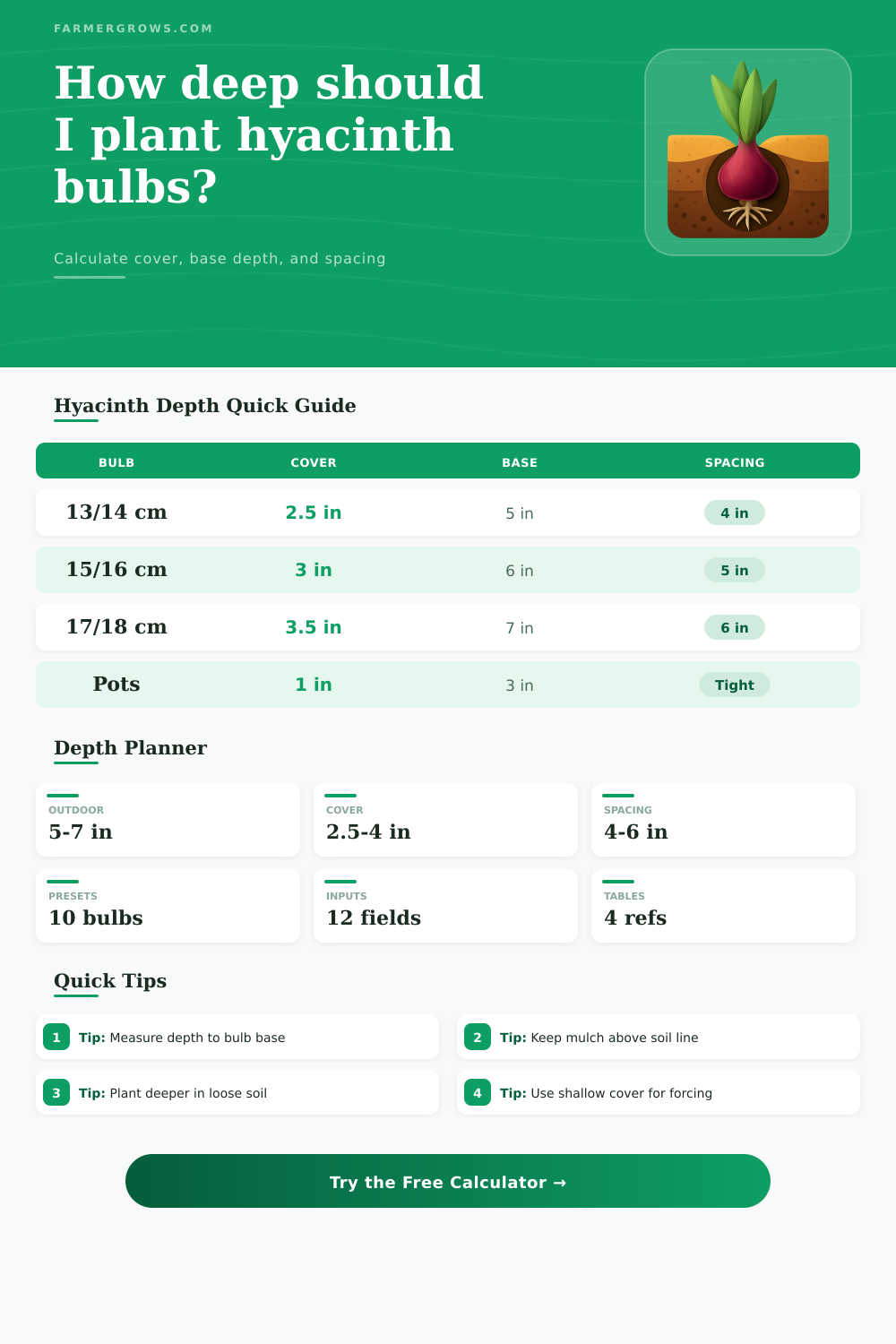
Choose a real hyacinth type, then adjust the dimensions and site conditions. Outdoor depth is measured from the finished soil surface to the bulb base; cover is the soil over the bulb tip.
⚙Bulb, Soil, And Bed Inputs
Hyacinth Planting Depth Results
Depth results will appear here.
📏Hyacinth Depth Snapshot
🌼Cultivar Comparison Grid
📚Hyacinth Reference Tables
Bulb Caliber To Depth Reference
| Hyacinth bulb caliber | Typical bulb height | Outdoor cover over tip | Base depth target | Common use |
|---|---|---|---|---|
| 13/14 cm bedding bulb | 2.3 to 2.5 in | 2.4 to 3.0 in | 4.8 to 5.5 in | Mass bedding and mixed spring borders. |
| 14/15 cm garden bulb | 2.5 to 2.7 in | 2.7 to 3.2 in | 5.2 to 5.9 in | Standard outdoor planting. |
| 15/16 cm exhibition bulb | 2.7 to 2.9 in | 3.0 to 3.5 in | 5.8 to 6.4 in | Strong border blooms and containers. |
| 16/17 cm premium bulb | 2.9 to 3.1 in | 3.2 to 3.8 in | 6.2 to 6.9 in | Named cultivars and dense displays. |
| 17/18 cm jumbo bulb | 3.1 to 3.4 in | 3.4 to 4.0 in | 6.6 to 7.4 in | Large spikes and show pots. |
Setting And Soil Adjustments
| Setting | Depth direction | Cover adjustment | Spacing note | Watch point |
|---|---|---|---|---|
| Outdoor loam bed | Standard | No change | 5 to 6 in centers | Plant before the ground freezes. |
| Loose raised bed | Slightly deeper | Add about 0.3 in | 5 in centers | Loose soil settles after watering. |
| Heavy clay bed | Slightly shallower | Reduce about 0.4 in | 5 to 6 in centers | Improve drainage below bulbs. |
| Outdoor container | Moderate | Reduce about 0.5 in | 4 to 5 in centers | Check usable pot depth. |
| Indoor forcing pot | Shallow | About 0.5 to 1.5 in | Bulbs can nearly touch | Leave the nose visible. |
Spacing And Bed Capacity Guide
| Display style | Center spacing | Bulbs per square foot | Best bulb size | Planting note |
|---|---|---|---|---|
| Natural mixed border | 6 in | 4 bulbs | 14/15 to 16/17 cm | Leave room for perennials to emerge. |
| Dense spring ribbon | 5 in | 5 to 6 bulbs | 15/16 to 16/17 cm | Good for visible front beds. |
| Formal block planting | 4 in | 9 bulbs | 13/14 to 15/16 cm | Expect bulbs to decline faster after bloom. |
| Outdoor container | 3.5 to 4.5 in | Close set | 14/15 to 17/18 cm | Keep drainage holes clear. |
| Indoor forcing bowl | Bulbs nearly touch | Container based | Prepared 16/17 cm plus | Do not bury the noses. |
Depth Problem Signs
| Symptom | Likely depth issue | Immediate response | Next planting adjustment |
|---|---|---|---|
| Bulbs lift above soil in winter | Too shallow for freeze-thaw | Press soil back gently | Plant 0.5 to 1 in deeper next fall. |
| Soft basal plate | Too wet or too deep in heavy soil | Improve drainage if possible | Plant higher in clay and avoid wet pockets. |
| Weak short flower spike | Bulb small, dry, or planted very shallow | Water during dry rooting weather | Use larger bulbs and standard depth. |
| Forcing pot rots near nose | Nose covered too much indoors | Remove wet top dressing | Leave the top third visible in pots. |
🌱Hyacinth Planting Tips
For outdoor hyacinths, set the bulb base at the calculated depth after the bed is prepared. Mulch goes on top afterward, so it should not be counted as soil cover over the bulb tip.
Hyacinths need winter moisture but dislike sitting in cold, airless soil. In clay, improve drainage and plant a little higher instead of simply burying the bulb deeper.
When you dig a hole for a spring bulb, have you ever wondered if it’s big enough? It makes you anxious; dig too shallow and that hyacinth will be pushed right out of the ground by winter freeze. But too deep and it’ll rot before it sees daylight. Once I input my bulb size and my soil type into the calculator up top, it do the math for me so I don’t have to guess if my clay garden needs deeper or shallower planting then standard advice recommends.
Digging the right depth isn’t always a matter of doing whatever the rule says; it’s about working with your own particular local microclimate too. General guidance is to plant hyacinths five to seven inches deep (counting from the basal plate, the thing on the bottom of the bulb). If your weather were predictably chilly and your soil perfectly loamy, sure. But who has that? Gardens aren’t always so tidy.
How Deep to Plant Bulbs
The variables is whether your ground is heavy clay or loose raised-bed mix. Does it get a lot of frost heave where you live? The tool factor those things in, which traditional instructions don’t. Plus: When you water loose soil, it settles fast. A six-inch-deep hole one day may only be five tomorrow. The calculator compensate for settling so your bulbs won’t be sitting above the ground in January.
The other thing that affects all this is the nature of your soil. Remember that sand dries out quickly, so you can plant bulbs slightly deeper there without worry of rot; but clay holds water and swells with freezing weather. Bury a hyacinth too deeply in heavy clay, and you’ve got a wet blanket wrapped around it when it freezes; and often a soft basal plate by springtime. That’s another reason the drainage factor make a difference: It makes you think not just about where the flower spike will poke up, but what’s going on underneath.
Bulbs grown in pots indoors for display during the holidays, hyacinths are a common example, is treated differently: What’s key isn’t keeping bulbs alive but getting them growing fast. In that case, the drop between the bulb tip and its cover is sharp; you don’t want any delay before those roots plunge into some cool water. When you force bulbs this way, the nose of the bulb is usually exposed, allowing moisture to evaporate off top and enter through the bottom (root zone). The calculator makes sure you don’t accidental treat your precious forcing pot as if it were a border outdoors.
Another mistake people make: They space their bulbs too closely, and hyacinths particularly want some air circulation. While a densely planted display may look great for a single season, it means the bulbs doesn’t come back as vigorously next year, and soon the bulbs compete so much for nutrients that they weaken quickly after bloom. How big is your bed? Use the spacing limit check in the tool to get an idea of just how many bulbs your bed will handle comfortabley, without crowding out the rest. Better to have too few bulbs properly spaced than many at dangerous depths.
This is detailed in the reference tables on the page, where you see by bulb caliber (the size of the bulb) what depth of coverage in the earth each require. Larger exhibition bulbs acts like bigger anchors and thus require greater protection then smaller bulbs for bedding out. A big bulb (jumbo) wants to expend all its energy getting roots going; it’s got more mass to guard, so anchoring down deep makes sense. On the other hand, plant a little bulb too deeply, and it will give up trying to get back up.
All these tweaks may sound insignificant, but make a difference over time. Ultimately, trust yourself, trust that the weather will allow you to breathe, and that the soil will protect what’s below. Your eyes must tell you whether the ground is ready to dig; once the calculator tells you how deep to plant, your hands must tell you when to do so. When the soil crumbles neatly, go ahead; when it feels as if it’s turning to wet cement, wait. Getting this part right pays off: You’ll be rewarded by a sturdy spike of hyacinths come springtime. A little thing, but it counts.