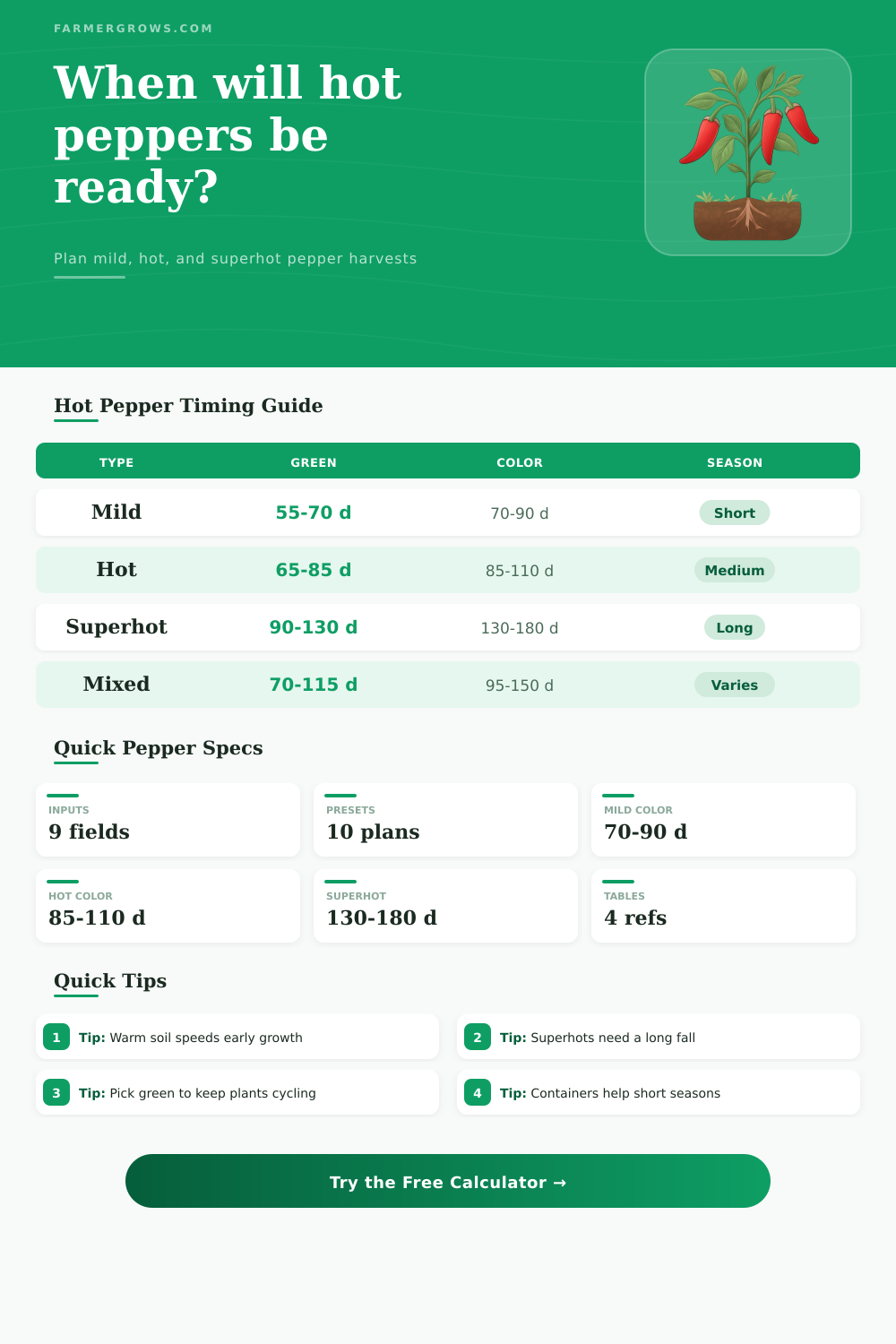
Hot Pepper Growth Time Calculator
Plan a pepper crop across mild, hot, and superhot heat classes using transplant date, soil temperature, days to maturity, harvest color, season length, container or bed growing, and plant count.
Use this calculator for broad hot pepper crop planning when you are growing mixed chilies, unnamed packet varieties, market assortments, or heat-class blocks instead of one specific named pepper. The formulas separate green harvest, ripe color harvest, total season fit, and expected picking volume.
📋Hot Pepper Crop Presets
🔥Heat Class And Type Comparison
Usually earliest and most forgiving. Good for green picking, stuffing types, fresh market baskets, and short summers.
Balanced heat class for sauce, drying, and regular fresh picking. Most plans finish colored fruit in medium seasons.
Often need extra warmth and a longer color window. Pick some green if the season is tightening.
Slowest crop class. Use warm soil, large containers or protected beds, and a realistic fall extension plan.
⚙Hot Pepper Planning Inputs
Hot Pepper Growth Timeline
Your harvest timing will appear after calculation.
🌱Planning Snapshot Grid
📚Heat Class Timing Table
| Heat class | Broad SHU band | Green harvest from transplant | Colored harvest from transplant | Best planning use |
|---|---|---|---|---|
| Mild hot pepper | 0 to 10,000 SHU | 55 to 70 days | 70 to 90 days | Short seasons, containers, fresh green harvests |
| Hot pepper | 10,000 to 100,000 SHU | 65 to 85 days | 85 to 110 days | Mixed garden chilies, sauce, drying, fresh heat |
| Very hot pepper | 100,000 to 500,000 SHU | 75 to 100 days | 105 to 140 days | Longer season blocks and protected beds |
| Superhot pepper | 500,000+ SHU | 90 to 130 days | 130 to 180 days | Greenhouse, hoophouse, or very long warm seasons |
| Mixed heat planting | Broad assortment | 70 to 115 days | 95 to 150 days | Use staggered picking and keep records by heat class |
🌡Temperature And Season Adjustment Table
| Condition | Fast crop pace | Average crop pace | Delay risk | Calculator effect |
|---|---|---|---|---|
| Soil at transplant | 65°F to 80°F | 60°F to 64°F | Below 60°F or above 88°F | Cool or hot roots add establishment days |
| Night temperature | 60°F to 72°F | 55°F to 59°F | Below 55°F or above 78°F | Night stress delays flowers and fruit set |
| Sun exposure | 8+ direct hours | 6 to 7.5 hours | Under 6 hours | Low sun stretches color and reduces pods |
| Remaining season | Target date plus 21+ days | Target date plus 7 to 20 days | Target after frost window | Creates strong, tight, or failed season score |
| Harvest color | Green | Breaker or ripe | Ripe held for drying | Color goal adds time beyond green size |
🏡Container And Bed Planning Table
| Setup | Timing influence | Root space note | Yield tendency | Best fit |
|---|---|---|---|---|
| In-ground field row | Slower spring roots | Deep soil, cooler early | Good if season is long | Large plantings and drip rows |
| Raised or mulched bed | Steady average pace | Warmer and better drained | Balanced yield and airflow | Most garden hot pepper blocks |
| Small container | Warms early, dries fast | 3 to 5 gal can restrict later | Lower total pods | Short crops and moving under cover |
| Large container | Warm and mobile | 7 to 15 gal gives roots room | Strong if watered steadily | Patio crops and fall extension |
| Tunnel or greenhouse | Faster set, longer fall | Manage heat and pollination | Best for very hot and superhot classes | Ripe color and drying harvests |
📊Harvest Color And Yield Table
| Harvest target | Timing effect | Flavor profile | Picking strategy | Yield note |
|---|---|---|---|---|
| Green full-size pods | Earliest harvest | Bright, grassy heat | Pick frequently to keep plants cycling | Often highest count over time |
| First blush or breaker | Adds moderate time | More sweetness, mixed color | Good compromise before frost | Useful for sauces and mixed baskets |
| Fully ripe final color | Adds longest normal wait | Full aroma and sweetness | Harvest in waves as pods color | Better flavor, fewer total pick cycles |
| Ripe pods held for drying | Adds a post-ripe hold | Concentrated ripe flavor | Pick only sound, fully colored pods | Requires dry-down space and airflow |
| Split green plus ripe | Balances calendar risk | Fresh heat plus final color | Pick first flush green, leave later pods to ripen | Good for uncertain seasons |
💡Hot Pepper Planning Tips
When packets are vague, group plants as mild, hot, very hot, or superhot. That broad class usually predicts crop timing better than pod shape alone.
Green pods may arrive weeks before final color. If the season margin is tight, harvest part of the crop green and reserve the warmest plants for ripe color.
It goes like this: it goes from seed packet to jar of sauce. But it never happens on schedule. Think of the days when you bought those superhot varieties because they’re supposed to be hot, not because they’ll be ready in a hundred thirty days. The summer rolls around, and everything seems fine. Those plants is looking good; but then the frost threatens before the pods turn red. There is nothing wrong with gardening, only with thinking about time.
When it comes to growing hot peppers, we need to plan backward from first hard frost. Not forward from the day we planted seeds. Most gardeners has this idea that all peppers are basically the same timing-wise. Wrong. Knowing your heat class makes all the difference in planning when things should goes into the ground, and how they’ll get there.
How to Plan When to Plant Peppers
Mild types is fast-growing and mature in as little as two months from planting out (though transplants take longer). Slow types like superhots need plenty of time, meaning a long, warm fall, and some patience. Plant both kinds on the same schedule, and you’ll probably reap the milder chilies but watch the superhots succumb to frost before they have ripened.
You can guess, or let the calculator do the math for you after you plug in your specific details. This way, you know if your late-season climate is able to grow slow-to-ripen plant. It separates the days until you see any green harvestable pods from the days until they finally turn color. This is an important divide, since green ones are technically edible but not fully flavored.
It’s not the air temperature that counts, it’s the soil temperature at transplant time. Even though your calendar is ticking along, roots in cold soil goes dormant, essentially stopping growth. Rushing to get out there as soon as the air warms up may mean that you’re still trying to plant into still-cold soil, where nothing much wants to expand those roots. This adds silent weeks to your timetable.
Because of this, the tool was adjusted to take account off how warmth of the root zone affects eventual maturity. Another hidden factor is night temperatures. Peppers will stop efficient fruit set if nights are cooler then fifty-five degrees Fahrenheit. You can have the perfect days then, provided the nights aren’t chilly, and the plants will stall out vegetatively instead of flipping into reproductive mode. That’s another reason why growing hotter things in greenhouses or protected beds extends the viable season.
That brings us to one final variable: container growing. In springtime, smallish pots will warm faster than big ones, putting you ahead of the game in terms off soil temperature. But remember: They will also dry out fast. This limits the overall volume of roots that can grow, which caps potential yields. Big containers take longer to warm at first, but are steadier once going.
The tool’s own tables spell this out nicely, not just with lists of rules but showing how set-up impacts timing. If the table has you looking at just a few days’ margin for each season, that’s saying your plan is vulnerable: One week of rain or a cold snap could send your crop into post-viability. RELATED: What if my crop’s been inside too long?
Most plans come undone at harvest time. Peppers show up green weeks earlier than their final color sets, be that red, or maybe yellow. In a short season, you’ll pick them early as green for use. This avoids overloading the plant with fruit and keeps it producing more. How many “full” fruits you can hold depends on having some buffer time, which you find by subtracting the number of days to final maturity from the number of frost-free days left until winter.
Do the math: Is there enough time to go all the way to red (or whatever), or would of you better cut back your expectations? You will be able to get green ones, sure, but September isn’t forcing red. The main takeaway is that variety speed matters. Match it to the length of your growing season. Reserve the superhots for long, protected seasons. Go with a shorter-day pepper if your summer’s short.
Use this information to make your decisions, rather than just growing what your heart wants. The seed doesn’t lie about its time line. It’s up to you to listen, before planting.