
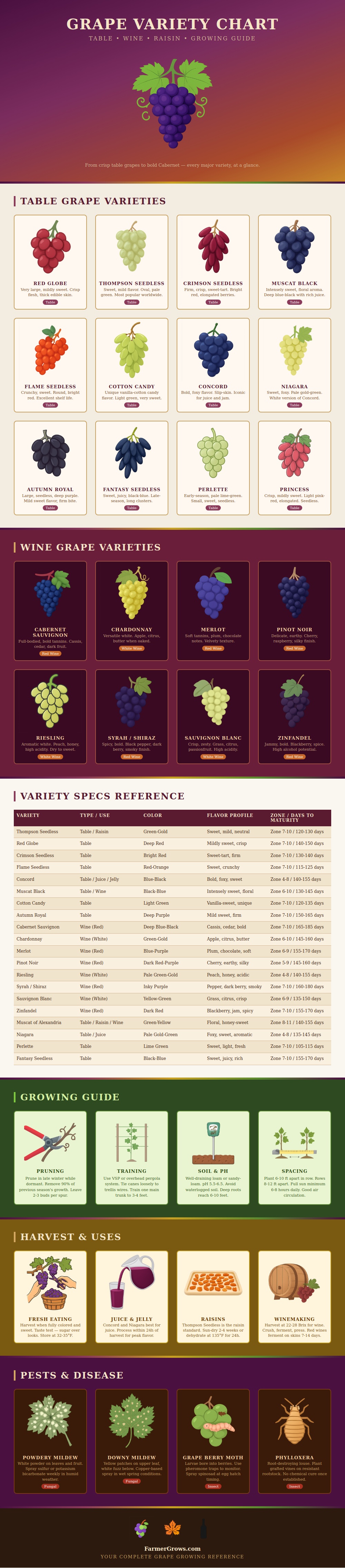
You can grow many different variety of grapes in your orchard. Additionally, you can choose between different varieties of grape based on whether you want to eat the grapes or use the grape to make wine. Each variety of grape has different uses for the grapes and different requirements for how to grow the vines to produce the grapes.
Table grapes are typicaly grew since humans mean to eat these grapes. For instance, Thompson Seedless is a variety of table grape that humans often use both as a fruit to be eaten, as well as to produce raisin. Additionally, Crimson Seedless is another variety of table grape that is often grown; this variety is known for it firm texture when harvested and its ability to last for long period of time while stored in the refrigerator.
How to Choose and Grow Grapes
Many of these table grape varieties is seedless, which is an advantage for the consumers of the grapes. Additionally, people often use Concord grapes to make grape juice or jam, due to the strong flavor of the grape. Muscat Black grapes are another variety of grape that is often used to make juice, due to the florally flavor of the grape.
Wine grapes are different than table grapes in that the wines are to be created through the fermentation process of the grapes. Additionally, wine grapes often contain thicker skin than table grapes, which allow for the extraction of tannins from the grapes. For instance, Cabernet Sauvignon is a grape variety that is often used to create red wines, and the grape varieties contains thick skins that allow for the wines to contain high level of tannins.
Additionally, Chardonnay is a white wine that can either be fermented in steel tanks or oak barrels, which alter the flavor of the wine. Pinot Noir grapes have thin skins, and need to be grown in cool climates to flourish. Syrah is another wine grape that thrive in hot climates, while Riesling is a wine grape that grows best in cooler climate.
Another factor to consider when choosing which type of grape to plant in your orchard is the climate zone in your area. For instance, Concord grapes can grow in climate zones 4, but most grape varieties cannot survive in zone 4. Additionally, grapes like Autumn Royal require climates zone 7, as they take longer to ripen then most grape varieties.
The number of days that the grapes need to mature into ripe fruits should also be considered, as short summers could prevent these grapes from ripening before the arrival of frost. In addition to considering the type of grape and the climate zones in which you would like to grow those grapes, there are specific step that must be performed for the grape vines to flourish. For instance, you must prune the vines in the late winter, as the pruning of most of the growth of the vines during the previous year will allow the vines to better focus their energy onto the production of grapes.
Additionally, you should train the vines onto a trellis system, which allow the grapes to receive sunlight and exposure to the air. Exposure to sunlight and air will prevent the grape vines from rotting. Additionally, the soil for the grape plants should be well-draining soils with a pH value between 5.5 and 6.5; and deep enough for the roots of the plants.
The grape plants should be spaced six to ten feet apart from each other in the orchard, and should have access to six to eight hour of sunlight per day. If the grape plants are planted too close together, they may develop fungal disease, such as powdery mildew and downy mildew. Sulfur sprays can be used to treat powdery mildew, while copper spray can be used to treat downy mildew.
In addition to treating the grape vines for diseases, there are specific steps that can be taken to manage insect that may attack the vines. For instance, berry moth larvae can attack the grapes, but using spinosad will prevent these insects from damaging the grapes. Additionally, the Phylloxera insect will attack the roots of the vines, so using resistant rootstock will prevent these insects from attacking the roots.
Finally, knowing when to harvest the grapes is the last step in the grape growing process. During this step, it is important to taste the grapes to ensure the sugar content, instead of relying upon the color of the grapes to determine when they are ready to be harvested. Additionally, table grapes should be stored between 32 and 35 degrees Fahrenheit to ensure the grapes remains fresh.
If the goal for the grapes is to make wine, the grapes should be harvested when the sugar content reaches between 22 and 28 Brix. Following these steps will allow an orchard owner to successfully grow grape vines that produce the type of grapes that he or she desire.