🌾 Grain Bin Cone Calculator
Calculate cone bottom volume, bushel capacity & grain weight for any bin diameter
lbs/bu
lbs/bu
lbs/bu
lbs/bu
lbs/bu
lbs/bu
lbs/bu
lbs/bu
| Diameter (ft) | Radius (ft) | Cubic Feet | Cubic Meters | Bushels (corn) |
|---|---|---|---|---|
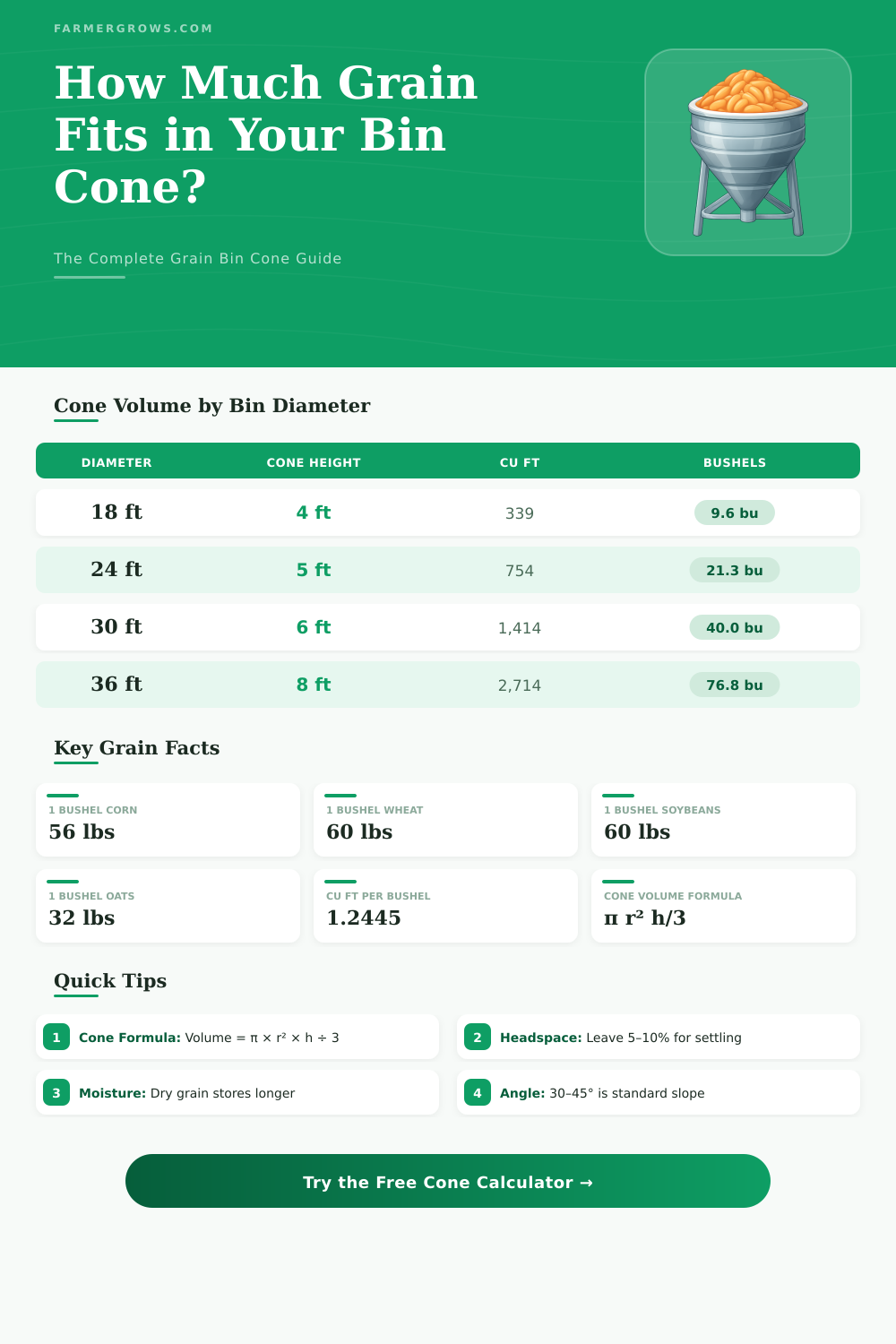
| 15 ft | 7.5 | 294.5 | 8.34 | 8.3 |
| 18 ft | 9.0 | 424.1 | 12.01 | 12.0 |
| 21 ft | 10.5 | 577.3 | 16.35 | 16.3 |
| 24 ft | 12.0 | 753.9 | 21.35 | 21.4 |
| 27 ft | 13.5 | 954.1 | 27.02 | 27.0 |
| 30 ft | 15.0 | 1,178.1 | 33.38 | 33.3 |
| 36 ft | 18.0 | 1,696.5 | 48.06 | 48.1 |
| 42 ft | 21.0 | 2,309.1 | 65.40 | 65.4 |
| 48 ft | 24.0 | 3,015.9 | 85.43 | 85.4 |
| 54 ft | 27.0 | 3,817.0 | 108.12 | 108.1 |
| Grain Type | lbs/Bushel | Cu Ft/Bushel | Bushels/Cu Ft | Bushels/Cu Meter |
|---|---|---|---|---|
| Corn | 56 | 1.2445 | 0.8034 | 28.37 |
| Wheat | 60 | 1.2445 | 0.8034 | 28.37 |
| Soybeans | 60 | 1.2445 | 0.8034 | 28.37 |
| Oats | 32 | 1.2445 | 0.8034 | 28.37 |
| Barley | 48 | 1.2445 | 0.8034 | 28.37 |
| Sorghum | 56 | 1.2445 | 0.8034 | 28.37 |
| Sunflower | 25 | 1.2445 | 0.8034 | 28.37 |
| Canola | 50 | 1.2445 | 0.8034 | 28.37 |
| Bin Diameter | 30° Slope Height | 37° Slope Height | 45° Slope Height | Typical Industry |
|---|---|---|---|---|
| 18 ft | 2.6 ft | 3.4 ft | 4.5 ft | 4.0 ft |
| 24 ft | 3.5 ft | 4.5 ft | 6.0 ft | 5.0 ft |
| 30 ft | 4.3 ft | 5.7 ft | 7.5 ft | 6.0 ft |
| 36 ft | 5.2 ft | 6.8 ft | 9.0 ft | 7.0 ft |
| 42 ft | 6.1 ft | 7.9 ft | 10.5 ft | 8.0 ft |
| 48 ft | 6.9 ft | 9.0 ft | 12.0 ft | 9.0 ft |
Volume = (π × r² × h) ÷ 3, where r = radius (diameter ÷ 2) and h = cone height. This is the exact mathematical formula for a right circular cone used in all grain bin calculations.
1 standard bushel = 1.2445 cubic feet (USDA standard). To convert cubic feet to bushels: divide cubic feet by 1.2445. This applies equally to corn, wheat, soybeans, and most grains regardless of their weight per bushel.
High-moisture grain is denser and less free-flowing. Grain at 15%+ moisture may pack differently in the cone. Always account for moisture when planning bin capacity to avoid overflow or compaction near the sump outlet.
1 metric ton = 2,204.6 lbs. Corn at 56 lbs/bu means 1 metric ton = ~39.4 bushels. Verify your bin floor load rating before filling — cone bottom bins concentrate weight differently than flat-bottom bins.
The grain bin cone forms the cone-shaped bottom part of grain bin. You also call them hopper tanks or cone-bottom bins. The cone funnel leads the grain to central spot, what unloads it much more easily and quickly.
With such cones in bins, you no longer require shoveling grain, escape back pain and breathing dust. You even can add more bushels to already existing grain bins by means of fast and simple unloading
How Hopper Cones Help Grain Bins
Hopper cones come in various styles. Modular bolt-together cones are built for good grain flow and easy transport. They fit most kinds of bins.
One-piece and bolt-together variants are availabel. Some companies design and manufacture them customized for new or already standing grain bins, so they become rugged and long lasting.
It is possible to also change old flat-bottom bin to hopper bottom. Hoppercone help farmers modernize their bins and expand their capacity. Such grain bottom bin adds value, safety and efficiency to storage of grain.
Some farmers even try build 14-foot hopper cones as home-made project.
The slope of cone is very important. Hopper cones with 40-degree slope helps grain flow exit. Strengthened slide gate eases the control.
60-degree cone bottom with smooth interior answers for paste flow and full drainage. Meridian bins have at least 40-degree bottom cone and 35-degree roof cone. 35-degree roof height maximizes the fill for biggest storage.
Hopper cones are available in diameters of 14 until 27 feet. Some models work for particular bins of makers like Meridian, Twister and AGI Westeel. Westeel weld his cones from pressed sheets, what gives ideal support for Wide-Corr or Standard-Corr bins.
Prairie Steel uses G115 galvanized steel for his cones, that lasts severe climates.
Hopper cones come with heavy steel plates and stiffeners. Some are acid washed, primed and enamel covered. Double band method with half-assembled cone parts gives more strength, and all include rack and pinion mechanism.
Steel bases and sliders are available for every size.
Grain storage is key part of grain farming, because it preserves the investment of farmer. Bins are from galvanized steel and usually stand on concrete. Aeration systems protect the grain against spoilage because of heat, mold and insects.
These easily assembled bins have heavy galvanized support structures. The cost moves around three dollars each bushel for hopper bins, what commonly includes delivery and setup.