Gladiolus Bulb Planting Depth Calculator
Estimate gladiolus corm planting depth, soil cover, row spacing, support confidence, and container clearance from corm grade, soil texture, drainage, exposure, mulch, and planting style.
Gladiolus are corms, though gardeners often call them bulbs. Depth is measured from the finished soil surface to the corm base. Tall cutting rows usually need a deeper anchor than small container plantings.
Gladiolus Depth Results
Your gladiolus depth plan will appear here.
1. Gladiolus Corm Grade Depth Guide
| Corm grade | Typical diameter | Starter depth | Spacing | Best use |
|---|---|---|---|---|
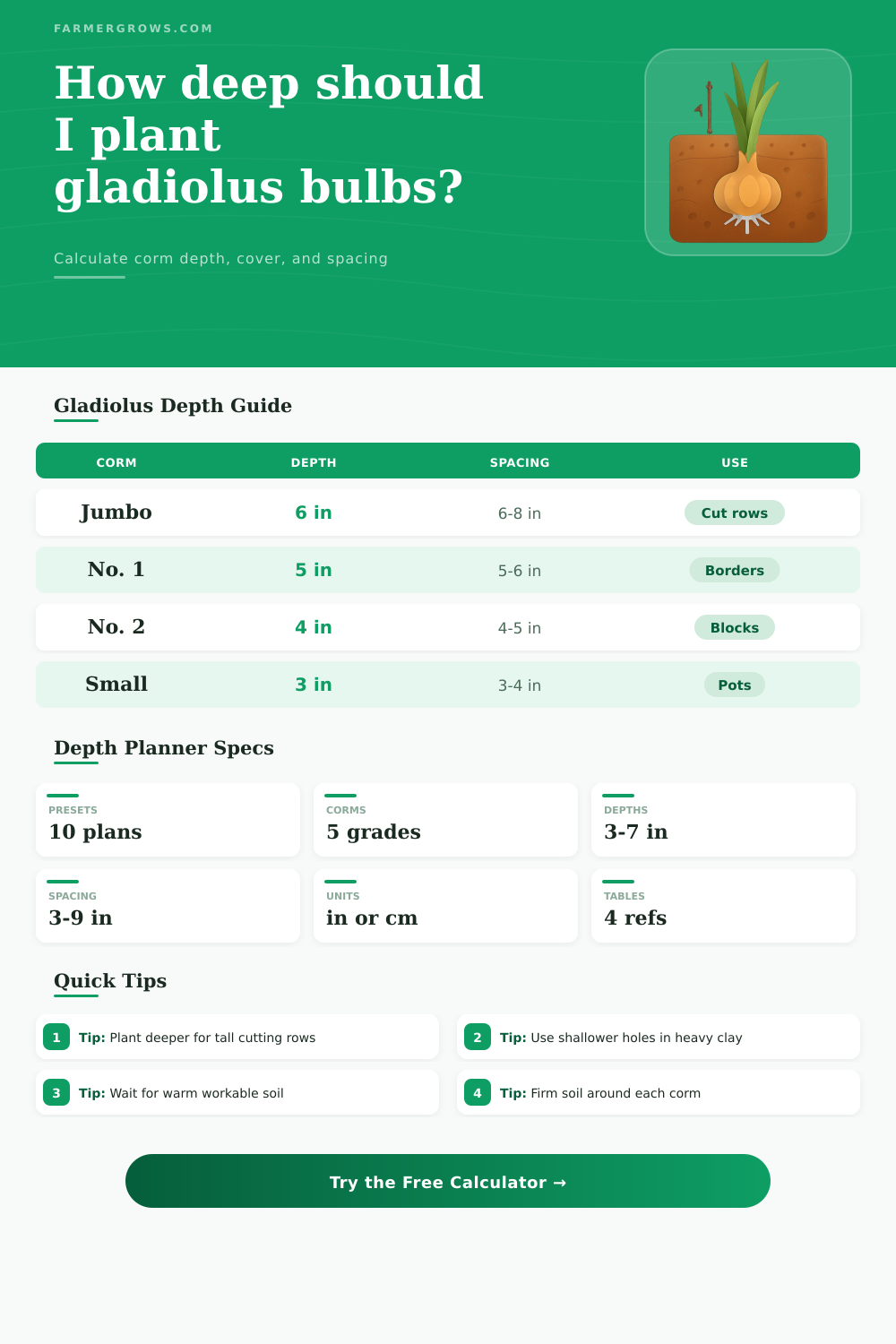
| Jumbo corm | 1.5 in or larger | 5.5 to 6.5 in | 6 to 8 in | Show spikes, cutting rows, and windy beds with support. |
| No. 1 corm | 1.25 to 1.5 in | 4.5 to 5.5 in | 5 to 6 in | Standard garden and bouquet production depth. |
| No. 2 corm | 1 to 1.25 in | 3.8 to 4.8 in | 4 to 5 in | Budget rows, mixed beds, and smaller spikes. |
| Small corm | Under 1 in | 3 to 4 in | 3 to 4 in | Nursery rows where building corm size matters. |
| Custom corm | Measure yours | About 3x height | 3x to 5x diameter | Use for unusual cultivars or saved corms. |
2. Soil And Drainage Adjustments
| Site condition | Depth adjustment | Why it matters | Planting response |
|---|---|---|---|
| Heavy clay | Shallower by about 0.5 in | Dense wet soil can rot corms and slow shoots. | Improve drainage or use raised rows. |
| Balanced loam | Use standard depth | Good moisture and oxygen balance. | Firm soil around the corm after backfilling. |
| Sandy soil | Deeper by 0.25 to 0.75 in | Extra depth buffers drought and anchors stems. | Water evenly as shoots stretch. |
| Container mix | Shallower by about 0.75 in | Root room and drainage holes limit usable depth. | Choose a deep tub, not a shallow bowl. |
| Excellent drainage | May plant slightly deeper | Less rot pressure at the corm base. | Best for tall cultivars and cutting rows. |
3. Row Spacing Capacity Guide
| In-row spacing | Corms per 10 ft row | Typical row use | Airflow note |
|---|---|---|---|
| 3 in | 40 corms | Temporary nursery rows or dense pots | Needs careful watering and sorting. |
| 4 in | 30 corms | Small corm blocks and compact displays | Good for short stems, tighter for jumbo corms. |
| 5 in | 24 corms | Mixed garden rows | Balanced density for many No. 1 corms. |
| 6 in | 20 corms | Standard cutting rows | Good stem room with support netting. |
| 8 in | 15 corms | Jumbo or exhibition spikes | Better airflow and easier staking. |
4. Container Depth And Support Checks
| Setup | Minimum soil depth | Depth target | Support cue |
|---|---|---|---|
| Large patio tub | 10 to 12 in | 3.5 to 4.5 in | Use a ring stake or grouped canes. |
| Raised bed | 10 in plus | 4.5 to 5.5 in | Row string works well before spikes show. |
| Cutting row | 12 in plus | 5 to 6 in | Netting at leaf height prevents leaning. |
| Show spike planting | 12 to 15 in | 6 to 7 in | Use individual stakes early. |
| Wet low bed | Move or raise bed | 3.5 to 4.5 in | Depth does not fix poor drainage. |
Depth tip: Plant the corm with the flatter basal plate down and the pointed shoot end upward. Measure depth from finished soil level, not from the bottom of a loose trench.
Support tip: Install stakes, string, or netting while leaves are short. Deep planting helps, but heavy flower spikes still need support in wind and rain.
Tall-growing glads with substantial flower spikes also needs to be planted deeply enough that their corms aren’t sitting exposed on the surface, where they’re vulnerable to falling over in wind. But if you bury them deeper than necessary, they’ll become exhausted struggling up toward light. The right answer is to firmly anchor roots but keep stems upright.
How deep? That’s what calculator does; adjusting the standard rule-of-thumb (plant 3x the corm’s height) according to your growing conditions. It factors in if the soil is sandy (fast-draining) or clayey (slow-draining). It also consider how windy it gets and your corm grade (size). No more guessing.
How Deep to Plant Glads
Heavy clay soil hold onto water, so the system advises planting glads a little shallower. In fast-draining sandy soils, it urges deeper planting to provide more moisture for roots and some stability against windy conditions. That’s important: Glads get their air by breathing out of their basal plate. Soaking them will cause fungal problems shortly thereafter. Most bulb growers does the same thing with all bulbs.
Glads are different because they are not meant to be planted as groundcovers, instead they grow up and out, so stability is key to growing them vertically. How much space between plant? That depends on size of corm grade you have. The chart on the page explains how various grades translate into recommended planting depths and spacings. It gives you an idea of how many corms per row to expect.
For example, jumbo corms require deeper anchoring and more space (the bigger spikes tends to flop over). The smaller nursery corms, which are destined to get bigger for harvesting next year, may go in a bit shallower and closer together; their only task now is to get bigger. It makes a difference whether you are planting a border or making a cutting row, too. The former requires more permissive spacing, maybe you want some companions in there, and less exactness. The latter call for support and precision.
Then there’s what happens in pots if you’re working on a patio rather than in the soil. Containers add an extra twist to all of this. Root room isn’t just beneath the corm but above it. Will it fit? The calculator will tell you whether there’s enough soil depth in the tub of your choice to support the desired amount of cover and not smother roots. Wide but shallow is not good. Looks good when that tub sits on a warm breeze.
Vertical soil volume matters with glads; they has to make their root mats, and for this reason, a shallower pot simply won’t do the trick. The calculator will signal trouble: time to use a larger one, or go easy on the number of corms per pot. How deep is another thing timing affects: Slightly deeper is an insurance policy in cold zones where frost often arrives late, as it provides extra insulation and a firmer hold for early growth. Planting shallow in warmer zones help them emerge more quickly (especially if you’re on a short growing season). You’re matching the biologic speed of the plant to the thermal reality of your garden bed.
By using your hardiness zone, the tool takes those regional variations into account so the depth suggestion matches both average textbook data and actual soil temperatures where you live. Stakes or netting, those support structures we often talk about separately, are connected to planting depth. A deeper-plant needs less lateral support; its own weight and root grip holds it up. String or hoops intervene sooner on something planted shallow. Based off your input, the calculator assigns a level of confidence for supported growth. It’s a helpful nudge that depth alone doesn’t always solve the problem.
There’s also the matter of what happens up top. Raising glads, whether for cut flowers or just to enjoy in the garden. Isn’t about following a strict formula, but about creating the right conditions. If you want bulbs to do their best, they need sufficient reserves of stored energy inside those corms to power up and push through. That means the digging part has to be done right… The way the depth calculator can show you how to make sure the stage is properly set from the moment that spade goes into the ground.
Measure the corm, evaluate your soil, follow the math with your fingertips, and then cover it all up, pack down and await the green blades’ sign that all is well. When things work out below, they appear effortless above. Actually, you should of used jumbo corms for better results. Looking at the moddern ways to garden, people often make mistakes when they are livig in new areas. It’s naturaly easy to get confused with the differant soil types.
The amount of furnitures in a garden can change things too. One might recieve more glads than expected. This is better different than before. Glads is fun to grow. You shouldnt worry too much.