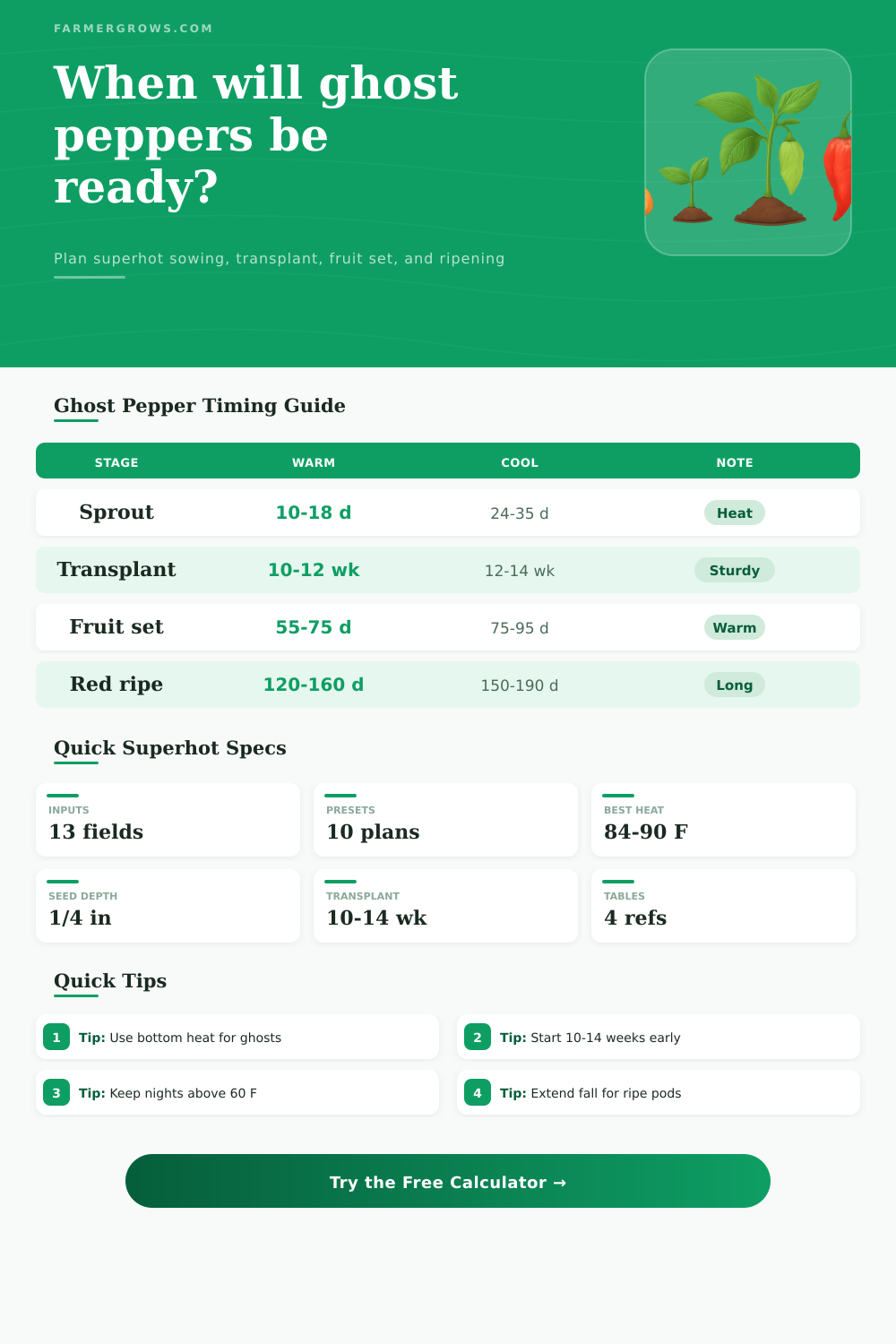
Ghost Pepper Growth Time Calculator
Build a long-season ghost pepper schedule from seed heat to transplant age, first fruit set, ripe pod timing, container or greenhouse extension, and harvest risk before frost.
Ghost peppers and close Bhut-type superhots are slower than jalapenos and most garden chilies. Use this calculator to plan an early indoor start, warm roots, patient ripening, and protected fall harvests for red, chocolate, peach, white, or yellow pods.
📋Ghost Pepper Presets
🌶Why Ghost Peppers Need Their Own Calendar
Fresh ghost seed can still sit for weeks without steady 84-90 F media temperature.
Superhot seedlings are commonly held longer than jalapenos before they make a sturdy outdoor plant.
Cool nights, wet roots, and low light delay flowers and cause early blossom drop.
Ripe ghost pods often need several more weeks after full green size, especially chocolate and peach types.
🌱Long-Season Inputs
Ghost Pepper Growth Timeline
Your superhot schedule will appear here.
📅Calculated Stage Summary
🔥Superhot Cultivar, SHU, And Ripening Grid
| Cultivar | Typical heat range | Transplant to ripe | Ripening behavior |
|---|---|---|---|
| Red Bhut Jolokia | 800,000-1,041,000 SHU | 110-150 days | Classic red ghost; slow color, reliable reference type. |
| Chocolate ghost | 800,000-1,000,000+ SHU | 125-165 days | Often needs extra color time and steady late-season heat. |
| Peach ghost | 700,000-1,000,000 SHU | 115-155 days | Peach color can look pale before full flavor develops. |
| Yellow ghost | 700,000-1,000,000 SHU | 110-150 days | Can finish slightly earlier than chocolate in warm seasons. |
| White ghost | 600,000-900,000 SHU | 110-145 days | Pale ripe pods make color checks trickier; track pod age. |
| Naga Morich | 800,000-1,000,000+ SHU | 115-155 days | Bhut relative with strong aroma and long warm-season needs. |
🌡Ghost Pepper Germination Heat Table
| Media temperature | Expected sprout range | What changes | Grower note |
|---|---|---|---|
| 84-90 F | 10-18 days | Fastest practical ghost pepper range | Use a probe in the cell mix, not the room air. |
| 78-83 F | 14-24 days | Usually acceptable but slower | Keep the dome vented once hooks appear. |
| 70-77 F | 21-35 days | Patchy emergence and more waiting | Do not overwater while waiting on slow seeds. |
| Below 70 F | 30+ days or failure | High rot and dormancy risk | Use bottom heat before blaming the seed lot. |
🏡Container And Greenhouse Season Extension Table
| Setup | Timing effect | Container guidance | Best use |
|---|---|---|---|
| Outdoor container | Warmer roots by day, faster chilling at night | 5-10 gal for single plants | Move under cover before cold rain or frost. |
| Raised bed with mulch | Steadier roots than field soil | Not potted | Good for warm climates with long summers. |
| Low tunnel or row cover | Adds 1-3 useful weeks | Open on hot days | Helps first fruit set and early fall ripening. |
| High tunnel | Adds 3-6 useful weeks | Train and stake heavily | Best balance for northern ripe ghost pods. |
| Greenhouse | Adds 5-10+ useful weeks | Use large pots or beds | Supports late ripe harvest and mother plants. |
📊Transplant, Fruit Set, And Harvest Planning Table
| Planning item | Typical ghost pepper range | Delay trigger | Practical target |
|---|---|---|---|
| Seedling age | 10-14 weeks after sprout | Small roots or pale growth | Pot up before plants stall in cells. |
| Outdoor transplant | After frost and warm nights | Nights below 55-60 F | Wait for warm soil, not just no frost. |
| First fruit set | 55-90 days after transplant | Cool nights or excess nitrogen | Steady moisture, support, and full sun. |
| Full green pods | 90-125 days after transplant | Cloudy weather or root restriction | Can pick some green to keep plants cycling. |
| Ripe pods | 120-170 days after transplant | Short fall, cool greenhouse | Protect plants before nights turn cold. |
💡Superhot Grower Tips
Start warmer than ordinary peppers. Ghost peppers often need bottom heat and patience. Keep cell mix evenly moist, not wet, and wait before reseeding a tray that may simply be slow.
Plan the fall before you sow. If ripe pods are the goal, containers, tunnels, or greenhouse space can matter more than a few extra spring days because color often arrives late.
Gardeners treat ghost peppers as if they were jalapenos. That is a bad move that will cost you the season. In March, you sow seed around, just waiting for it to sprout. When it finally does, you pop it out into the cold ground and hope for the best. Nature seldom cooperates.
Superhot ghost peppers crave warmth from day one until maturity. Plan ahead with the long game by using the time calculator up top. It compares the number of warm days seeds need to grow with your specific frost dates. It tracks age of your transplants. It also shows when to set fruit and when to pick. There is no more guesswork, only a plan.
How to Plan Your Ghost Pepper Garden
Seed: And the beginning of everything is…seed. I know, again… The number one obstacle with growing ghost peppers is getting those stubborn little guys going. Even at room temp, their tough outer coating makes them resistant to sprouting. It might take a month. Maybe not. It depends on your soil temperature (what if the soil is below 70°F?). Yeah.) So enter the variable: tell the tool what the soil will be like as it’s meant to sprout. If possible, use a heat mat to get your cell mix up to eighty-four to ninety degrees F, which will help jump-start things on day one. Get that right, and they’ll pop up in ten days. Miss the mark and you’re looking at a “Why haven’t these started?” question rather than “Whoa! Look at that!” You can also buy fresh seeds, which are always faster to sprout. Just be patient with older stock…and keep it consistently warm. Don’t think the packet failed if the soil isn’t.
Then come the hooks; the nursery phase. Here’s where gardeners tend to get impatient. As soon as those seedlings reach their fourth leaf, it can seem as if there’s no stopping them from going out in the world. But ghost peppers are not ready to handle outdoor stresses until their root system have matured, which takes time. Add the transplant-age factor to the calculator. That’s typically between ten and fourteen weeks after sprouting. It tells you when to actually plant by taking into account your last frost date. Then it figures in “hardening-off” days so you don’t make the most popular mistake of all: placing tender young transplants into the ground while the soil remains cold at night. Chilling nights kill growth dead in its tracks, no matter what the days may be like.
A second key point: Temperature, not light, determines if flowers gets to set fruit. Warm nights are necessary to keep the flower attached. The plant will drop them to save energy if it’s too chilly. How does it estimate when fruit will set? It estimates it based off your growing setup and your average early-season night temperatures. Pots will be cooler than raised beds; so container-grown plants may be a little bit slower than ones in the ground. You can use that knowledge to decide whether or not to bring potted plants inside during a cold snap. And it helps you manage expectations for when to expect the first pickings.
Now it’s coming down to the wire. You can eat some of those green pods right now (though without all of the heat and flavor they’re meant to be). But here’s the deal: color doesn’t just come on overnight. In fact, sometimes it doesn’t develop until a couple weeks after the pod has filled out. If you have chocolate or peach-colored ghost pepper varieties, especially, they may be extra-slow to show their true colors. The calculator assumes your ghost peppers will take some time to color up, and then adds this wait time to the day you saw fruit set.
The calculator also accounts for ways to extend the season, such as using a row cover or a low tunnel. Adding a couple more warming weeks in early fall can make the difference between red pods and green ones. Of course, greenhouse growers have the luxury of continuing a long way into the season, and then they can overwinter their mother plants to set fruit much earlier next year. Outdoor gardeners may be able to salvage a crop that would otherwise turn green forever by protecting roots with mulch. Getting fruit off as late as is humanly possible (and then waiting to see if it ripens) can save a crop destined to remain forever green.
This sort of thinking will help you use the tool well: Think back from your earliest possible date of first frost, then allow some days afterward for a few more pods to size up and reach ripeness. That means you want to have set your crop. This requires sturdy plants, so you need to start early. The list of necessary inputs forces you to deal with them in advance of seed purchases. Days are not all that matters; timing depends on how you manage moisture and heat at each growth phase. Thermal management isn’t so much a matter of luck as it is of planning. You need a superhot crop that gives the seed the heat it requires up front, which allows the middle part to take care of itself. Then, you must shield the fruit from any coolness at the end. That’s all the calculator does: make sure those two bookends are realistic for your setup and climate.
You’ll still have to do the work. But at least you’ll know exactly when each task lands on your calendar.