Garlic Growth Time Calculator
Estimate garlic harvest timing, scape window, curing period, and planting fit from variety type, planting date, USDA zone, clove size, chilling, mulch, spacing, and harvest cues.
Use this planner for field or garden garlic. Local soil temperature, winter snow cover, spring heat, irrigation, disease pressure, and seed stock vigor can move the final harvest by one to three weeks.
Garlic Growth Timeline
Estimated from planting date, garlic type, zone, chilling, spacing, mulch, scape handling, and harvest cue.
| Garlic variety | Type | Best zone fit | Typical growth days | Field note |
|---|---|---|---|---|
| Music | Porcelain hardneck | 3 to 7 | 245 to 275 | Large cloves, strong cold performance, reliable scapes. |
| German Extra Hardy | Porcelain hardneck | 3 to 6 | 250 to 280 | Very winter hardy and often harvested mid to late summer. |
| Chesnok Red | Purple stripe hardneck | 4 to 8 | 240 to 270 | Good flavor and dependable wrapper color when cured well. |
| Spanish Roja | Rocambole hardneck | 4 to 7 | 235 to 265 | Excellent flavor but likes real winter chilling and good drainage. |
| Inchelium Red | Artichoke softneck | 6 to 9 | 220 to 250 | Mild-climate storage type with flexible harvest timing. |
| California Early | Artichoke softneck | 7 to 10 | 200 to 235 | Early softneck option for warm zones and commercial timing. |
| Silver Rose | Silverskin softneck | 6 to 9 | 230 to 260 | Later softneck with excellent storage after thorough curing. |
| Elephant garlic | Leek relative | 5 to 9 | 220 to 260 | Wide spacing and steady moisture matter more than scape timing. |
| USDA zone | Fall planting window | Spring fallback | Chill expectation | Timing note |
|---|---|---|---|---|
| Zone 3 | Late September to mid October | As soon as soil opens | High natural chill | Mulch after soil cools to protect roots. |
| Zone 4 | Late September to late October | Late March to April | High natural chill | Plant early enough for roots, not tall shoots. |
| Zone 5 | Early October to early November | March to early April | Strong natural chill | Classic hardneck timing for midsummer harvest. |
| Zone 6 | Mid October to mid November | February to March | Moderate chill | Mulch helps buffer freeze-thaw heaving. |
| Zone 7 | Late October to early December | January to February | Moderate chill | Hardnecks may benefit from pre-chill in warm years. |
| Zone 8 | November to December | January planting works | Low to moderate chill | Softneck varieties are usually safer. |
| Zone 9 | November to January | Very early spring only | Low chill | Pre-chill hardnecks or choose softneck seed stock. |
| Zone 10 | December to January | Use pre-chilled cloves | Very low chill | Expect earlier harvest and shorter storage potential. |
| Spacing plan | In-row spacing | Rows in bed | Bulb size effect | Best use |
|---|---|---|---|---|
| Tight market bed | 4 inches | 8 to 10 inches apart | Smaller average bulbs | Green garlic, small bulbs, limited bed space. |
| Standard garden | 6 inches | 10 to 12 inches apart | Balanced bulb size | Most hardneck and softneck home plantings. |
| Wide food crop | 8 inches | 12 to 15 inches apart | Larger bulbs likely | Large seed cloves, good fertility, hand weeding. |
| Seed stock | 10 inches | 15 to 18 inches apart | Maximizes clove size | Growing future planting stock or jumbo bulbs. |
| Elephant garlic | 10 to 12 inches | 18 to 24 inches apart | Needs room | Large plants and heavy tops in fertile beds. |
| Cue or stage | What to look for | Calculator effect | Curing action | Risk if missed |
|---|---|---|---|---|
| Six green leaves | Enough green leaves remain to wrap bulbs | Earlier harvest | Lift gently and keep tops attached | Too early can reduce final bulb size. |
| 40-50% brown leaves | Lower leaves brown while upper leaves stay green | Standard harvest | Cure 2 to 4 weeks with airflow | Waiting too long can split wrappers. |
| Test bulb wrapper | Cloves filled, wrappers tight, neck softening | Fine-tuned harvest | Brush soil after drying, not while wet | Wet handling stains wrappers. |
| Softneck tops lean | Tops yellow and fall over naturally | Slightly later softneck harvest | Braid or trim only after necks dry | Loose bulbs store poorly. |
| Curing complete | Necks dry, roots brittle, skins papery | Storage start | Trim roots and move to cool dry storage | Uncured bulbs mold in storage. |
Garlic harvest is decided in the bed. Start checking one test bulb near the estimate, especially after hot springs or uneven irrigation.
The best fall planting builds roots before winter. If shoots are tall before hard freezes, add mulch but avoid heavy wet mats.
Precisely how do you plant garlic? You plant it in fall. Then you wait, waiting and waiting. Months later, you hope those bulbs has grown big enough by summertime when it start getting hot. It all depends on so many variables, what happens over the winter, how thickly your soil is mulched, and the initial size of each seed-clove that went in the ground.
This is the point. A tool can be helpful to run numbers once your choices are locked in. ← previous post To use the calculator, just type in your Zone, planting date, variety, chill weeks, mulch depth, spacing, and harvest cue. The calculator will then do math (see box above).
How to Use the Garlic Calculator
Each variable entered is an actual field decision: How big was the seed clove? Bulbs with bigger cloves contains more energy, maturing earlier and leading to slightly larger bulbs as well. How much space between each plant? Crowding them up can push harvest a few days later, but also mean slightly smaller average bulb.
How deep is the mulch layer? It regulate soil temperatures and helps keep roots alive during multiple freeze/thaw cycles. In colder zones, these cycle could push plants right out of the ground.
There’s also an input for chill. Hardneck varieties won’t make good bulbs unless they gets some regular winter chill. Softnecks don’t require as much and tend to keep better after curing. The calculator takes all these factors into account: the possible range of scaping times (longer with hardneck), and the duration of the final curing time (also longer when growing hardneck).
If you choose to lift at some specific percentage of leaves turning brown (say 40-50 percent down), the calculator knows you’re setting a somewhat early date (the earlier the better for keeping wrapper intact). If your choice is really late, it might split in case of heatwave.
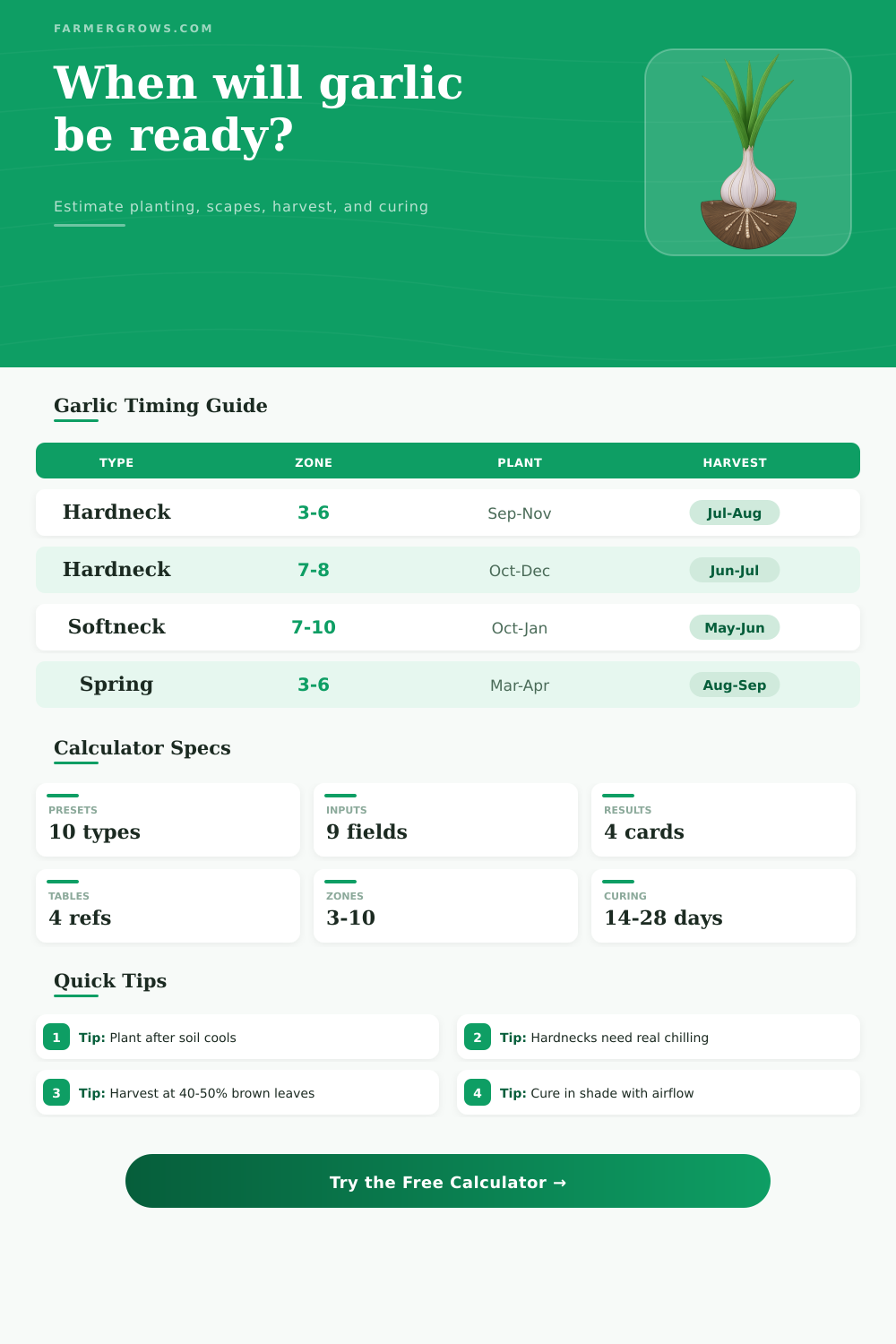
On the page: The reference tables of typical range of days for each variety in each zone explain why a porcelain hardneck in zone five usually sits between two hundred forty-five and two hundred seventy-five days, while a softneck in zone eight finishes sooner. The ranges aren’t guaranteed. Weather changes things locally… But they offer a ballpark time frame that gets adjusted by the changeable nature of our weather.
Another pitfall is thinking that the date given in the harvest estimate is an actual appointment instead of just a sign to go out and scope things out. The math behind the estimate includes some assumptions about when you will plant (your input). It also looks at what is happening around the time you plant (anchor points based off your Zone) and which varieties you grow. However, it has no idea if there will be rain in April or a heat wave in June.
Better late than never, I say; 1-2 weeks prior to expected harvest, push open a test bulb. Waiting? Cloves aren’t separated. Go again. Ready? The skins are papery and the necks is softening. Dig those babies up.”
Growers overlook the biggest thing: the cure. Because you have to wait until the necks have dried out before cutting them away, the calculator assume a typical curing period post-harvest. This allows the bulbs to continue drying out and the skins to shrink and become tight. Curing under shade with good air flow prevents any mold from taking hold. When the roots are brittle and the necks are dry, then it’s time to put your garlic in cool, dry storage for the rest of the months to come.
Using a calculator for planning is great because it makes you think through the sequence of decisions ahead of time, before you plant first clove. Pick a variety whose winter best suits yours. Determine how much space you have in your beds and how far apart the garlic will go. Decide what kind of mulch you’ll use, or if you need any at all, based on what your climate needs for insulation. And then the computer converts all these selections into date(s), which you can pencil in on the calendar.
It is not perfect, but it would of been a good starting point to watch from.