
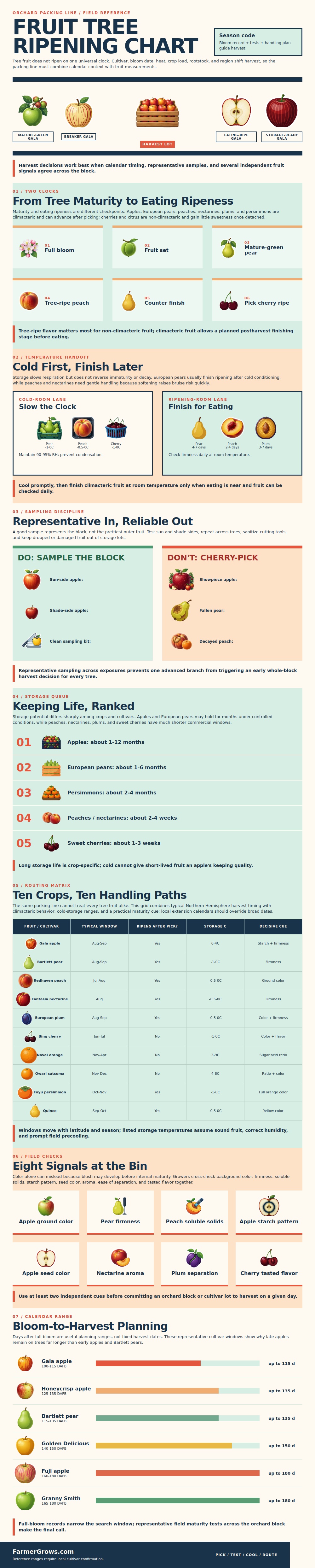
The best way to get the right pick is to stop looking at calendar. Why? Because you’ll never find it. You won’t find it, even if you cross-eyed yourself looking.
That’s because nature isn’t running by one clock for all of us. It runs by each individual piece of fruit on the tree; this is why your calendar needs to match what’s in your hand (see chart above).
How to Know When Fruit Is Ready
Guessing by calendar alone doesn’t work better then. Letting the fruit tell you will.
Maturity and ripeness isn’t the same thing. Knowing this is important because it affects what happens to your fruit once it’s off the tree. Climacteric fruits, which includes apples and European pears, will go on ripening once picked; meaning you can still pick them while firm and allow them to complete their ripening process in an ideal setting.
Non-climacteric fruits (cherries, citrus) cease development as soon as they’re removed from the tree, which means if you pick one that isn’t absolutely perfect, it won’t improve, it’ll only soften. Which is exactly why with stone fruit, there’s no room for error. You have to get it right at the source.
Interestingly enough, the whole process has something to do with temperature of storage: Climacteric fruits has their clock stopped by cold temperatures; respiration is slowed way down. To stop a pear from ripening, store it near freezing, then take it out a few days before desired eating time, and let it warm up at room temperature. This not only gives you more season of eating, but it basically stops the clock.
With peaches, which soften rapidly and will spoil after a single bump or bruise: Cool as soon as possible (to maintain texture), but don’t expect fridge to undo time if a peach was immature when picked. Can’t save an under-ripe peach in the refrigerator. Keep only what is there.
Most harvest decisions goes wrong during sampling. We’re tempted to grab the bright and shinies on the sunny side of the tree, then think all those on the block must be ripe. The outer fruit is nearly always ahead of what’s inside. Take samples from deep inside canopy, including shady side.
If you only test best-looking specimens, you’ll likely harvest too early. Most likely, you’ll have picked too soon if you don’t get out and do this. This means the majority of crop hasn’t developed properly. Small detail, but saves so much heartbreak.
Use clean tools when you sample. No matter how good or bad, don’t include damaged fruit in your samples, as that will throw off your test results. This is a snapshot of the entire crop, not just the lucky few who snagged most sun.
The storage times are also very dependent on the type of fruit. For example, apples can store for months if stored correctly. Sweet cherries may be good for just a few weeks. These variations will also dictate how aggressively you need to manage your post-harvest routine. A bin of nectarines won’t have the same easy storage time as a bin of Fuji apples.
The chart breaks down the types easily, but the general point is that each crop has its own storage life. Understanding this allow you to know what to tackle first and what can go in back of the cooler.
The bottom line is that harvesting is all about reading many signs. Because sometimes fruits will blanch up first without forming their internal sugars yet, color isn’t always a reliable signal either. Examine ground color, press on a fruit, even eat a sample fruit off the opposite end of the tree. If a number of different clues converge, go ahead and pick confidently.
Finding that single telltale sign doesn’t happen; it’s more like making a case for ripeness. Once you begin to think in terms of signals instead of dates, the guesswork fades. The crop becomes less mysterious and more something you’re managing as fruit. Your eyes and hands become more reliable guides than the almanac.
That change of mind is what transforms an average harvest into a bumper crop. You should of seen it happen.