
Foaling out takes time, but if you put in the effort it repays you far better then many expect. For the first few weeks, it’s a blur. Does the foal stand? Nurse? Does it pass its first dark stool at the right time? Those is the easy goals. Once they’re passed, then the fun starts.
A young horse are changing rapidly. Knowing this, you can get an idea of where he “should” be on his journey. Use a good growth chart to map out what normal development should look like for him through his first couple of years. Then, rather than wondering whether something might not be quite right, you’ll know it when it isn’t.
How to Use a Growth Chart for Your Foal
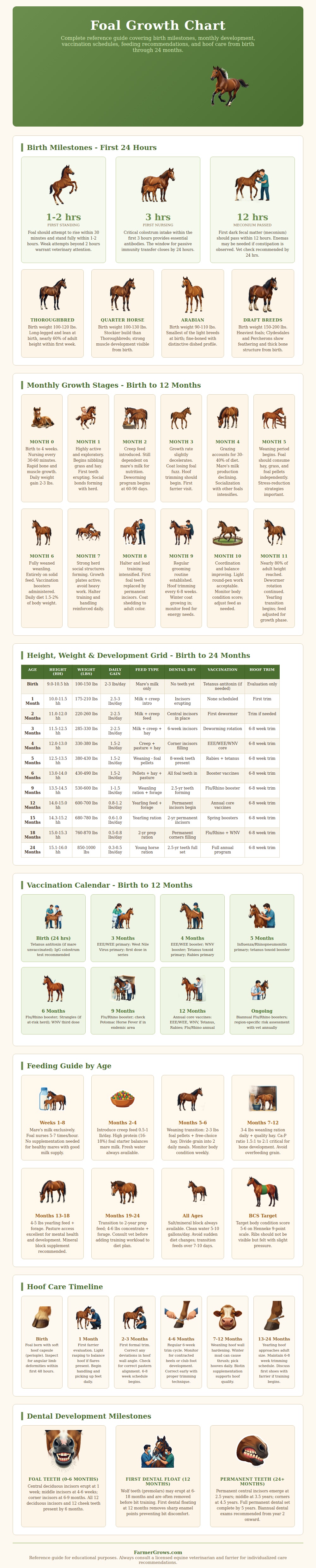
Those changes is laid out in the chart above. It details them month by month, noting how much of the foal’s diet should comes from the mare and how much he or she should eat on his or her own as they move from complete dependency to eating independantly. What is important isn’t so much one number as the overall pattern.
You notice fast initial growth gains that then slow down. This tell you when to back off feeding and when not to worry if the horse seem to lag a little. The same table also tracks the hoof trimming schedule and dental development. Those tend to fall through the cracks until something go wrong.
It’s the same principle with vaccines; early ones provide a level of protection when the foal still has passive immunity from his colostrum but they also help establish a base. Later booster shots maintains the level of coverage once maternal antibodies diminish. Everything is grouped nicely on the chart so it’s easy to see. You won’t have to wonder if it’s time for the four-month vaccine or the three-month one.
Your vet might adjust or add a vaccine based off regional risk. In areas where certain diseases are more common, there might be adjustments in this way. The chart isn’t carved in stone, just a starting point for discussion.
Most day-to-day questions revolves around feeding. Fortunately, the first eight weeks are simple: the mare’s milk provides all nutrition. The next addition is creep feed after eight weeks, nutritious food for growth, but not so much that it overwhelms the foal’s digestive tract. Then comes weaning time, which is the greatest change of all.
The chart explains how gradual increases with solid feed help the transition. Those who progress too rapidly to big grain meals risk getting developmental orthopedic problems or experiencing loose manure. A plan for steady weight gain ensure no one is outpacing anyone else. That’s pushing the body beyond what bones and joints can accommodates.
There’s a pace to hoof care. Newborn hooves is soft and grow quickly, so an early first trim is much easier for everyone. Subsequent trims every six to eight weeks keep them balanced, even as they’re still growing their skeleton. That chart indicates when that first schedule usually begins. Then it shows what happens in following years as this continues well into the yearling stage. It prevents little imbalances from maturing into permanent issues.
Less focus is put on dental milestones than it should of been. The chart shows eruption of baby teeth in a consistent pattern as well as the approximate age at which permanent teeth are starting to emerge. Even youngsters has sharp points, so that an earlier float (12 months or so) tends to help bit acceptance later. Anticipating those changes early reduces surprises once you start working.
What does it mean? It means that the best chart to use is the one you will use to check against reality. Weigh the foal if possible. Take notes on changes in the legs, coat, and other parts. Have a simple record, and then when you notice something different you don’t have a fuzzy “I think it should be this way” but rather “hey I know what I was expecting, lets see what happened.”
That mix of looking at the chart and having a clear time line makes a good growth chart into practical advice. It is not just another piece of furnitures.