Cucumber Growth Time Calculator
Estimate cucumber germination, first harvest date, peak picking window, frost buffer, plant count, and patch yield from variety, soil warmth, trellis style, spacing, and irrigation.
Cucumbers are warm-season crops. This planner adjusts the seed packet maturity estimate for cool soil, transplant recovery, water stress, plant habit, and frost limits so the date is useful for real garden scheduling.
Cucumber Harvest Timing
The estimate combines the variety maturity with soil temperature, sowing method, plant habit, water consistency, spacing pressure, and frost timing.
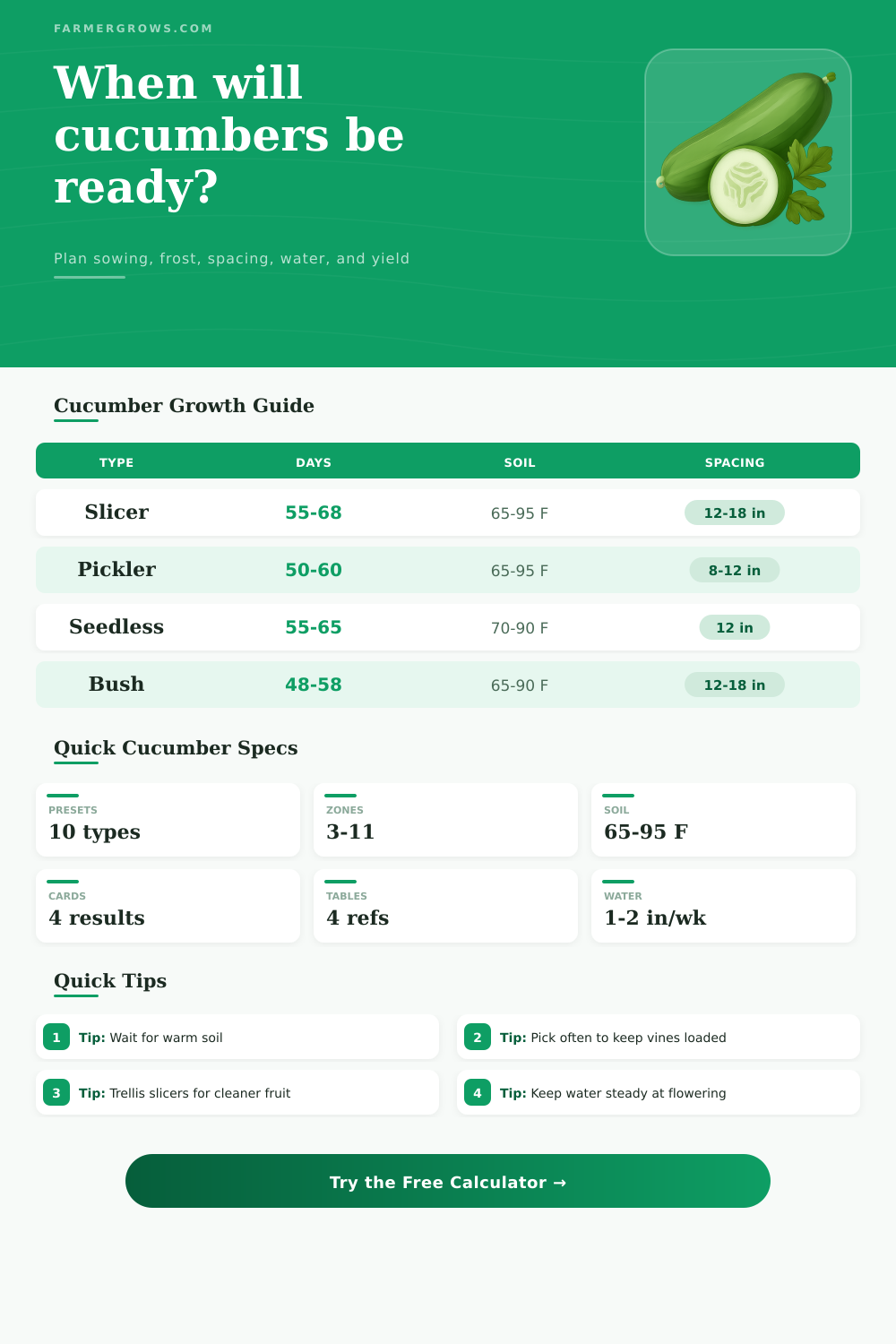
| Variety | Best use | Days to maturity | Habit | Planning note |
|---|---|---|---|---|
| Marketmore 76 | Slicing | 65 | Vining | Good outdoor disease tolerance and steady harvest. |
| Straight Eight | Slicing | 58 | Vining | Classic garden cucumber for 8 in fruit. |
| National Pickling | Pickling | 52 | Vining | Harvest small and often for crisp pickles. |
| Boston Pickling | Pickling | 55 | Vining | Reliable heirloom style for brining sizes. |
| Diva | Seedless slicer | 58 | Trellis | Thin-skinned fruit; benefits from clean trellis culture. |
| Sweet Success | Long seedless | 54 | Trellis | Best with warm, even moisture and support. |
| Lemon | Specialty fresh | 65 | Vining | Round yellow fruit is picked before the skin toughens. |
| Armenian | Long specialty | 65 | Vining | Handles heat well and needs a long harvest lane. |
| Spacemaster | Container slicer | 56 | Bush | Compact habit for pots, beds, or small patios. |
| Homemade Pickles | Pickling | 55 | Short vine | Good for repeated sowings and smaller beds. |
| Soil temperature | Expected emergence | Growth time effect | Garden action |
|---|---|---|---|
| Below 55°F / 13°C | Poor or failed | Adds major risk | Wait, use protection, or start transplants indoors. |
| 55-59°F / 13-15°C | 10-14 days | Often adds about 8 days | Use row cover and avoid wet, cold soil. |
| 60-64°F / 16-18°C | 7-10 days | Often adds about 4 days | Acceptable for early starts with protection. |
| 65-74°F / 18-23°C | 5-7 days | Near normal timing | Good direct-sow range for most gardens. |
| 75-85°F / 24-29°C | 3-5 days | Can shave 1 to 2 days | Fast emergence if soil stays evenly moist. |
| 86-95°F / 30-35°C | 3-5 days | Fast but watch stress | Mulch and water consistently after emergence. |
| Growing style | In-row spacing | Row or trellis spacing | Plants per 20 ft row | Spacing note |
|---|---|---|---|---|
| Trellised vining | 8-12 in | 36-48 in | 20-30 | Cleaner fruit and easier picking in small beds. |
| Ground vining | 18-24 in | 48-72 in | 10-13 | Needs mulch or straw to keep fruit clean. |
| Bush container | 12-18 in | 24-36 in | 13-20 | Use a large pot and steady watering. |
| Pickling block | 8-12 in | 36-48 in | 20-30 | Close spacing works when plants are picked hard. |
| Greenhouse cordon | 12-18 in | 24-36 in | 13-20 | Prune side shoots and support heavy fruit. |
| Cucumber class | Typical maturity | Fruit per plant | Typical weight per plant | Harvest span |
|---|---|---|---|---|
| Early pickling | 50-55 days | 10-18 small fruit | 2-4 lb | 2-4 weeks with frequent picking. |
| Garden slicing | 55-65 days | 6-12 fruit | 3-6 lb | 3-5 weeks if vines stay healthy. |
| Seedless trellis | 54-62 days | 8-14 fruit | 4-8 lb | Longer with protected culture. |
| Specialty long type | 60-70 days | 5-10 fruit | 5-10 lb | Best in hot, steady conditions. |
| Bush or container | 50-58 days | 4-8 fruit | 1.5-3.5 lb | Often shorter but compact and early. |
Timing tip: For direct sowing, soil temperature matters more than the calendar. A seed planted in 68°F soil often catches and passes one planted earlier in cold soil.
Harvest tip: Do not var oversized fruit sit on the vine. Mature cucumbers slow new flowering, so steady picking is part of the yield plan.
Want to plant cucumbers? It is better to check your soil temperature then a calendar. Seeds left in cool earth will stay dormant for weeks, then catch up once the heat come. Don’t worry more about when you want to start growing than when it is actualy time to do so. Once the conditions are right, cucumbers grows fast.
Depending on the variety and whether they was transplanted well, most cucurbits will sets their initial crop within about 50-65 days. If you know your soil warmth and frost date, and how consistently you water, and which sowing method you’re using (above), the calculator figure it out for you. No guessing required.
How to Grow Cucumbers Better
That also goes for spacing options. If the plant have a trellis, the foliage is free-flowing. This allow it to be placed closer than ground-grown varieties, since fruit resting on wet ground would rot long before harvest. Container plants, especially bushy ones, has a limited root zone. That’s why those has other rules. It’s all in the tables on that page as examples, but you’ll see what works best for your bed. Decide how many will fit without crowding.
However, consistent moisture is key as soon as they start to flower. During fruit set, cucumbers will drink heavily; odd-shaped (and perhaps bitter) fruit result from a combination of dry spells followed by drenching. You’ll enter your weekly irrigation inputs into the tool (including rain), so that estimate take actual conditions into account rather than some ideal plan.
And then there’s the matter of frost timing. If your earliest frost comes just after you’ve had your first crop, the plants will be in fruit during those chilly nights. The calculator tells you how many more days there is. This might help you judge whether you want to try something with a shorter period (like an early variety) or one that’ll need some kind of protection from frost in your area.
Take the cucumber, for instance. The chart on the page compare varieties, showing some trade-offs that might not be obvious at first glance. Pickling types finish sooner but ask for frequent small harvests. Seedless slicing cukes want regular warmth and may need trellising, too. Bush types fits in containers on patios but yield less overall. Each serves a different kind of gardener’s reality; there’s no right or wrong choice here.
Adjusting the habit setting works similarly: Pruning down to one stem may give a greenhouse cordon higher yield of any given variety than if it were growing on the ground, but it demand greater care each day. Adjusted yield and maturity takes that into account, so you can judge whether the additional fruit is worth all that labor.
But a calculator can’t make judgment calls for you, like deciding if it’s time to water again because the soil is dry an inch or two down, or noticing that a leaf are starting to look stressed. Those little bits of observation add up: Over a season they makes the difference between a decent crop and a crop good enough to keep kitchen well-stocked all summer long.