Flower Spacing Calculator
Estimate plant count, usable bed area, canopy closure, row layout, and starter tray needs for annual cutting beds, perennial borders, pollinator strips, and mixed flower blocks.
Use botanical spacing as the starting point, then adjust density for your goal. Cut flower beds often use tighter spacing than landscape borders, while long-lived perennials need room for airflow and mature spread.
Flower Bed Spacing Plan
Plant count is based on usable bed area after the edge offset, selected row spacing, in-row spacing, pattern multiplier, density setting, and transplant backup.
| Flower | Type | Plant spacing | Row spacing | Mature spread | Best use |
|---|---|---|---|---|---|
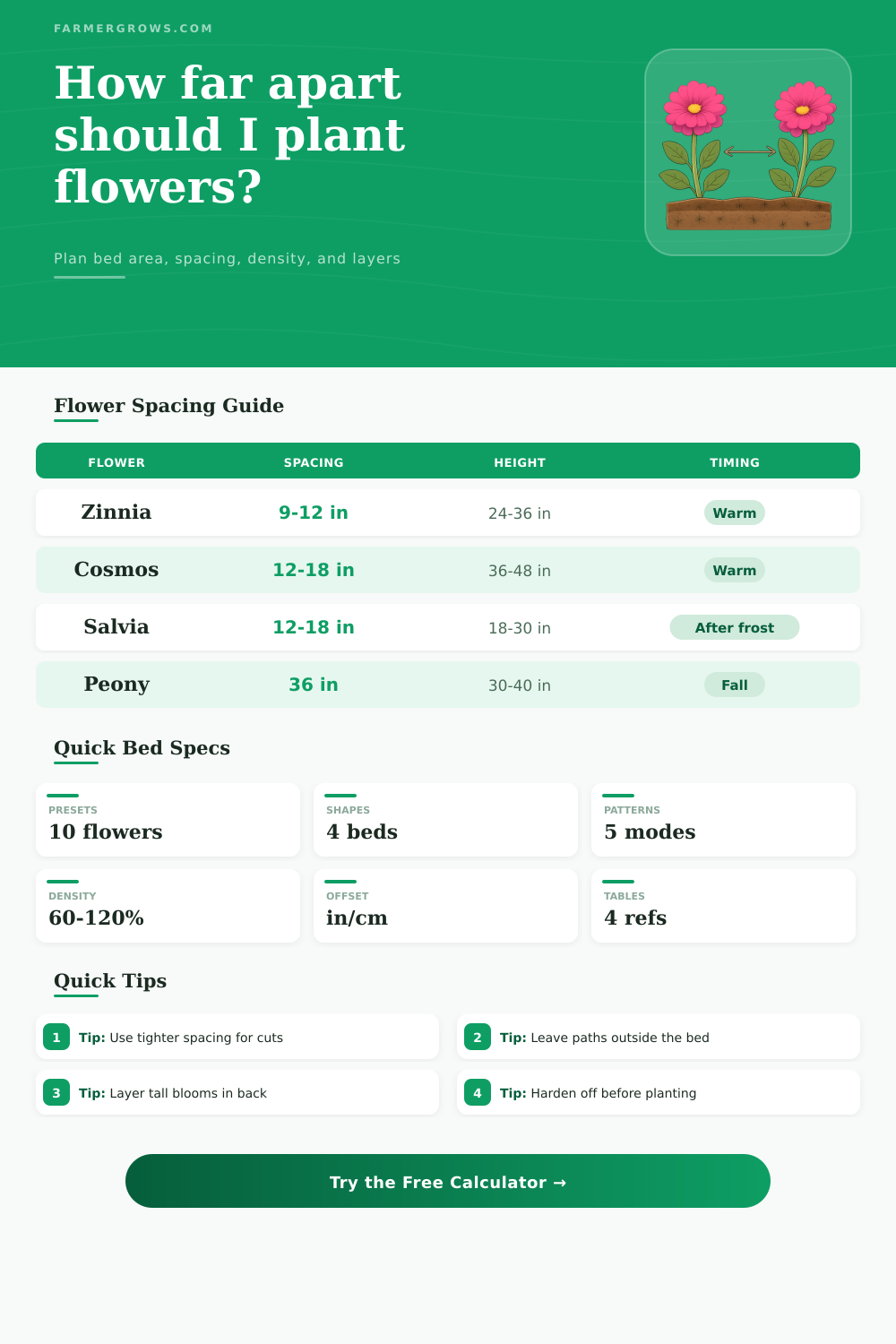
| Zinnia | Warm annual | 9 to 12 in | 12 in | 18 to 24 in | Cut flowers, mixed annual beds |
| French marigold | Warm annual | 8 to 10 in | 10 to 12 in | 8 to 12 in | Edges, vegetable companions, containers |
| Cosmos | Warm annual | 12 to 18 in | 18 in | 18 to 30 in | Pollinator drifts, airy back rows |
| Snapdragon | Cool annual | 6 to 9 in | 9 to 12 in | 8 to 12 in | Dense cut flower rows under support netting |
| Branching sunflower | Warm annual | 18 to 24 in | 24 in | 24 to 36 in | Tall seasonal screens and pollinator patches |
| Dahlia | Tender perennial | 18 to 24 in | 30 to 36 in | 24 to 36 in | Staked cutting rows and show beds |
| Lavender | Perennial shrub | 18 to 24 in | 24 to 30 in | 24 to 36 in | Dry borders, hedges, pollinator strips |
| Salvia | Annual or perennial | 12 to 18 in | 15 to 18 in | 18 to 24 in | Mass color, pollinator plantings, borders |
| Echinacea | Perennial | 18 to 24 in | 24 in | 18 to 24 in | Native-style beds, seedheads, midsummer color |
| Peony | Perennial | 30 to 36 in | 36 to 42 in | 30 to 42 in | Long-term cut rows and permanent borders |
| Spacing pattern | Calculator multiplier | Where it fits | Layout note |
|---|---|---|---|
| Square grid rows | 1.00x | Simple beds, easy weeding, drip lines | Rows and plants form a rectangular grid |
| Staggered triangular grid | 1.15x | Fuller canopy and meadow-like annual blocks | Every other row is offset by half a plant spacing |
| Double row intensive | 1.08x | Cut flower beds with support netting | Pairs rows on each drip line or bed strip |
| Natural drift clusters | 0.88x | Perennial borders and pollinator islands | Leaves open pockets for paths and companion plants |
| Specimen spacing | 0.72x | Peonies, dahlias, lavender, focal plants | More space for mature clumps and harvest access |
| Bloom height layer | Typical height | Spacing feel | Examples | Placement |
|---|---|---|---|---|
| Front edging | 6 to 14 in | Tighter, tidy, visible edges | French marigold, alyssum, dwarf zinnia | Bed fronts, path edges, vegetable borders |
| Low filler | 14 to 24 in | Moderate spacing with quick canopy | Calendula, salvia, gomphrena, dwarf cosmos | Middle-front bands and mixed annual blocks |
| Mid-height bloom | 24 to 40 in | Standard 12 to 18 in spacing | Zinnia, echinacea, snapdragon, rudbeckia | Main color layer and cutting rows |
| Tall background | 40 to 72 in | Wider rows and support access | Cosmos, branching sunflower, tall dahlia | Back rows, screens, fence lines |
| Permanent specimen | 24 to 48 in | Wide spacing for mature crowns | Peony, lavender, large salvia, shrub roses | Long-term anchors and permanent borders |
| Flower group | Start indoors | Transplant outside | Direct sow option | Spacing caution |
|---|---|---|---|---|
| Warm annuals | 4 to 6 weeks before last frost | After soil warms and frost risk passes | Zinnia, cosmos, sunflower can direct sow | Do not crowd if humid summers cause mildew |
| Cool annuals | 8 to 10 weeks before planting | Before or around last frost if hardened | Some can fall sow in mild climates | Close rows usually need netting or support |
| Tender tubers | Pre-sprout 2 to 4 weeks if desired | After nights are reliably mild | Usually planted as tubers or starts | Leave harvest and staking access |
| Hardy perennials | 8 to 12 weeks before planting | Spring or early fall in workable soil | Some seed needs cold treatment | Plan for year-two and year-three spread |
| Woody perennials | Buy plugs or divisions when practical | Spring or fall during cool weather | Not usually direct sown for quick beds | Airflow matters more than first-year fullness |
For cutting beds: Use tighter in-row spacing only when you can irrigate evenly, weed early, and support tall stems with netting or stakes.
For perennial borders: Trust mature spread more than first-year size. A slightly open first season usually becomes a healthier long-term planting.
The simple choice of getting your flowers spaced correctly make all the difference in how your bed presents itself for the entire growing season. Plant too far apart and you’re left looking at empty ground between plant all summer long. Too much? It becomes a humid jungle, with mildew appearing well before first harvest. Often it’s more about learning what every number mean (instead of just memorizing numbers on a chart).
The shape makes a difference: a triangle or circular bed use part of its total area for edges that cannot be planted, which leaves less room for plants to grow. A rectangular one (long) will yield clean rows and good access. Again, that’s what the calculator asks for first: length by width or diameter. It’s not just measuring the bed, but calculating how much of it there really is to play with, after factoring in the edge where you want nothing but leaves, no flowers.
How to Plant Flowers with Correct Spacing
The first true decision, aside from which plant to use, is spacing pattern. Drip-line patterns, such as a square grid, are orderly. Staggered patterns fits more plants in the same area by staggering each alternate row. Drift clusters of them provide space for perennials that will spread (over time) to breathe. The math of the geometry determines different multipliers: more stems can fit per unit area before competing for air and light.
Not all beds has the same intent, which is why the calculator offer a range of options for density. You might go tighter on a cut flower block, which you’ll keep weeded for airflow and harvest for stems once a week, compared to landscape border. And long-lasting plantings tend to be happier at less density because they’ll fill out over time, and because crowding increase disease pressure, particularly in a humid summer. You can adjust that percentage in the calculator so final count matches your real-world plan, not a one-size-fits-all approach.
What’s keeping the optimist in check? The number: mature spread. That six-inch seedling can quickly become much bigger, especially since most varieties triple their width by midsummer. Consider what the project canopy cover results mean for your garden. If the cover is low, the bed will look open when it is in full flower. If the cover is very high, plan to do more staking or thinning then you expected. Either way, knowing what the percentage actualy means on your site is good information.
If you’re mixing different heights in a single bed, like I do, those timing windows and layering recommendations (shown in the reference tables on the page) also matter. Tall background flowers don’t want to be crowded out by shade from plants in front of them. Also, tight-spaced front edgers don’t look good unless they are planted close together.
Once the numbers come up: Then what? That’s where the hard work begins. Are there backups for your typical weather? How much closer will plants need to be spaced in a larger pot? Will they also need to be hardened off before planting out (as most do)? Will water need adjusted based off that narrower gap between things? Answers are up to you; the tool just takes away the math.