
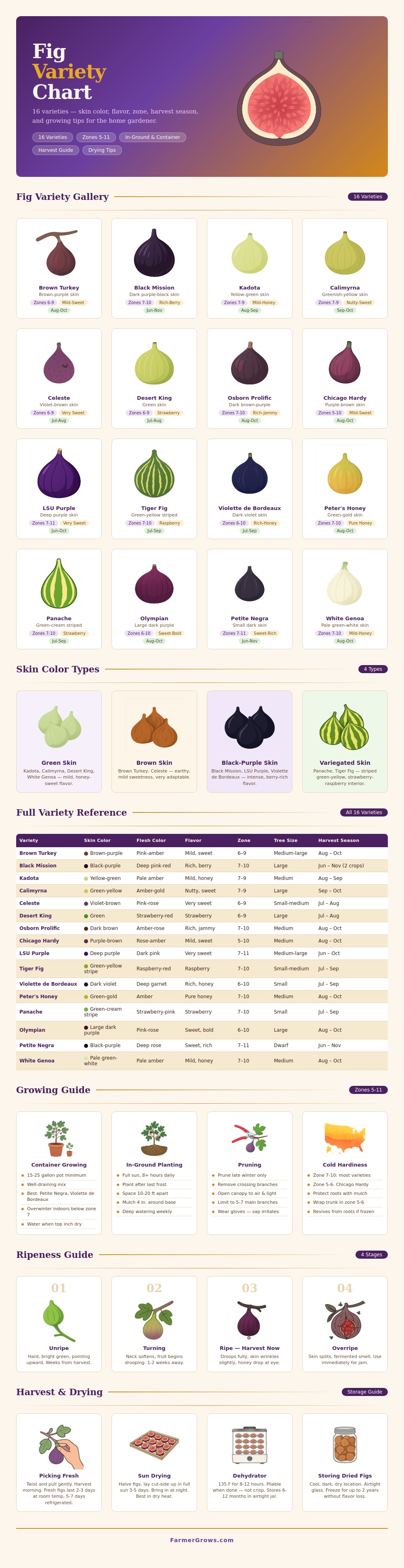
Figs are fruit that grow on trees. Different varieties of figs contains different flavors and have different requirements to grow successfuly. In order to determine the best type of fig for an area, individuals must consider the climate and taste preference in the area.
The different variety of figs have different characteristics that affect the growth and consumption of the fruit. One of the characteristic of the fig is its skin color. Green-skinned fig varieties tend to have a mild flavor that is similar to honey.
How to Choose and Grow Figs
These fig are best for individuals with a preference for a mild flavor. Many green-skinned fig varieties has amber flesh inside the skin. People often use these figs in recipes that contain cheese or yogurt.
Brown and purple-skinned fig varieties has an earthy flavor that is similar to berries. These type of figs are often used in jams. Striped fig varieties have green skin with yellow stripes.
These figs have a flavor that is similar to strawberry. The skin color of a fig variety can help individuals to select a fig variety that provide flavors that they enjoy. Another factor to consider is the climate hardiness of a fig variety.
The climate hardiness of a fig variety will determine if the fig tree can survive in an individual’s specific location. Most fig tree thrive in zones 7-10 on the USDA hardiness zone map. However, individuals in zones 5 and 6 has different options for fig varieties.
In cold climate, individuals should choose fig varieties that are bred to withstand cold climates. Figs should be planted in full sun in an area where the trees can grow apart from each other to allow for air circulation. The application of mulch around the base of the fig tree will protect the tree from rot and dieback.
In limited areas, individuals can grow fig trees in containers; 15-gallon container are appropriate for smaller fig trees. The watering of fig trees should occur only when the topsoil is dry. Fig trees should be pruned during the late winter month to open the tree’s canopy.
In areas with plenty of soil for planting, it is best not to plant too many fig trees, too many fig trees may result in the trees becoming sickly and not producing fruit. In order to determine when the figs are ripe and ready to be harvested, individuals must observe the fruit. Unripe figs are hard with green skin and point in the direction of the sky.
When ripe, the figs will soften at the neck of the fruit. Additionally, figs will droop at the tips of the branches. The skin will change color with the ripening of the figs.
When fully ripe, the figs will hang excessive on the tree branch. The skin will wrinkled and contain beads of nectar at the base of the figs. During the cool morning hours, individuals can pick the figs by twisting the figs gentle on the branch; however, picking the figs too late can cause the fruit to split off the branch or to undergo fermentation.
Freshly harvested figs can be stored on a counter for a few day or can be stored in the refrigerator for up to one week. The figs can also be dried. Halved figs can be stored in the sun or a dehydrator set to low temperatures until the figs is pliable.
Dried figs can be stored in airtight container. Additionally, figs can also be stored in the freezer for up to two year. Some fig varieties contain flavors of honey, strawberry, and berries.
Some fig varieties are very sweet and best enjoyed when eat alone. Others contain a nutty flavor and are best used in baking. The size of the fig tree to be grown can also be considered when choosing a fig variety.
Dwarf fig trees are best suited to areas with small patio. In contrast, large fig tree are best grown in backyards. Additionally, the season in which the figs will be harvested can be of concern.
Some fig varieties are grown to mature during the summer season while others mature in the fall. By considering the skin color, climate, size, and flavor of fig varieties, individuals can select the type of fig that are best for there area and personal needs.