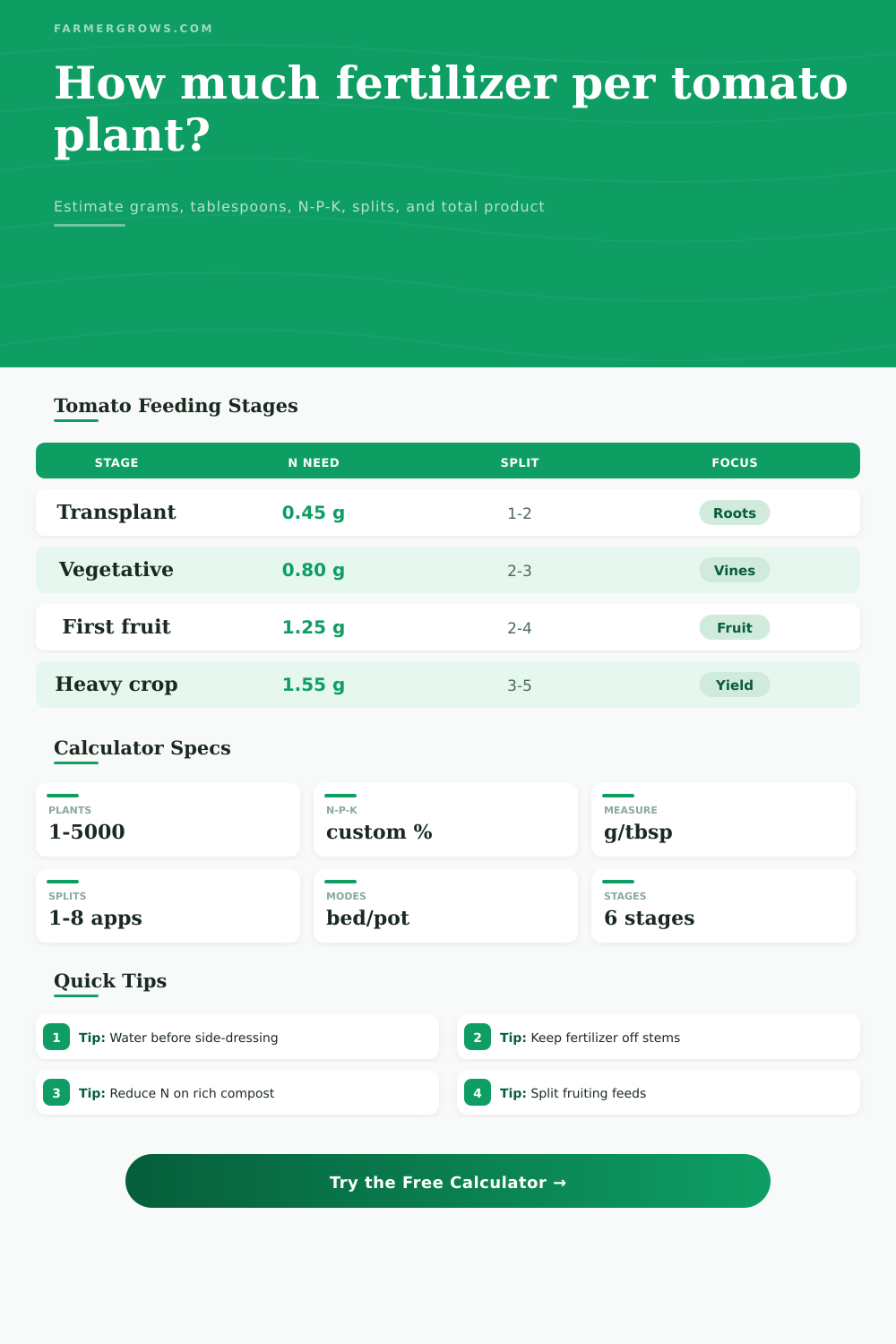
Fertilizer per Tomato Plant Calculator
Estimate dry or liquid tomato fertilizer per plant from plant count, growth stage, N-P-K analysis, spoon density, soil fertility, bed or container mode, split applications, and a transplant-to-fruiting schedule.
This planning tool converts the guaranteed fertilizer analysis into product amount. It is intentionally conservative: rich soil, composted beds, small pots, and young transplants reduce the rate so tomato roots are not hit with a heavy feeding all at once.
Uses a small amount of soluble nutrients or starter fertilizer placed away from the stem and watered in.
Moderate nitrogen helps young tomato plants size up before flowering, especially in sandy or low organic matter soil.
Split applications avoid a surge of nitrogen while fruit clusters are setting and potassium demand is rising.
Pots leach faster than beds, so smaller spoonfuls at shorter intervals usually beat one large dose.
Fertilizer N-P-K analysis from the label
Tomato Fertilizer Plan
Your per-plant and total product estimate will appear here.
| Growth stage | Typical total N target | Best split pattern | What to watch |
|---|---|---|---|
| Transplant or starter | 0.35-0.55 g N per plant | 1-2 light applications | Keep product out of the planting hole unless label allows starter placement. |
| Vegetative growth | 0.65-0.95 g N per plant | 2-3 feedings | Too much N can delay bloom and make plants leafy. |
| First bloom | 0.85-1.10 g N per plant | 2-3 feedings | Balanced nutrients help transition from canopy growth to fruit set. |
| First fruit set | 1.05-1.40 g N per plant | 2-4 feedings | Steady potassium matters as fruit clusters begin to size. |
| Heavy fruiting | 1.30-1.80 g N per plant | 3-5 smaller feedings | Containers and sandy beds usually need smaller, more frequent doses. |
| Product style | Typical N-P-K | Good tomato timing | Measurement note |
|---|---|---|---|
| Tomato and vegetable granular | 5-10-10, 4-6-8, 3-4-6 | Transplant through fruiting | Weigh one level tablespoon for the best g/tbsp value. |
| Balanced garden fertilizer | 10-10-10 or 12-12-12 | Early growth or low fertility beds | Higher analysis means fewer grams are needed per plant. |
| Water-soluble feed | 18-18-21, 20-20-20 | Diluted, frequent greenhouse feeds | Check label dilution limits before using the dry-weight estimate directly. |
| Slow-release prills | 14-14-14 or similar | Container base feed plus light top-up | The calculator can size top-ups, but label release period still controls timing. |
| Fertility choice | Calculator factor | When it fits | Tomato feeding cue |
|---|---|---|---|
| Low fertility or sandy soil | 120% of stage target | New beds, pale plants, light soil, low organic matter | Use split feeds and irrigate evenly to reduce leaching losses. |
| Average garden soil | 100% of stage target | Typical amended bed without a recent high soil test | Use the result as a planning starting point. |
| Good composted bed | 75% of stage target | Regular compost additions, strong color, good growth | Watch for excess leafy growth before adding more nitrogen. |
| Rich soil or manure history | 55% of stage target | High organic matter, manure, or a strong soil test | Favor potassium and calcium management over extra nitrogen. |
| Growing mode | Typical dose style | Split timing | Practical placement |
|---|---|---|---|
| Raised bed tomatoes | Moderate side-dress | Every 14-21 days during fruiting | Band 4-6 inches from the stem, scratch lightly, then water. |
| Field row tomatoes | Row-length side-dress | At transplant, bloom, and fruit set | Keep fertilizer in the root zone but away from direct stem contact. |
| Container tomatoes | Smaller spoonfuls | Every 7-14 days in active growth | Apply around the pot edge and flush occasionally if salts accumulate. |
| Greenhouse fertigation | Dilute liquid feed | Often weekly or with irrigation | Use label dilution, water quality, and media EC as final checks. |
| Timing | Goal | Suggested approach | Skip or reduce when |
|---|---|---|---|
| At transplant | Root establishment | Use a light starter or diluted soluble feed after watering in. | Plants are stressed, soil is cold, or starter is already in the mix. |
| 2-3 weeks after transplant | Canopy growth | Use a modest side-dress if plants are actively growing. | Plants are dark green and vigorous. |
| First bloom | Fruit set support | Move to balanced or lower-N tomato fertilizer. | Soil test shows high phosphorus or potassium. |
| First fruit to heavy picking | Steady yield | Split smaller applications instead of one large spoonful. | Leaves are curling from salt, drought, or overfeeding. |
Placement tip: Side-dress tomato fertilizer several inches away from the stem, then water it in. Direct contact with tender roots or stems can burn plants, especially in containers.
Soil test tip: If a recent soil test already shows high phosphorus or potassium, use the calculator for product math but follow the soil test recommendation for final nutrient targets.
Imagine: You want to grow some healthy tomatoes. You buy a bag of tomato fertilizer. But don’t just pour all of it onto one plant; it’ll suffocate it, killing it before flowering.
What’s wrong? Generaly, nothing…except the math. It is not the seed math (unless they’re hybrids) or the soil math (generaly not unless you have heavy clay). If you ask most gardeners how much of what they apply, they say they guessed. Guessing is how under-fertilization happens, too, leading to stunting and maybe even salt burn.
How to Use the Tomato Fertilizer Calculator
The calculator, above, do the math for you after you input your plants’ numbers and their growth stage. No need to guess at conversion rates or coefficients. Instead of thinking vaguely; I better feed them something!; you get a precise instruction: Add just this many grams. That kind of precision helps the vine go on and grow, rather than sit there all confused-looking.
But as the tomato plants mature, the need change. Heavier bearers with fruit swelling on the vines has different requirements different than fresh transplants. Roots are tender and learning their new space early in the season. Giving them too big a jolt with a strong nitrogen blast can causes shock. This leads to leaf burn or too much lush foliage production (at the expense of fruit set).
To adjust for that, the tool let you pick a growth stage from transplant through heavy fruiting. It recommend a lower rate for young plants and a higher rate when the crop really needs to put out energy. You’re feeding the stage of development the plant is in.
What kind of fertilizer is another variable? Liquid concentrates act differently than dry granules, which don’t dissolve until wetted by rain or watering. This means that if you use too much, granular products can builds up salts on top of the soil surface where no roots touch. Because of this, the salts can become even more concentrated. Liquids go into solution, and get evenly distributed throughout; they may wash away faster if you have big containers or sandy soil. Will you be applying a dry meal or diluting a liquid stock as your fertilizing material? That’s what the calculator asks, too, along with how heavy your formulation is… In grams per tablespoon.
Most users skip this step, but here’s why: A tablespoon of super-light stuff like compost tea powder will weigh less than a tablespoon of heavy rock phosphate or something. If you fail to account for weight, your spoonful won’t reflect the label analysis.
Better split than none: Splitting applications is smarter then using single large doses of fertilizer. Why? Tomato roots can takes up what they need when fed, but not all at once; flooding the zone with too many nutrients just washes some away and ties up others in the soil chemistry. Smaller, more frequent feeds keeps the available nutrients level and accessible. With this tool, you can set how many splits you want and the time between each one. It’s helpful if growing in containers, as pots leach and dry out quicker then raised beds. A light feed every week in a pot tend to work better than a huge dose monthly.
This also ties in to soil fertility. Don’t throw in extra commercial fertilizer if your bed is full of goodness from well-aged manure and/or compost. There’s an adjustment slider for fertility in the calculator to lower the rate recommendation, so it doesn’t over-apply nutrients if your soil is already good. That’s when people go wrong… Thinking fertilizer is a vitamin supplement rather than part of a balanced diet. Add what is lacking; don’t top up what is already plenty.
The page includes a table of reference levels (above), so you can get an idea of where those figures are coming from; why the targets change at each stage. For instance: Nitrogen should be kept somewhat low to prevent excessive foliage, but potassium is increasingly critical once fruit starts setting.
The result shows how much of what you need in grams, then tablespoons, followed by the overall weight required for your whole garden. That way, you don’t order too much. You get just the correct amount of product. You can also print it or leave the page up while you’re working. It makes what has been a chaotic part of the gardening chore a process you could of done again and again.
Growing great tomatoes means consistent but careful attention. You give the plant the proper fuel at the proper time, and let it do the heavy lifting. With the guessing taken out of when to feed, all those vine can concentrate on what they do best: Growing realy well.
That comes through in the harvest, too, because the difference is obvious… The very first ripe fruits are evidence. You start with a bag of fertilizer and a dream, and end with a basket full of reality.