⚡ Electric Fence Calculator
Calculate wire length, post count, energizer joules & ground rods for any fencing project
| Perimeter | 2 Strands | 4 Strands | 6 Strands | 8 Strands |
|---|---|---|---|---|
| 100 ft (30 m) | 200 ft | 400 ft | 600 ft | 800 ft |
| 200 ft (61 m) | 400 ft | 800 ft | 1,200 ft | 1,600 ft |
| 400 ft (122 m) | 800 ft | 1,600 ft | 2,400 ft | 3,200 ft |
| 660 ft (201 m) | 1,320 ft | 2,640 ft | 3,960 ft | 5,280 ft |
| 1,320 ft (402 m) | 2,640 ft | 5,280 ft | 7,920 ft | 10,560 ft |
| 1 mile (1,609 m) | 10,560 ft | 21,120 ft | 31,680 ft | 42,240 ft |
| Post Spacing | Posts / 100 ft | Posts / 1 Acre (sqr) | Metric Spacing | Best For |
|---|---|---|---|---|
| 6 ft | 17 | 278 | 1.8 m | Hogs, dense terrain |
| 8 ft | 13 | 209 | 2.4 m | Sheep, goats, general |
| 10 ft | 10 | 167 | 3.0 m | Cattle, horses |
| 12 ft | 9 | 139 | 3.7 m | Cattle, open pasture |
| 15 ft | 7 | 111 | 4.6 m | Deer exclusion, hills |
| 20 ft | 5 | 83 | 6.1 m | Large open terrain |
| Energizer Output | Min Ground Rods | Rod Length | Spacing Between Rods |
|---|---|---|---|
| Up to 1 Joule | 1 rod | 6 ft (1.8 m) | 10 ft apart |
| 1–3 Joules | 3 rods | 6 ft (1.8 m) | 10 ft apart |
| 3–6 Joules | 5 rods | 6–8 ft | 10 ft apart |
| 6–10 Joules | 6–8 rods | 8 ft (2.4 m) | 10 ft apart |
| 10+ Joules | 10+ rods | 8 ft (2.4 m) | 10 ft apart |
| Project | Perimeter | Wire (4 strands) | Posts (10 ft spacing) | Energizer |
|---|---|---|---|---|
| Small Pen 20x20 | 80 ft | 320 ft | 8 posts | 0.5–1 J |
| Horse Paddock 50x50 | 200 ft | 800 ft | 20 posts | 1–2 J |
| Cattle Pasture 100x100 | 400 ft | 1,600 ft | 40 posts | 1–3 J |
| 1 Acre Square | 835 ft | 3,340 ft | 84 posts | 2–4 J |
| 5 Acres Square | 1,867 ft | 7,468 ft | 187 posts | 4–6 J |
| 10 Acres Square | 2,640 ft | 10,560 ft | 264 posts | 6–10 J |
| 40 Acres Square | 5,280 ft | 21,120 ft | 528 posts | 10–20 J |
An electric fence is an tool that can be used to create a boundary for livestocks. An electric fence work by sending a pulse of electricity through a wire. The electric fence use energy, measured in joules, to deliver the voltage to the animal.
If the voltage are too low, the animal will not respect the electric fence; if the voltage is too low, the animal will not learn to avoid the electric fence. The number of joules that the energizer for the fence can produce is one of the most important characteristic of the fence. The energizer must produce enough joules to power the lengths of the electric fence.
How to Choose and Set Up an Electric Fence for Farm Animals
The vegetation that is located in the electric fence can touch the electric fence and drain the energy from the electric fence. If the vegetation absorb the energy from the electric fence, the voltage that is delivered to the livestock is reduce. The type of electric fence that the livestock may require may differ from animal to animal.
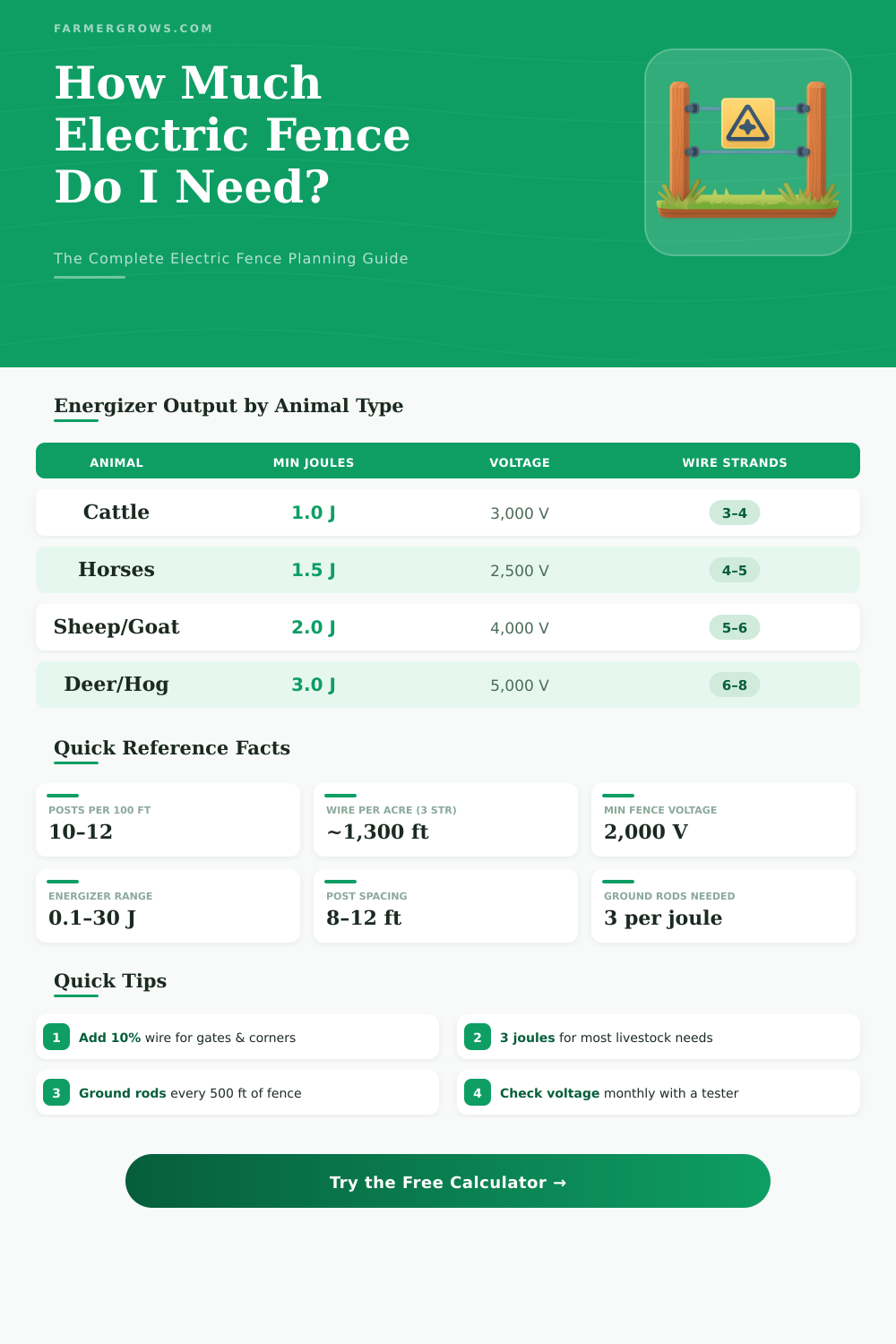
For instance, cattle requires an electric fence that has 3,000 to 4,000 volts of electricity. Furthermore, because cattle do not typically jump over fences, there are fewer strands of wire required for cattle than for animals like goat. Goats may push against electric fences, so more strands of wire is needed to contain the goat.
Horses require fences that are more higher than electric fences for livestock because the horses may attempt to touch the fence with there noses. Additionally, deer will jump over fences, so fences that exclude deer have to have more strands of wire to prevent the deer from jumping over the fence. Both the length and the number of strands of wire in the electric fence will impact the number of joules that is require for the fence.
Each foot of the electric fence will use some amount of power. Additionally, each strand of wire will increase the amount of power that is required. Furthermore, the terrain that is used for the electric fence may also impact the length of the fence.
If the terrain include hills, the length of the fence will be longer than it would be on flat terrain based off the map of the property. Therefore, if an individual measure the length of the fence on the map alone, they may not purchase enough wire to complete the fence. An electric fence require a grounding system to complete its circuit.
Without ground rods to complete the circuit, the electric fence will not function. Furthermore, if the farmer do not install enough ground rods, the voltage will drop to useless level. If the soil is dry, it will not conduct electricity well.
Therefore, more ground rods may be required in dry soil to ensure the electric fence maintain high voltage. The type of wire that is used in the fence also matter. High tensile steel wire will last the fences for many years of use.
High tensile wire is also suitable for creating long runs of electric fence. Alternatively, poly wire and poly tape are a more portable fence and highly visible. The visibility of electric fences help to train the livestock to respect the electric fence.
Therefore, when purchasing the wire for the fence, individuals should round up the amount of wire to ensure there is enough for the project. The gates for the electric fence requires special consideration. Gates will interrupt the electric fence.
Therefore, the gates must be made with insulate components or specialized cables. Additionally, individuals should create a buffer of around 10% of the total length of the electric fence to account for possible mistake with the length of the fence. Electric fences can be powered by solar unit, battery unit, or AC plug-in unit.
Battery and solar units are helpful for areas that are remote from sources of electricity because these units dont require an electrical outlet. The solar and battery units, however, require monitoring because the power output of these units may change with the weather and the temperature. Additionally, people commonly use AC plug-in units for permanent electric fence.
However, electric fences that is loaded with weeds will not deliver the same amount of joules as the energizer of the electric fence. Therefore, individuals must purchase an energizer that is larger than the amount required for the electric fence.