Eggplant Growth Time Calculator
Estimate warm-safe transplant timing, first flowers, first harvest, and expected yield for globe, Italian, Asian, baby, white, Indian, Thai, and protected eggplant crops.
Eggplant behaves like a heat-loving pepper cousin, but it is even less forgiving of cold roots and cold nights. This planner adjusts variety timing for transplant age, soil temperature, night temperature, season protection, pruning or staking, harvest size, spacing, water, and frost pressure.
Eggplant Growth Results
Timing estimates use transplant-based maturity, warm-night checks, flowering delay, flower-to-fruit sizing, and frost-limited harvest length.
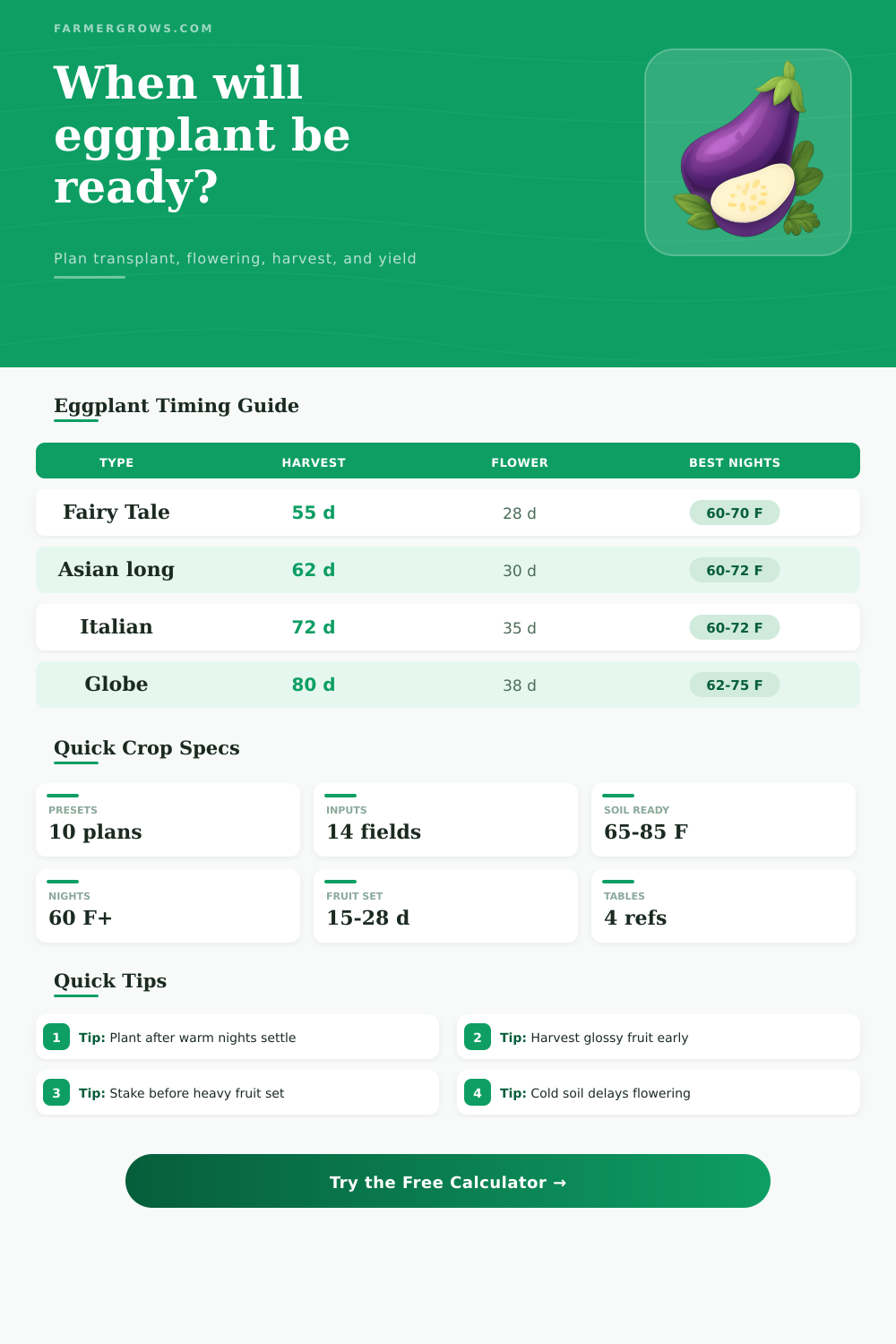
| Variety type | Typical harvest | First flower | Fruit style | Planning note |
|---|---|---|---|---|
| Classic globe | 75 to 85 days | 36 to 42 days | Large oval fruit | Needs the longest sizing window and strong staking. |
| Italian oval | 68 to 76 days | 33 to 38 days | Medium glossy fruit | Good market-garden balance of earliness and size. |
| Asian long | 58 to 68 days | 28 to 34 days | Slender tender fruit | Pick young and often for the fastest repeat harvest. |
| Baby or fairy | 50 to 60 days | 26 to 32 days | Small striped fruit | Best for pots, short seasons, and early glossy harvest. |
| Indian or Thai | 58 to 70 days | 28 to 35 days | Small clustered fruit | High fruit count, lower individual fruit weight. |
| Condition | Best range | Delay risk | Crop effect | Calculator adjustment |
|---|---|---|---|---|
| Soil at transplant | 65 to 85°F | Below 60°F | Root stall and delayed bloom | Up to +18 days |
| Average night temperature | 60 to 72°F | Below 55°F | Slow flowering and poor set | Up to +16 days |
| Hot nights | Below 78°F | Above 78°F | Blossom drop and slower set | Up to +7 days |
| Protected roots | Mulch or tunnel warmth | Cold open soil | Earlier first flowers | -3 to -12 days |
| Transplant age | Plant look | Root note | Best use | Timing effect |
|---|---|---|---|---|
| 4 to 5 weeks | Small, tender starts | Limited root ball | Only for warm protected beds | +4 to +8 days |
| 6 to 9 weeks | Sturdy, 5 to 8 inches tall | Filled plug without circling | Standard garden transplant | Baseline |
| 10 to 12 weeks | Large starts, possible buds | Watch root binding | Short-season insurance | +3 days if checked |
| Over 12 weeks | Root-bound or stressed | Needs careful hardening | Use only if stock is healthy | +7 days |
| Harvest goal | Flower to pick | Skin cue | Yield pattern | Best practice |
|---|---|---|---|---|
| Baby fruit | 12 to 18 days | Glossy, tender, small seeds | More fruit, less weight each | Pick often to keep flowers coming. |
| Standard glossy fruit | 18 to 25 days | Full size but still shiny | Balanced fruit count and weight | Harvest before skin dulls or seeds harden. |
| Large fruit | 24 to 32 days | Large and glossy, not bronze | Fewer fruit, more weight each | Support branches before fruit loads up. |
| Seed-mature fruit | Not a fresh goal | Dull or yellowing skin | Stops new fruit set | Avoid for eating quality and steady yield. |
Warm roots first: Delay transplanting until soil is warm and nights are consistently mild; cold set-out often costs more time than waiting a week.
Pick glossy: For better yield, harvest before fruit dulls. Removing mature fruit keeps the plant shifting energy into new flowers and tender fruit.
EGGPLANT’S A VEGETABLE, and most of us gardeners think all vegetables want is water and sun. Yes they do…but what eggplants really want are specific temperature conditions that can throw off even the best-laid watering plans. They’ll be happy with high summer heat here (so long as nights don’t drop below sixty degrees), but may stay dormant despite having ninety-degree days. Why? Because the roots won’t warm up till the soil does, and the soil holds onto its cool much longer than the air do. It is more about time then fertilizer.
But what if your spring is cool? Or what about fall crops? The calculator does all of the work for you. Just input where you live, your temperature patterns (above), and what variety you’ll be growing. This saves you the guesswork of whether a cool spring would mean a later harvest. It takes into account your root-zone soil heat and nighttime temperatures that make flower drop happen.
Why Temperature Is More Important Than Water for Eggplants
It even knows the difference between a high tunnel and an open garden bed. It also understands how plastic mulch can speed things up by warming the roots while the outside air remains cooler, reducing potential delay by five to a dozen days. The first advantage is choosing the correct variety if you have a short warm season. Baby-type ‘Fairy Tale‘ (left) will be ready to pick much sooner than classic globe types such as Black Beauty, which take 80 days or longer from transplant to harvest, and still may be just getting going here.
With the baby types and also the Asian long varieties, you get tender young fruit pretty quickly, but you don’t get giant-size. Final weight is sacrificed for time saved. This is shown in the reference table below where it’s clear that baby and small-fruited varieties matures faster. Grow big-globe eggplant, and chances are you’ll see dulling of skin before ever harvesting any good-sized fruit, if your summer is short. Get your earliest harvest finished quickly, and then skip any heat stress in late August by growing baby or Asian long types instead of big globes.
Age also changes transplant age. Those cute little baby plants you may have seen and bought in a nursery are tempting, but eggplants takes awhile to get going. Setting out a four-week-old plant in cool soil often causes slow growth. It is usually better to use a strong, well-rooted six- to eight-week-old plug because it will be tougher to kill. The tool handles this by altering the first period of getting established. If you’re starting from a big, hardy start, it hits the go button on veggie-growing right away; no weeks of rooting around while it gets its sea legs. It is best to hold off for larger starts rather than hurrying little ones along into chilly ground.
Consistent watering multiplies your efforts: Blossom drop is far worse when it is uneven. Drought stress, as signaled when the soil dries up between rains, tells the plant to conserve energy and it abandons flowers to save itself. To adjust yield estimates to reflect water patterns, enter that into the calculator. If you expect the container to dry fast, the estimate reduces output because they’ll be spending extra time recovering from water shock rather than making fruit.
Mulching provides a buffer against erratic weather, retaining moisture while also helping stabilize soil temperature. Most gardeners drop a bit of their yield without knowing it: by missing the ideal time to pick. The best eggplants are when they’re still tight and shiny. After that, as their seeds start to get hard and skin gets less shiny, the plant says “no more blossoms” and the crop stops.
Even if the eggplant isn’t the size you expect, go ahead and pick now (often). The calculator adjusts its yield estimate to match what size you prefer to pick at. It understands that if you pick smaller fruits early there will be more picks for a longer time during the season. With big fruit, it’ll take longer to develop… Thus reducing the total number of harvests possible before frost sets in.
Soil should be warm when planting, or it can really slow things down (sometimes weeks!) and even cause them to flower later because of the chill. That’s what dark mulch (or black plastic) does: It’s not just a weed blocker but a heat source for your root system. Normally waiting till nights are reliably over sixty works best. There’s no sense in rushing out when there are still cold snaps, then you’re really stalling yourself later, even though the calendar says it’s springtime. Be patient early; grow fast later.
All told: the secret to a good eggplant crop is not so much feeding and watering as understanding when there’s going to be enough heat for them. Protect their roots from early cold, and choose varieties that correspond well to whatever your true thermal window happens to be, and the odds will increase in your favor. The math makes it clear where our instincts fail. Respecting this heat-loving plant’s temperature limits leads to glossy fruit… Not poor-quality produce.